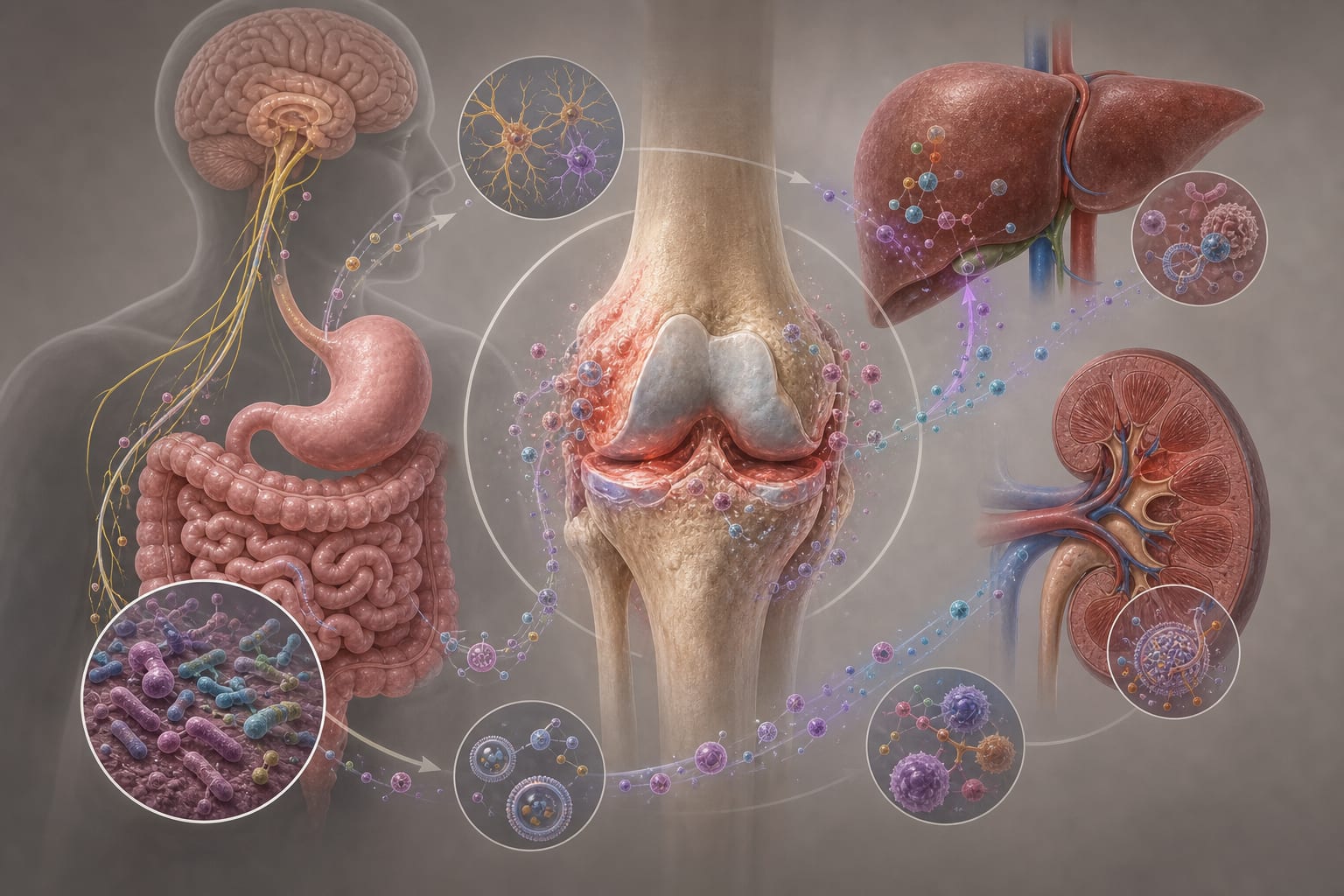
Clinical Report: Therapeutic Approaches for Osteoarthritis in the Context of Inflammaging
Overview
This review discusses the role of the senescence-associated secretory phenotype (SASP) in osteoarthritis (OA) and highlights emerging therapeutic strategies targeting inflammation. Pharmacological agents such as anakinra, metformin, and rapamycin are mentioned in the context of managing OA by reducing inflammation and preserving cartilage integrity.
Background
Osteoarthritis (OA) is a prevalent degenerative disease characterized by cartilage degradation and chronic inflammation. The accumulation of senescent cells and the SASP contribute to the inflammatory environment that exacerbates OA progression. Understanding the molecular mechanisms involved in SASP can inform therapeutic approaches aimed at mitigating OA-related inflammation and cartilage breakdown.
Data Highlights
No numerical data or trial data presented in the source material.
Key Findings
The SASP contributes to chronic inflammation and cartilage degradation in OA.
Key pro-inflammatory cytokines involved in OA include IL-1β, TNF, and IL-6.
Pharmacological agents like anakinra, metformin, and rapamycin are discussed in relation to inflammation and cartilage preservation.
MicroRNA modulation and CRISPR/Cas9 editing are emerging strategies to regulate SASP factors.
Accumulation of senescent chondrocytes and macrophages activates signaling pathways such as NF-κB and JAK/STAT.
Clinical Implications
Targeting the SASP and associated inflammatory pathways may provide new avenues for OA treatment.
Conclusion
This review summarizes the importance of understanding SASP in OA pathogenesis and highlights therapeutic strategies.