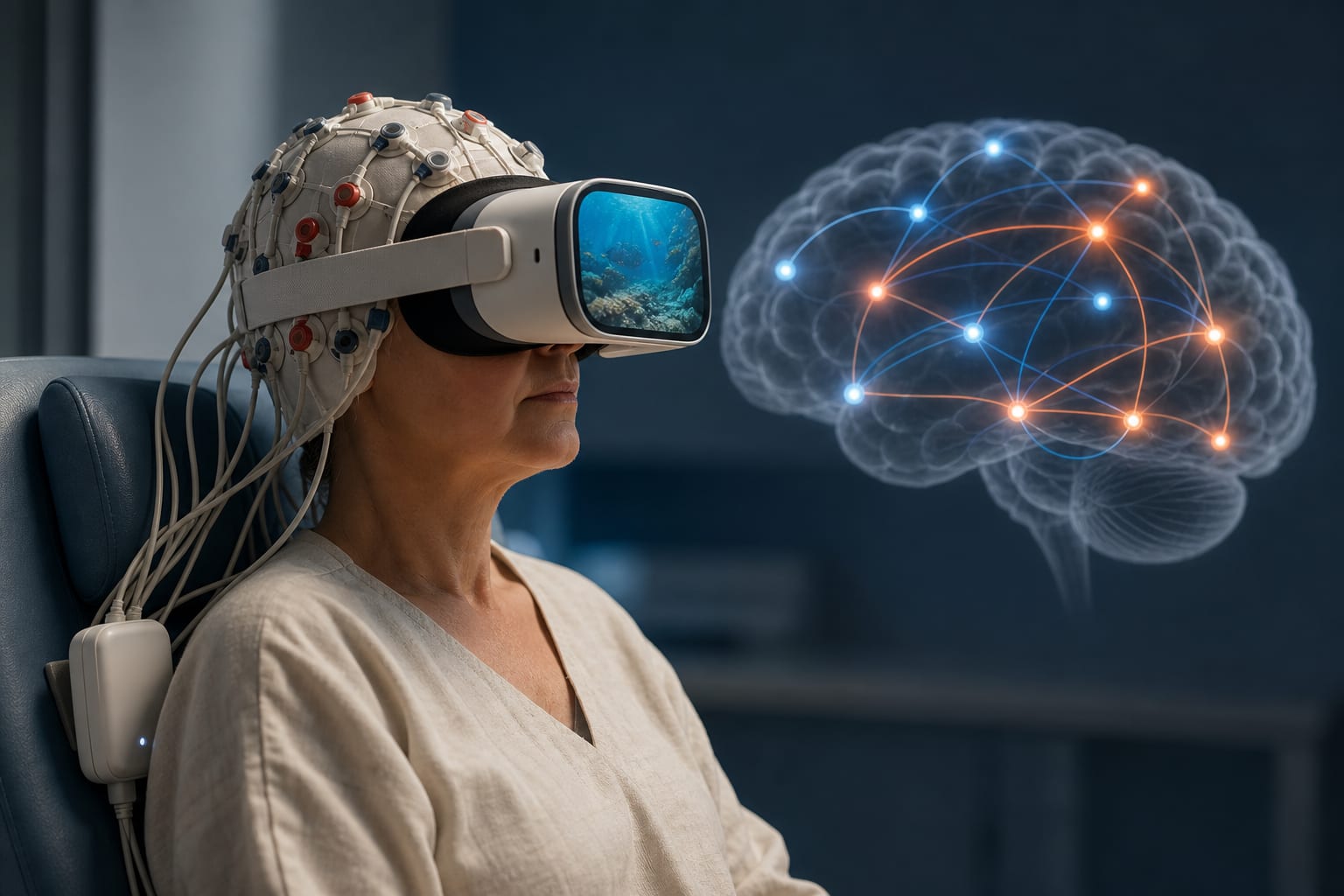
Editorial: Progress in Neuromodulation Techniques for Chronic Pain Management: Mechanisms and Clinical Significance
-
By
-
Hong Jiang
-
Linlin Sun
-
Fengyu Liu
-
July 21, 2026
Clinical Report: Progress in Neuromodulation Techniques for Chronic Pain Management
Overview
This editorial discusses advancements in neuromodulation techniques for chronic pain management, emphasizing their mechanisms. It highlights the complexity of chronic pain and the potential of neuromodulation as a treatment strategy.
Background
Chronic pain is a prevalent condition that poses significant challenges in treatment due to its complex nature involving neuroplasticity and neuroinflammation. Traditional pharmacological treatments often provide inadequate relief and are limited by side effects. Neuromodulation techniques offer a promising alternative by targeting the underlying neural processes that sustain chronic pain.
Data Highlights
No specific numerical data or trial results were provided in the source material.
Key Findings
- Neuromodulation techniques aim to reshape pain-processing pathways rather than merely suppress symptoms.
- Electroacupuncture may alleviate pain and improve outcomes in temporomandibular disorder-related pain.
- Non-invasive brain stimulation techniques, such as rTMS and tDCS, target the primary motor cortex for analgesic effects.
- Electrophysiological indicators may serve as biomarkers to guide neuromodulation treatments.
- Low-intensity pulsed ultrasound showed greater pain relief compared to tamsulosin in chronic prostatitis type IIIb/chronic pelvic pain syndrome.
Clinical Implications
Clinicians should consider neuromodulation as a potential approach for chronic pain management, focusing on individual patient characteristics and pain phenotypes.
Conclusion
Neuromodulation represents a dynamic and evolving field in chronic pain management.
Related Resources & Content
- American Academy of Pain Medicine, Pain Medicine, 2026 -- Consensus guidelines on neuromodulation technologies
- German National Guidelines, PubMed, 2025 -- Epidural Spinal Cord Stimulation for Chronic Pain
- American Society of Pain and Neuroscience, PMC, 2025 -- Consensus Guidelines for Peripheral Nerve Stimulation Therapy
- Frontiers in Immunology — Mechanical cues as immunomodulators in neuroinflammation-driven spinal sensitization: analgesic mechanisms and therapeutic strategies
- Frontiers in Pain Research — Leveraging artificial intelligence to optimize neuromodulation in the treatment of patients with chronic pain
- Pain Medicine — Noninvasive brain stimulation beyond the motor cortex: a systematic review and meta-analysis exploring effects on quantitative sensory testing in clinical pain
- Frontiers in Neurology — A meta-analysis of neuroimaging evidence for acupuncture-mediated modulation of altered central pain processing in patients with chronic pain
- Mechanical cues as immunomodulators in neuroinflammation-driven spinal sensitization
- Leveraging artificial intelligence to optimize neuromodulation in chronic pain treatment
- Noninvasive brain stimulation beyond the motor cortex: a systematic review
- American Academy of Pain Medicine consensus guidelines on neuromodulation technologies and neurocomputer interfaces for pain management and functional recovery | Pain Medicine | Oxford Academic
- German National Guidelines for Epidural Spinal Cord Stimulation for the Treatment of Chronic Pain - PubMed
- Consensus Guidelines from the American Society of Pain and Neuroscience for the Use of 60-Day Peripheral Nerve Stimulation Therapy. A NEURON Living Guideline Project - PMC
- NASS Coverage Recommendations: Spinal Cord Stimulation, 2nd Edition
- Long-term efficacy of high-frequency (10 kHz) spinal cord stimulation for the treatment of painful diabetic neuropathy: 24-Month results of a randomized controlled trial - PubMed
- Treatment of nonsurgical refractory back pain with high-frequency spinal cord stimulation at 10 kHz: 12-month results of a pragmatic, multicenter, randomized controlled trial - PubMed
- Long-term safety and efficacy of closed-loop spinal cord stimulation to treat chronic back and leg pain (Evoke): a double-blind, randomised, controlled trial - PubMed
- Dorsal root ganglion stimulation yielded higher treatment success rate for complex regional pain syndrome and causalgia at 3 and 12 months: a randomized comparative trial - PubMed
- Frontiers | The effect of different transcranial magnetic stimulation protocols on pain scores in patients with neuropathic pain: a systematic review and meta-analysis
- Network Meta-analysis of Randomized Controlled Trials Assessing Neuromodulation Therapies for Painful Diabetic Neuropathy | Neurology and Therapy | Springer Nature Link
This content is an AI-generated, fully rewritten summary based on a published scholarly article. It does not reproduce the original text and is not a substitute for the original publication. Readers are encouraged to consult the source for full context, data, and methodology.