Blood pressure–stratified associations of the atherogenic index of plasma with all-cause mortality: a 10-year rural cohort study in China - Report - MDSpire
Advertisement
Blood pressure–stratified associations of the atherogenic index of plasma with all-cause mortality: a 10-year rural cohort study in China
Clinical Report: Associations Between Atherogenic Index and All-Cause Mortality
Overview
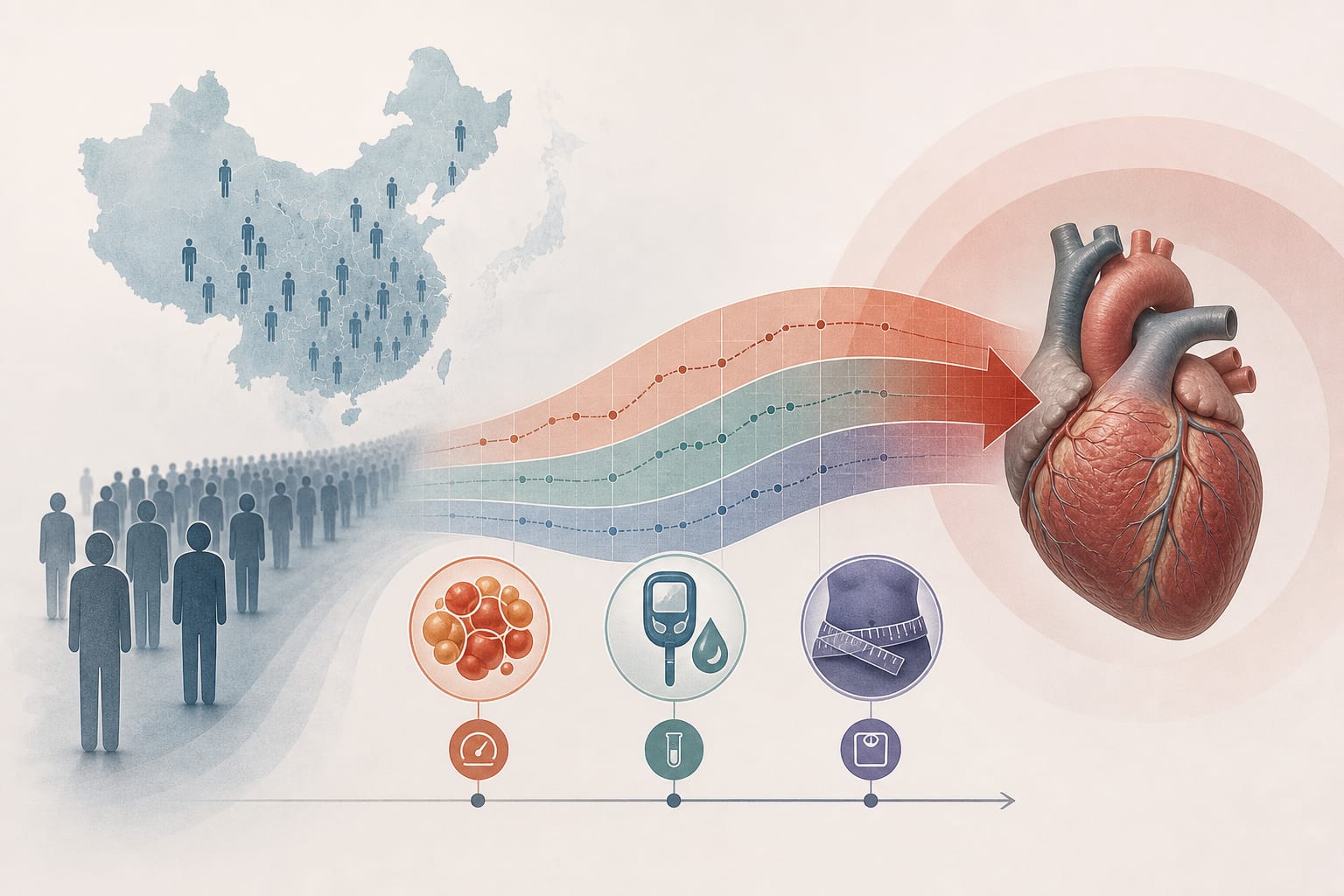
This study investigates the association between the Atherogenic Index of Plasma (AIP) and all-cause mortality in hypertensive and non-hypertensive individuals over a median follow-up of 8.82 years. Findings indicate that AIP and its modified indices are significantly associated with reduced mortality risk in hypertensive individuals, while no significant associations were observed in non-hypertensive individuals.
Background
Incorporate relevant statistics or studies to substantiate claims about CVD in low-income populations.
Data Highlights
Measure
Hypertensive Group
Non-Hypertensive Group
AIP-WHtR
79% reduction in mortality risk (HR: 0.21, 95% CI: 0.18–0.25)
No significant association
AIP
57% reduction in mortality risk (HR: 0.43, 95% CI: 0.39–0.47)
No significant association
Follow-up Duration
8.82 years
N/A
Mortality Cases
1,024
N/A
Key Findings
AIP and its modified indices are significantly negatively associated with all-cause mortality in hypertensive individuals.
A one-unit increase in AIP-WHtR is associated with a 79% reduction in mortality risk.
A one-unit increase in AIP is associated with a 57% reduction in mortality risk.
No significant associations between AIP and all-cause mortality were found in the non-hypertensive group.
AIP and its modified indices demonstrated better predictive ability for all-cause mortality compared to the TyG index.
Clinical Implications
Healthcare professionals should consider the Atherogenic Index of Plasma (AIP) as a potential biomarker for assessing mortality risk in hypertensive patients. The findings suggest that monitoring AIP levels may aid in identifying individuals at higher risk for all-cause mortality, thereby informing preventive strategies in rural and low-income populations.
Conclusion
Highlight specific areas for future research to enhance understanding of AIP's role.