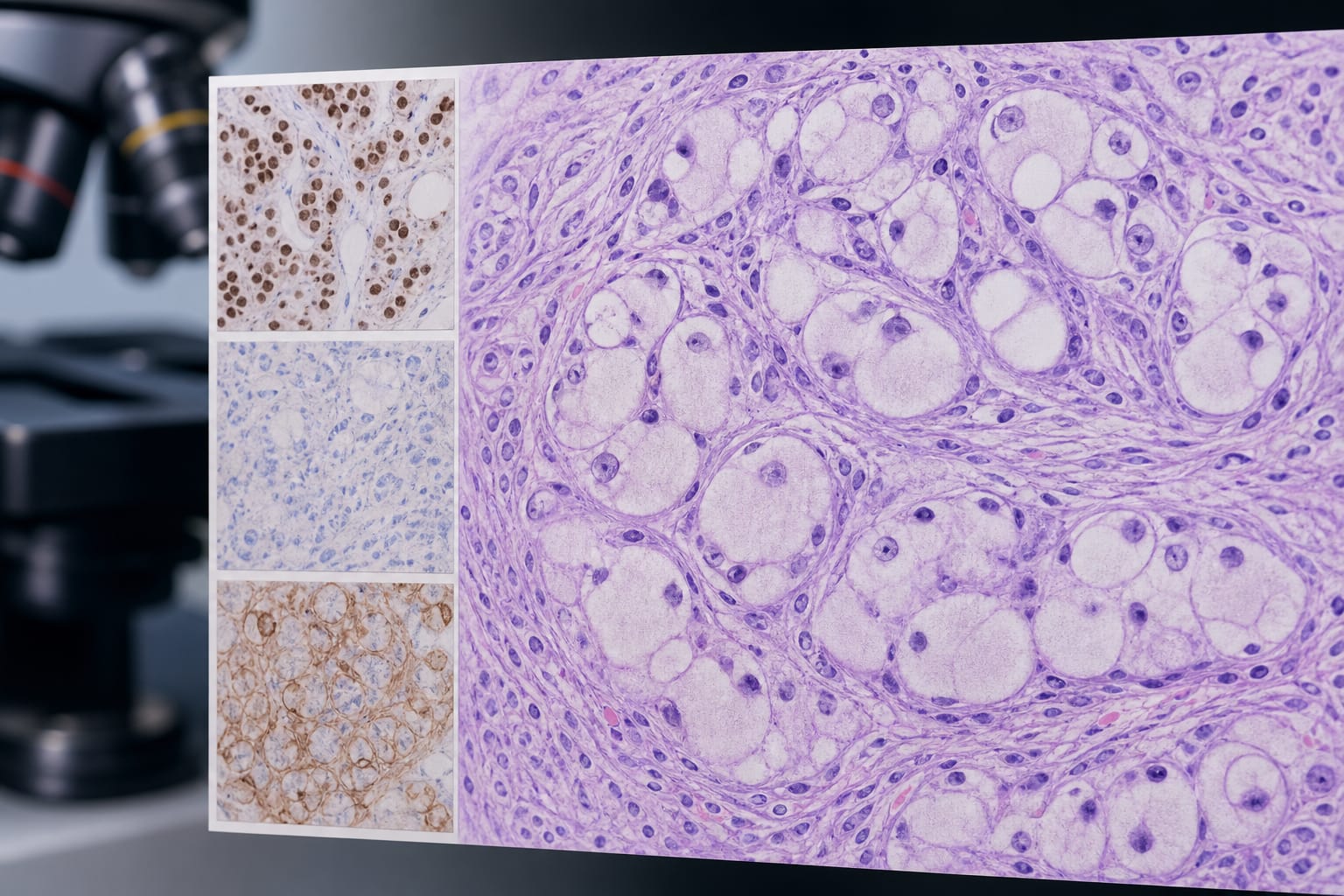
Clinical Report: Identifying Non-Gastric Sources of Signet Ring Cells
Overview
This case study highlights the diagnostic challenges of identifying gastric metastases from invasive lobular carcinoma (ILC) that present with signet ring cell morphology, particularly the risk of misdiagnosis as primary gastric cancer. The findings emphasize the importance of using an immunohistochemistry panel to differentiate between primary gastric cancer and metastatic breast cancer.
Background
Invasive lobular carcinoma (ILC) is a breast cancer subtype known for its unique growth pattern and propensity for gastrointestinal metastasis. Gastric metastases from ILC can mimic primary gastric malignancies, leading to potential misdiagnosis and inappropriate treatment. Understanding the histopathological features, such as the loss of E-cadherin and the presence of signet ring cells, and employing targeted immunohistochemistry is crucial for accurate diagnosis.
Data Highlights
No numerical data or trial data presented in the article.
Key Findings
['A 52-year-old woman with de novo metastatic grade 1 ILC developed gastric symptoms two years post-diagnosis.', 'Gastric biopsies showed signet ring cell morphology, initially misinterpreted as primary gastric cancer.', 'Immunohistochemistry revealed markers consistent with breast cancer origin, including GATA3 and strong ER/PR expression.', 'Loss of E-cadherin was noted, supporting the diagnosis of gastric metastasis from ILC.', 'Second-line treatment with weekly paclitaxel was initiated due to symptomatic gastric involvement.']
Clinical Implications
Clinicians should be aware that signet ring cell morphology in gastric biopsies is not definitive for primary gastric cancer, especially in patients with a history of ILC. An immunohistochemistry panel that includes breast lineage markers is essential to avoid misdiagnosis and ensure timely initiation of appropriate systemic therapy.
Conclusion
This case underscores the need for careful diagnostic evaluation of gastric lesions in patients with ILC to prevent misdiagnosis and optimize treatment strategies. Enhanced awareness and appropriate use of immunohistochemistry can significantly impact patient management.
by Amalia A. Sofianidi, Constantinos Papadimitris, Maria Papanikolaou, Eleftheria Lakiotaki, Penelope Korkolopoulou, Meletios-Athanasios Dimopoulos, Maria Kaparelou