Does Kaposi’s sarcoma signal the conclusion of the OX40/OX40L pathway in atopic dermatitis treatment?
-
By
-
Shahram Salek-Ardakani
-
June 2, 2026
Clinical Report: Does Kaposi’s sarcoma signal the conclusion of the OX40/OX40L pathway?
Overview
Revise to better articulate the implications of safety concerns on treatment strategies.
Background
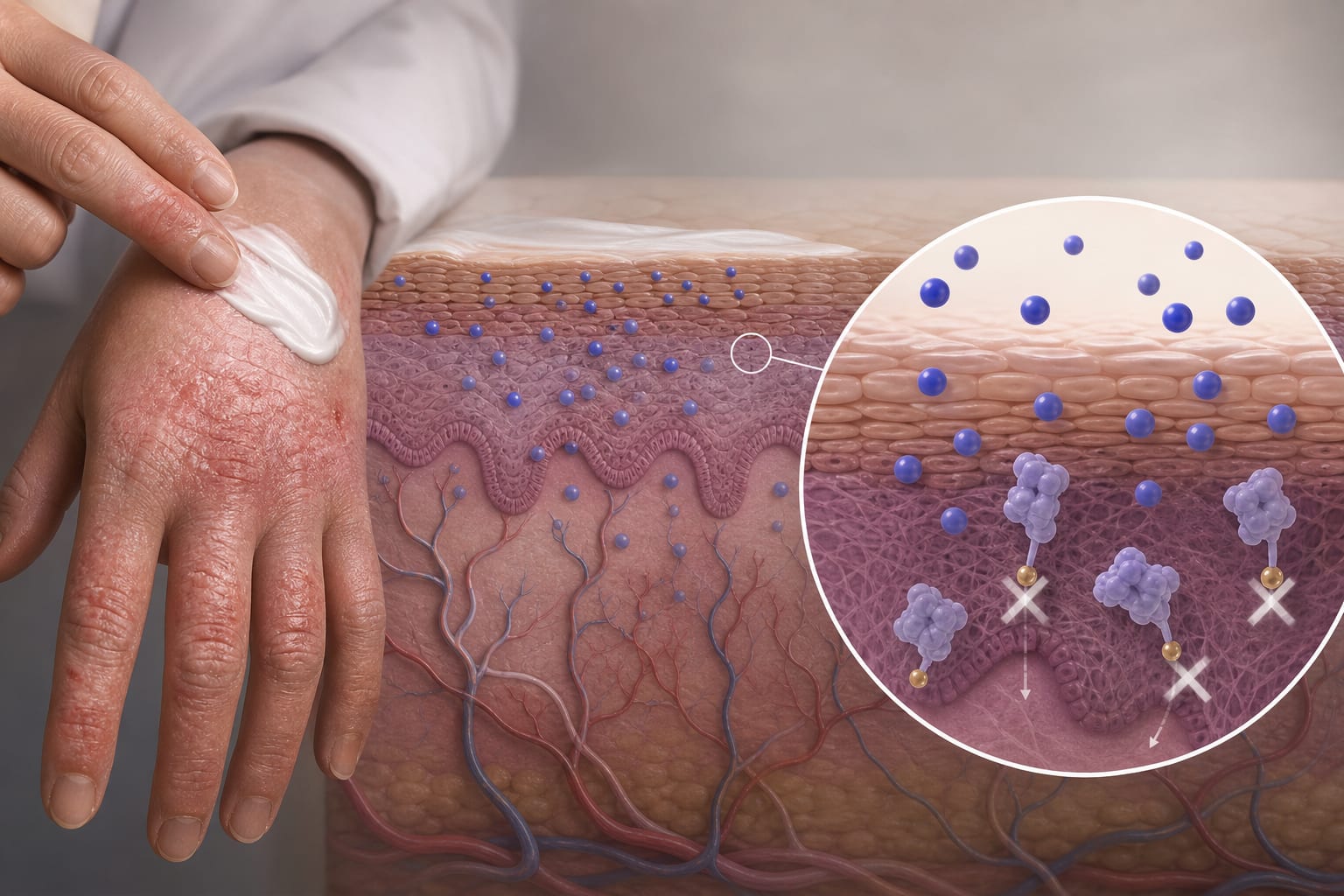
Atopic dermatitis (AD) is a chronic inflammatory skin condition that significantly impacts patients' quality of life. The OX40/OX40L axis was initially considered a promising target for therapy due to its role in T cell activation and inflammation. However, emerging safety concerns, particularly regarding Kaposi’s sarcoma, necessitate a reevaluation of its therapeutic potential and risk management strategies.
Data Highlights
No numerical data available in the source material.
Key Findings
- Kaposi’s sarcoma cases have been reported in clinical trials of OX40/OX40L pathway therapies, raising safety concerns.
- Rocatinlimab and amlitelimab showed early signs of clinical activity in atopic dermatitis but faced discontinuation due to safety reviews.
- The biological rationale for targeting the OX40/OX40L axis remains strong, but its clinical benefit must be weighed against potential risks.
- Current treatment guidelines emphasize the need for new therapies to demonstrate clear advantages over existing options.
- Future development strategies may focus on selective targeting and risk mitigation in patients with known vulnerabilities.
Clinical Implications
Healthcare professionals should remain vigilant regarding the safety profiles of emerging therapies targeting the OX40/OX40L axis. A thorough assessment of patient risk factors is essential when considering these treatments, particularly in light of recent findings.
Conclusion
The emergence of Kaposi’s sarcoma cases does not necessarily signal the end of the OX40/OX40L pathway in atopic dermatitis but highlights the need for a more cautious and informed approach to its clinical application.
Related Resources & Content
- The ASCO Post, 2022 -- PD-1 Inhibition in Patients With Classic or Endemic Kaposi Sarcoma KEY POINTS
- Basic Research in Cardiology, 2016 -- The Role of CD40 in Coronary Artery Disease: Implications for Macrophage Activity
- Frontiers in Immunology, 2026 -- Clinical applications and challenges of CD40/CD40L signaling regulation in autoimmune diseases
- Nature Cancer, 2026 -- Safety and activity of RO7300490, a bispecific CD40 agonist targeted to fibroblast activation protein, in patients with advanced solid tumors: a single-arm, multicenter, first-in-human, phase 1 trial
- Atopic dermatitis clinical guideline -- American Academy of Dermatology
- Efficacy and safety of rocatinlimab for the treatment of moderate-to-severe atopic dermatitis in ROCKET-IGNITE and ROCKET-HORIZON: two global, double-blind, placebo-controlled, randomised phase 3 clinical trials - ScienceDirect
- Comparative efficacy of targeted systemic therapies for moderate-to-severe atopic dermatitis: a network meta-analysis of phase 3–4 randomized trials
- Atopic dermatitis clinical guideline
- Efficacy and safety of rocatinlimab for the treatment of moderate-to-severe atopic dermatitis in ROCKET-IGNITE and ROCKET-HORIZON: two global, double-blind, placebo-controlled, randomised phase 3 clinical trials - ScienceDirect
- Full article: Comparative efficacy of targeted systemic therapies for moderate-to-severe atopic dermatitis: a network meta-analysis of phase 3–4 randomized trials
Based on findings from:
Is Kaposi’s sarcoma the end of the OX40/OX40L axis in atopic dermatitis?
Shahram Salek-Ardakani. Frontiers In Immunology, 2026.
https://www.frontiersin.org/journals/immunology/articles/10.3389/fimmu.2026.1870289/full
This content is an AI-generated, fully rewritten summary based on a published scholarly article. It does not reproduce the original text and is not a substitute for the original publication. Readers are encouraged to consult the source for full context, data, and methodology.