Analysis of risk factors and prediction of prognosis in patients with primary liver cancer undergoing transarterial chemoembolization - Report - MDSpire
Advertisement
Analysis of risk factors and prediction of prognosis in patients with primary liver cancer undergoing transarterial chemoembolization
Clinical Report: Prognostic Factors and Survival in Primary Liver Cancer Patients
Overview
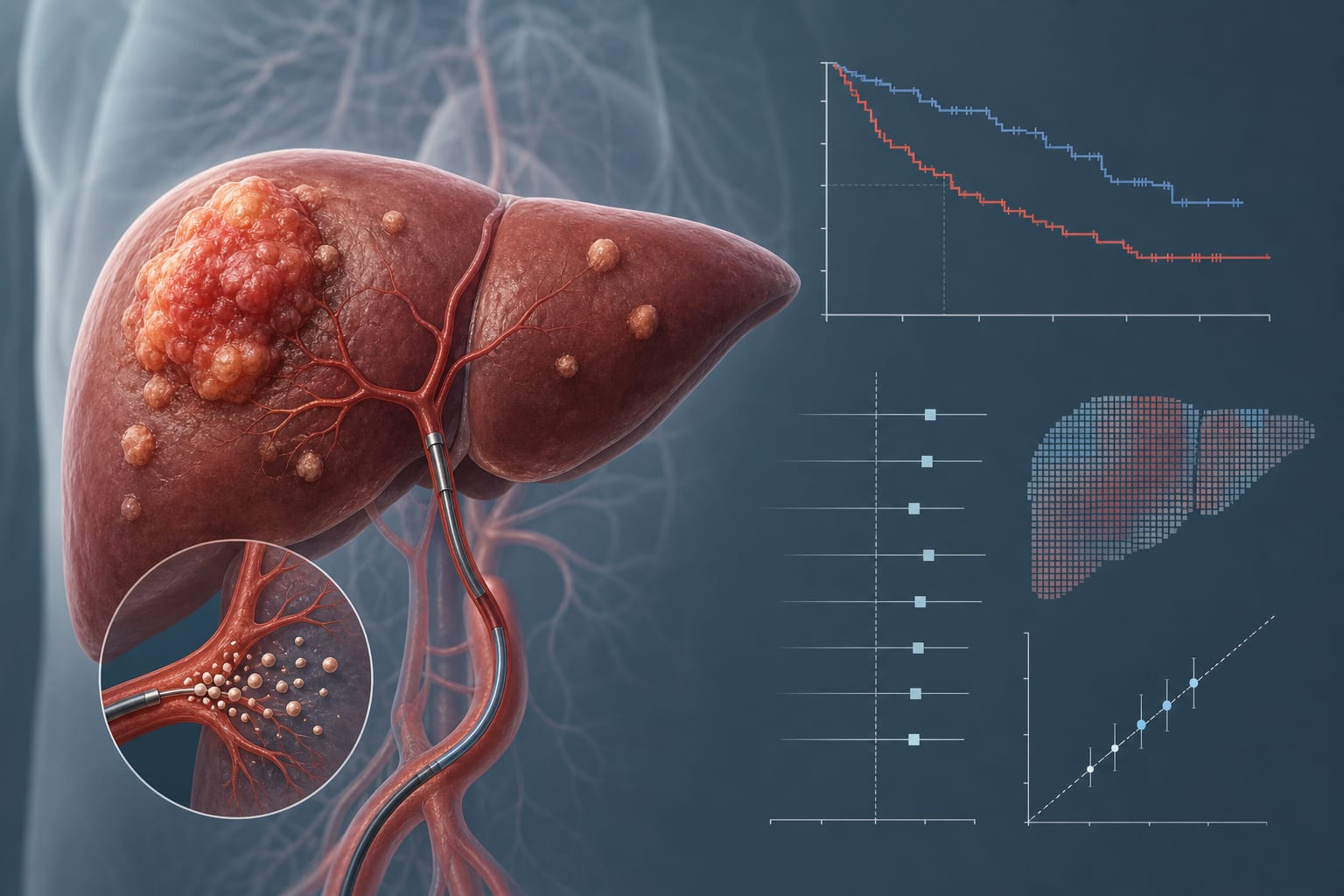
This study evaluates prognostic factors affecting overall survival in primary liver cancer patients treated with transarterial chemoembolization (TACE). A Cox-based prediction model was developed, demonstrating good discrimination and identifying key independent predictors of survival.
Background
Primary liver cancer, particularly hepatocellular carcinoma (HCC), is a leading cause of cancer mortality globally. TACE is a standard treatment for unresectable HCC, yet patient outcomes vary significantly due to factors such as tumor burden and liver function. Understanding these prognostic factors is crucial for optimizing treatment strategies and improving patient survival.
Data Highlights
Outcome
Median (Months)
12-Month OS
24-Month OS
12-Month PFS
24-Month PFS
Overall Survival
28.0
76.4%
55.7%
-
-
Progression-Free Survival
10.9
45.0%
25.9%
-
-
Key Findings
Median overall survival (OS) was 28.0 months with a 12-month OS rate of 76.4%.
Independent predictors of worse OS included maximum tumor diameter, portal vein tumor thrombosis, and Child–Pugh class B.
The model showed good discrimination with a C-index of 0.812 in training and 0.791 in validation.
Objective response rate (ORR) was 48.1% with a disease control rate (DCR) of 73.5% based on mRECIST.
Alpha-fetoprotein (AFP) levels were significant predictors of survival, with HR of 1.946 per 1 log10 increase.
Clinical Implications
Clinicians should consider the identified prognostic factors when evaluating patients for TACE to tailor treatment plans effectively. The developed prediction model can assist in risk stratification and guide clinical decision-making regarding patient management and follow-up.
Conclusion
The study provides a robust model for predicting survival in primary liver cancer patients undergoing TACE, emphasizing the importance of integrating clinical and biological factors in treatment planning.
The Lank Center for Genitourinary Oncology at Dana-Farber Cancer Institute presents a succinct summary of all the bladder cancer clinical updates you need to know from AACR 2026.