Non-invasive vagus nerve magnetic stimulation combined with rehabilitation training for vocal cord paralysis and dysphagia following brain injury: a prospective case series study - Report - MDSpire
Advertisement
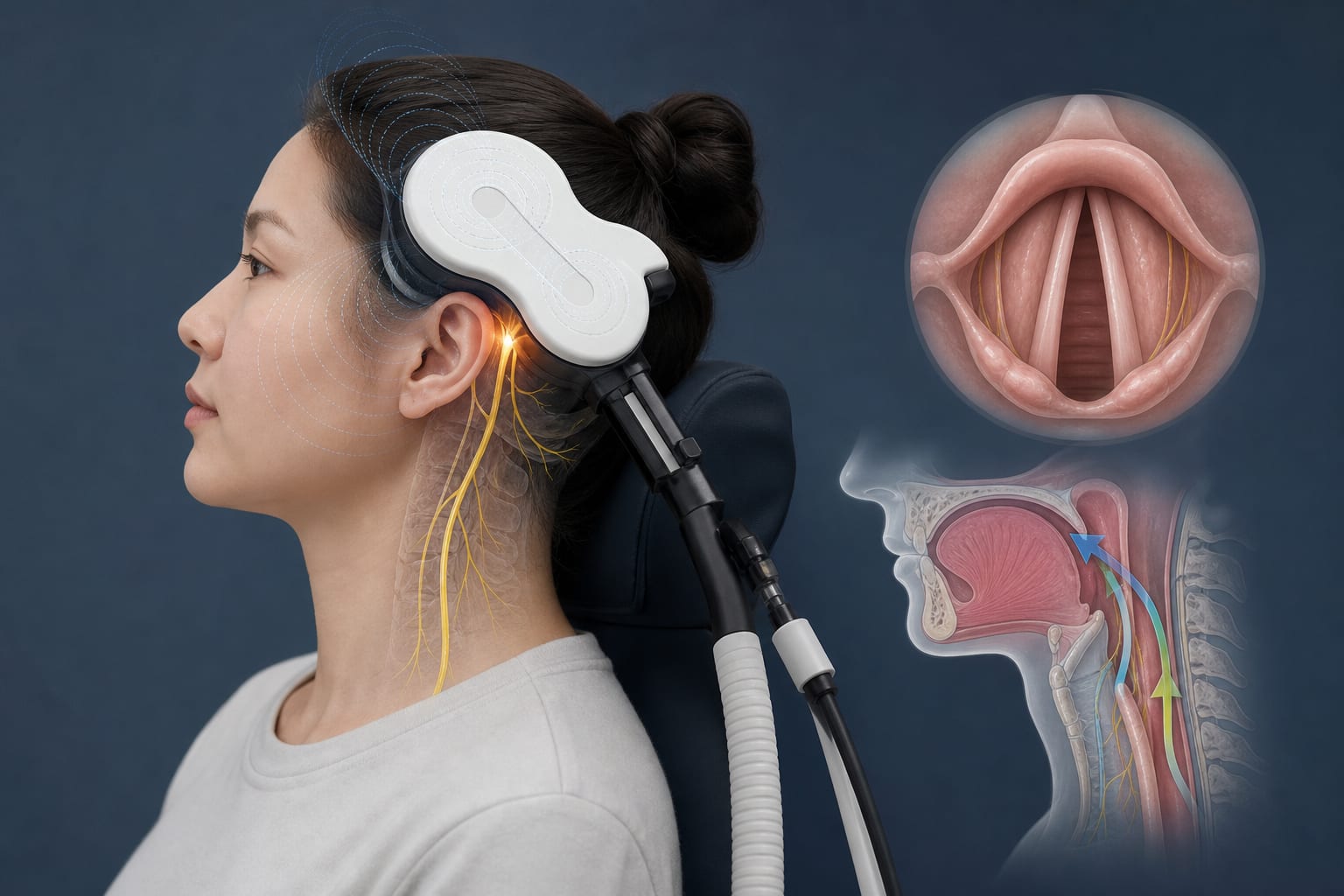
Non-invasive vagus nerve magnetic stimulation combined with rehabilitation training for vocal cord paralysis and dysphagia following brain injury: a prospective case series study
Clinical Report: Magnetic Stimulation of the Vagus Nerve Without Invasion
Overview
This prospective case series analyzed the effects of non-invasive vagus nerve magnetic stimulation (nVNMS) combined with rehabilitation on vocal cord paralysis and dysphagia in patients with brain injury. Improvements were observed in swallowing safety, vocal cord function, and airway management requirements.
Background
Vocal cord paralysis and dysphagia following brain injury can lead to severe complications, including aspiration pneumonia and malnutrition. Traditional rehabilitation methods often yield limited efficacy.
Data Highlights
Outcome Measure
Baseline
Post-Treatment
p-value
SSA Scores
36.92 ± 4.71
32.63 ± 7.10
<0.001
FILS Scores
2 (2–2)
3 (2–3)
<0.001
PAS Scores
6 (4–6)
4 (4–4)
<0.001
Vocal Cord Paralysis Incidence
100%
63.2%
<0.001
Tracheostomy Cannula Retention Rate
55.3%
26.3%
0.001
Nasogastric Tube Retention Rate
100%
68.4%
<0.001
Key Findings
Significant reduction in SSA scores indicating improved swallowing safety.
FILS scores showed a transition from total tube-feeding dependence to eligibility for minimal oral intake.
PAS scores decreased, indicating restoration of functional airway protective response.
Incidence of vocal cord paralysis decreased significantly from 100% to 63.2%.
Tracheostomy cannula retention rate decreased from 55.3% to 26.3%, with 11 patients achieving decannulation.
Nasogastric tube retention rate decreased from 100% to 68.4%, with 12 patients recovering oral feeding ability.
Clinical Implications
Further research through multicenter randomized controlled trials is necessary to validate these results.
Conclusion
This preliminary case series indicates that nVNMS may improve outcomes in patients with brain injury. However, the lack of a control group necessitates further investigation.
The nurse practitioner profession claims the No. 1 spot across three categories in the U.S. News & World Report 2026 Best Jobs rankings for the third consecutive year.
A VHA study across 11 vendors finds AI-generated primary care notes score lower than clinician-written notes, with the largest deficits in thoroughness, organization, and usefulness