Real-world evidence of baseline soluble CD25 as a prognostic biomarker and indicator of differential EGFR–TKI benefit in stage IV lung adenocarcinoma - Report - MDSpire

Real-world evidence of baseline soluble CD25 as a prognostic biomarker and indicator of differential EGFR–TKI benefit in stage IV lung adenocarcinoma

  • By

  • Huiru Guo

  • Lingshuang Liu

  • Veronika Lindberg

  • Yingjun Xue

  • Jan P. A. Baak

  • July 10, 2026

  • 0 min

Share

Prognostic Significance of Baseline Soluble CD25 in Stage IV Lung Adenocarcinoma

Overview

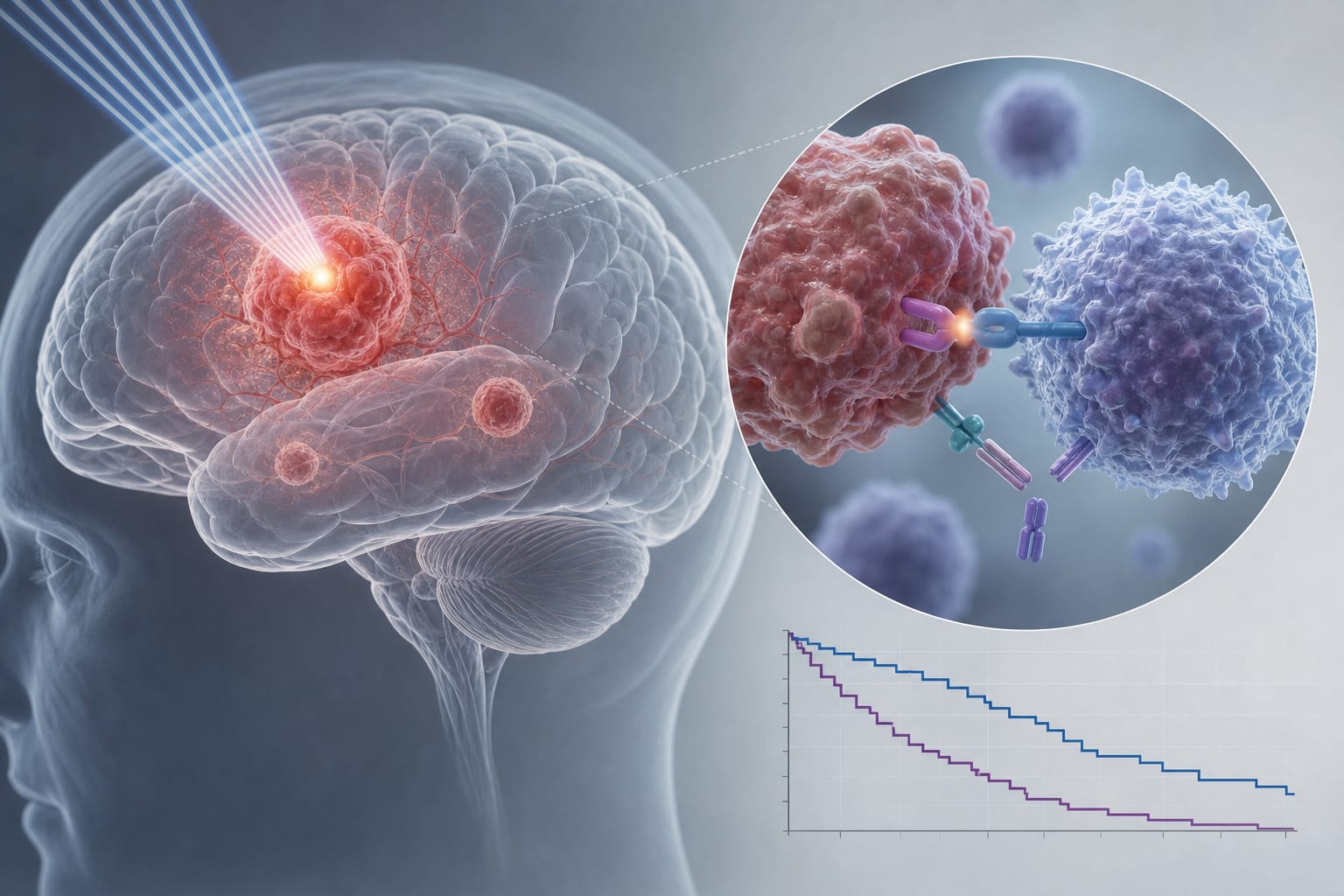
This study evaluates the prognostic and predictive value of soluble CD25 (sCD25) in patients with stage IV lung adenocarcinoma (LUAD). Elevated sCD25 levels are associated with shorter overall survival.

Background

Lung adenocarcinoma is the most common subtype of lung cancer and is often diagnosed at an advanced stage, leading to variable clinical outcomes. Despite advancements in biomarkers, there remains a need for reliable indicators that can predict treatment response and survival.

Data Highlights

ParameterValue
Median Follow-up24.1 months
Deaths during Follow-up52
High sCD25 (≥441 U/mL) OS HR5.70 (95% CI, 2.94–11.07; P <.0001)
One-year OS Rate (low sCD25)97%
Three-year OS Rate (high sCD25)27%

Key Findings

  • Elevated sCD25 is associated with shorter overall survival (OS) in stage IV LUAD.
  • High sCD25 levels (≥441 U/mL) correlate with a hazard ratio of 5.70 for OS.
  • One- and three-year OS rates are significantly lower in patients with high sCD25 compared to low sCD25.
  • EGFR-TKI treatment benefits are limited to patients with high sCD25 levels.
  • No significant interactions were found for immune checkpoint inhibitors or antiangiogenic therapy.

Clinical Implications

Baseline sCD25 may assist in identifying patients with stage IV LUAD who are likely to have poorer outcomes.

Conclusion

Baseline sCD25 serves as a strong prognostic biomarker in stage IV LUAD.

Related Resources & Content

  1. Frontiers, Frontiers in Oncology, 2026 -- Real-World Evidence of Baseline Soluble CD25 as a Prognostic Biomarker and Indicator of Differential EGFR–TKI Benefit in Stage IV Lung Adenocarcinoma
  2. Therapy for Stage IV Non–Small Cell Lung Cancer With Driver Alterations: ASCO Living Guideline, 2026.3.0 | Journal of Clinical Oncology
  3. Osimertinib with or without Chemotherapy in EGFR-Mutated Advanced NSCLC | New England Journal of Medicine
  4. Gastric Cancer — Evaluating Gene Hyperamplification and PD-L1 Expression as Predictive Biomarkers for Tislelizumab Efficacy in Gastric and Gastroesophageal Junction Adenocarcinoma
  5. The ASCO Post — New Data Reported From International Studies of Lung Cancer Treatment
  6. The ASCO Post — Deep-Learning CT Biomarker Predicts Survival Better Than Traditional Measures in Immunotherapy-Treated Advanced NSCLC
  7. The ASCO Post — Liquid Biopsy: Mounting Evidence Shows Clinical Utility in Tumor Monitoring
  8. The ASCO Post — New Data Reported From International Studies of Lung Cancer Treatment
  9. The ASCO Post — Deep-Learning CT Biomarker Predicts Survival Better Than Traditional Measures in Immunotherapy-Treated Advanced NSCLC
  10. Therapy for Stage IV Non–Small Cell Lung Cancer With Driver Alterations: ASCO Living Guideline, 2026.3.0 | Journal of Clinical Oncology
  11. Osimertinib with or without Chemotherapy in EGFR-Mutated Advanced NSCLC | New England Journal of Medicine
  12. Frontiers | Real-World Evidence of Baseline Soluble CD25 as a Prognostic Biomarker and Indicator of Differential EGFR–TKI Benefit in Stage IV Lung Adenocarcinoma

Original Source(s)

Related Content