Nursing-led, ultrasound-assisted swallowing rehabilitation in older adults
Overview
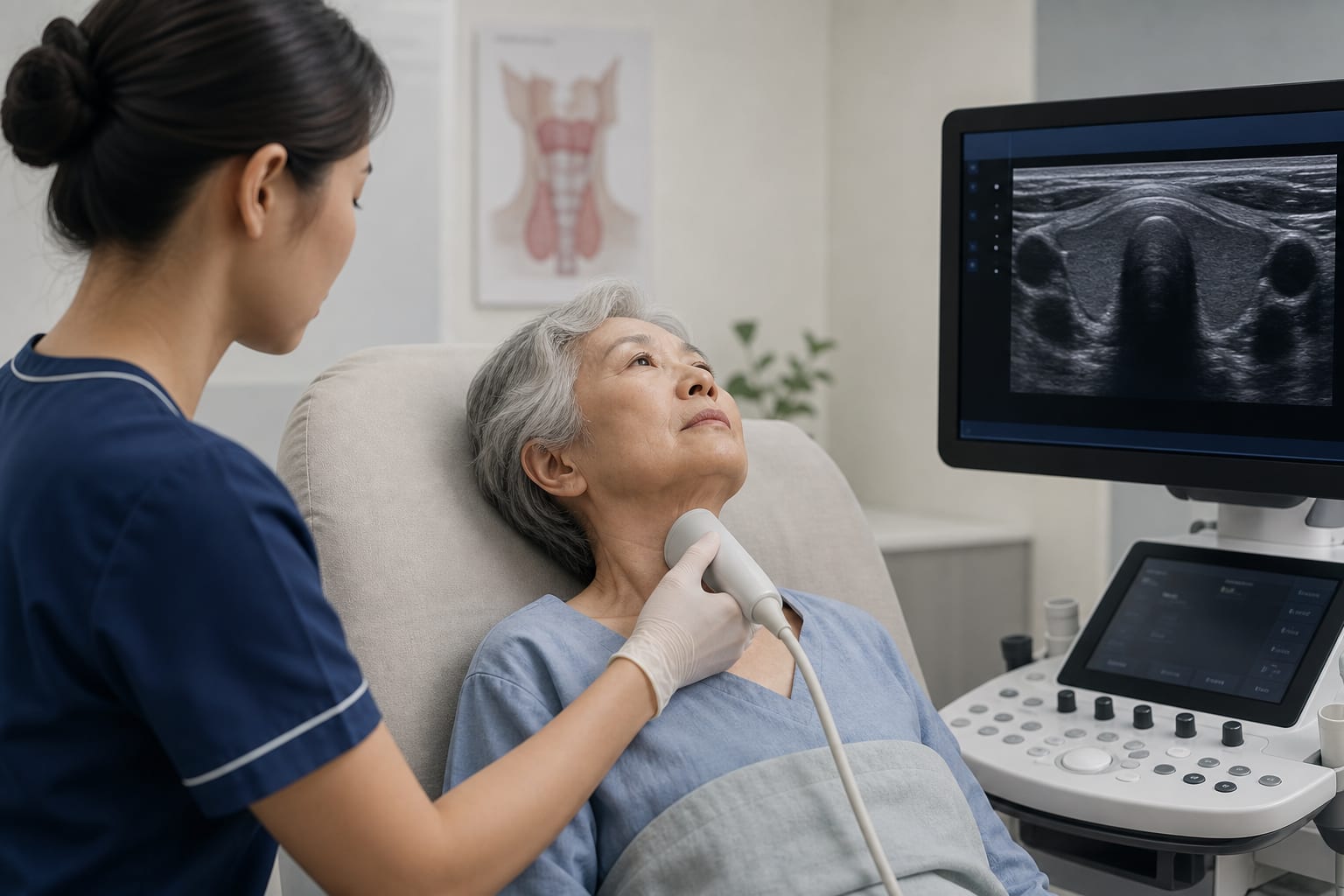
This study evaluates the effectiveness of ultrasound-guided, nursing-led swallowing rehabilitation in elderly patients with MIBG-positive medullary thyroid carcinoma following 131I-MIBG therapy.
Background
Medullary thyroid carcinoma (MTC) is a rare neuroendocrine malignancy that often leads to dysphagia and malnutrition, particularly in elderly patients. Traditional rehabilitation approaches have shown limited effectiveness, highlighting the need for innovative, technology-assisted strategies.
Data Highlights
Outcome Measure
Ultrasound Group
Conventional Group
P-value
FOIS Improvement
+2.1 ± 0.5
+1.2 ± 0.6
< 0.001
MDADI Improvement
+32%
+18%
< 0.001
EAT-10 Change
−6.8 ± 2.1
−3.4 ± 1.9
< 0.001
Aspiration Events
9%
15%
N/A
Pneumonia-related Readmissions
5%
15%
N/A
Key Findings
Ultrasound-guided rehabilitation resulted in greater FOIS improvement compared to conventional methods.
MDADI scores improved significantly more in the ultrasound group.
EAT-10 scores showed a greater reduction in the ultrasound group.
Suprahyoid muscle thickness increased by 24% in the ultrasound group.
Aspiration events decreased from 15% to 9% in the ultrasound group.
No adverse events related to rehabilitation were reported.
Clinical Implications
The findings indicate the potential for integrating ultrasound into swallowing rehabilitation for elderly patients with dysphagia following 131I-MIBG therapy.
Conclusion
Ultrasound-guided, nursing-led swallowing rehabilitation appears to improve swallowing function and quality of life in elderly patients with MIBG-positive MTC.