Conexiant’s news site is now MDSpire News. Learn more
Advertisement
AI may estimate chest fluid with similar efficacy to radiologists
A general-purpose AI model performed comparably to experienced readers, but substantial errors highlighted the limits of chest radiography for quantifying pleural fluid.
Clinical Report: AI may estimate chest fluid with similar efficacy to radiologists
Overview
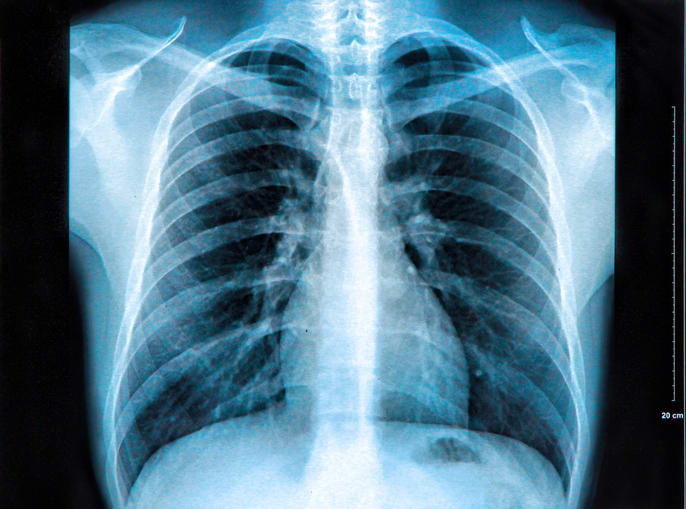
An artificial intelligence model demonstrated comparable accuracy to experienced radiologists in estimating pleural effusion volume on chest radiography. Both methods exhibited moderate agreement with computed tomography and substantial estimation errors.
Background
Accurate estimation of pleural effusion volume is crucial for clinical decision-making and management. Traditional imaging methods, such as chest radiography, may not provide precise volume assessments, leading to potential mismanagement of pleural effusions.
Data Highlights
Method
Mean Estimation Error (mL)
AUC for 300 mL Effusion
Radiologist 1
300
0.84
Radiologist 2
250
0.90
AI
264
0.85
Key Findings
AI and radiologists showed moderate agreement with CT-derived pleural effusion volumes.
Mean estimation errors were 300 mL for Radiologist 1, 250 mL for Radiologist 2, and 264 mL for AI.
All approaches exhibited positive bias in volume estimation.
Radiologist 2 had a higher AUC compared to AI for identifying clinically significant pleural effusions.
Estimation error was influenced by imaging and patient characteristics, including patient position.
Clinical Implications
Understanding the limitations of both AI and radiologist assessments is essential for accurate clinical decision-making.
Conclusion
This study highlights significant variability and estimation errors in estimating pleural effusion volume. Further research is needed to enhance the accuracy and reliability of AI applications in this domain.