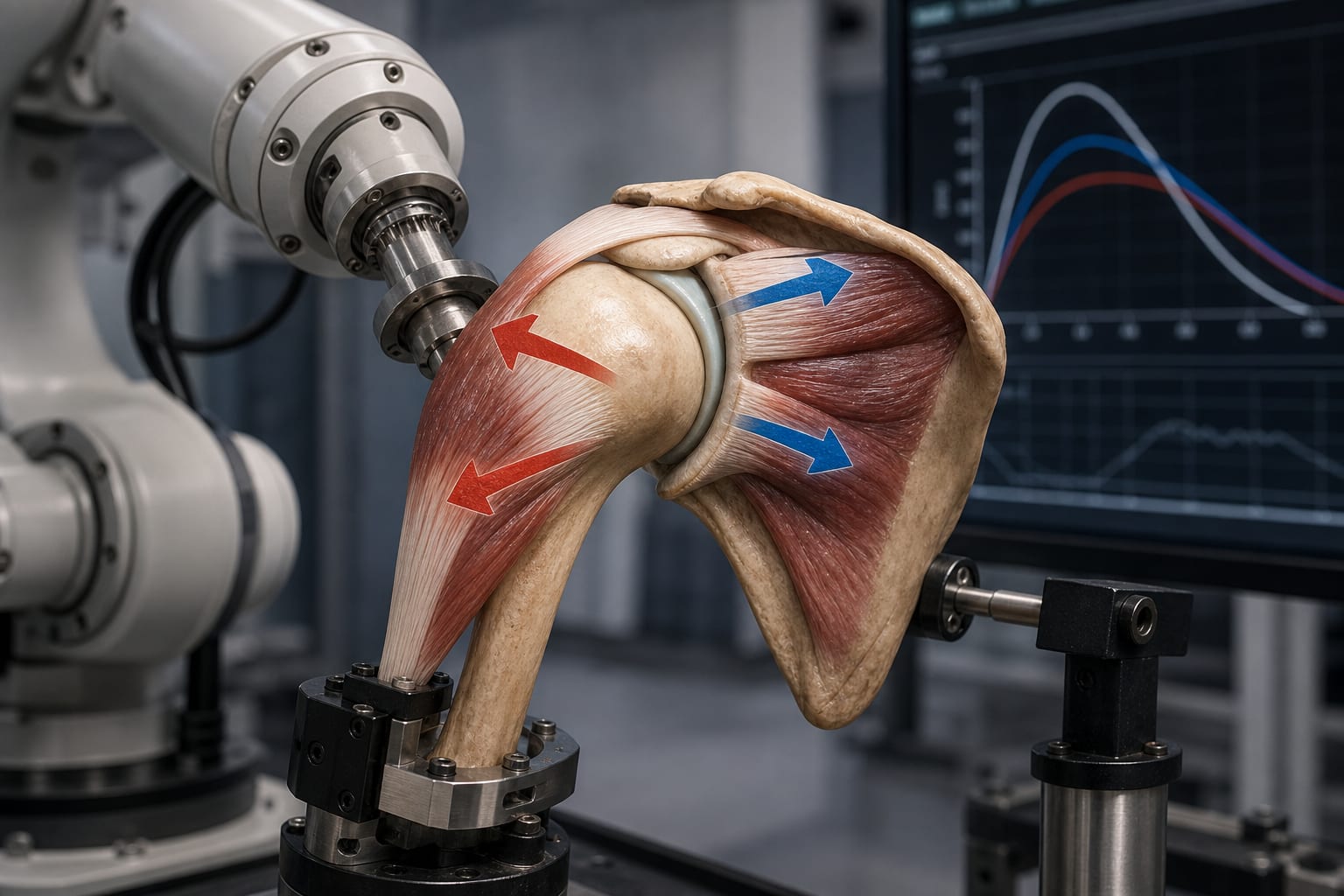
Simulated tears of antero-posterior rotator cuff force-couple and reduced glenoid concavity decrease anterior glenohumeral stability: a robot-assisted biomechanical analysis of a load and shift sequence - Report - MDSpire
Advertisement
Simulated tears of antero-posterior rotator cuff force-couple and reduced glenoid concavity decrease anterior glenohumeral stability: a robot-assisted biomechanical analysis of a load and shift sequence
Impact of Simulated Antero-Posterior Rotator Cuff Force-Couple on Stability
Overview
This study investigates the effects of rotator cuff tears and glenoid concavity on anterior glenohumeral stability using a robot-assisted biomechanical model.
Background
The glenohumeral joint's complex anatomy allows for a wide range of motion but also predisposes it to instability and dislocations. This study aims to clarify how specific rotator cuff tears and glenoid morphology influence joint stability.
Data Highlights
No numerical data provided in the source material.
Key Findings
Isolated tears of the subscapularis tendon have a greater negative impact on anterior glenohumeral stability than other single tendon tears.
Glenoid concavity plays a critical role as a passive stabilizer in conjunction with the dynamic stabilizers of the rotator cuff.
Low glenoid depth may increase the risk of rotator cuff tears due to higher forces required to maintain stability.
The study utilized a robot-assisted cadaver model to simulate real-life biomechanical conditions.
Clinical Implications
The findings highlight the importance of assessing the specific rotator cuff tendons involved in shoulder instability when planning surgical interventions. Understanding the role of glenoid concavity can guide treatment strategies to improve patient outcomes.
Conclusion
This biomechanical study underscores the significance of both rotator cuff integrity and glenoid morphology in maintaining anterior glenohumeral stability, informing surgical decision-making.