Chronic Abdominal Pain and Gastrointestinal Symptoms 12 Years After Primary Roux-en-Y Gastric Bypass: A Cross-Sectional Controlled Study - Report - MDSpire
Advertisement
Chronic Abdominal Pain and Gastrointestinal Symptoms 12 Years After Primary Roux-en-Y Gastric Bypass: A Cross-Sectional Controlled Study
Long-Term GI Symptoms and Chronic Abdominal Pain 12 Years After RYGB
Overview
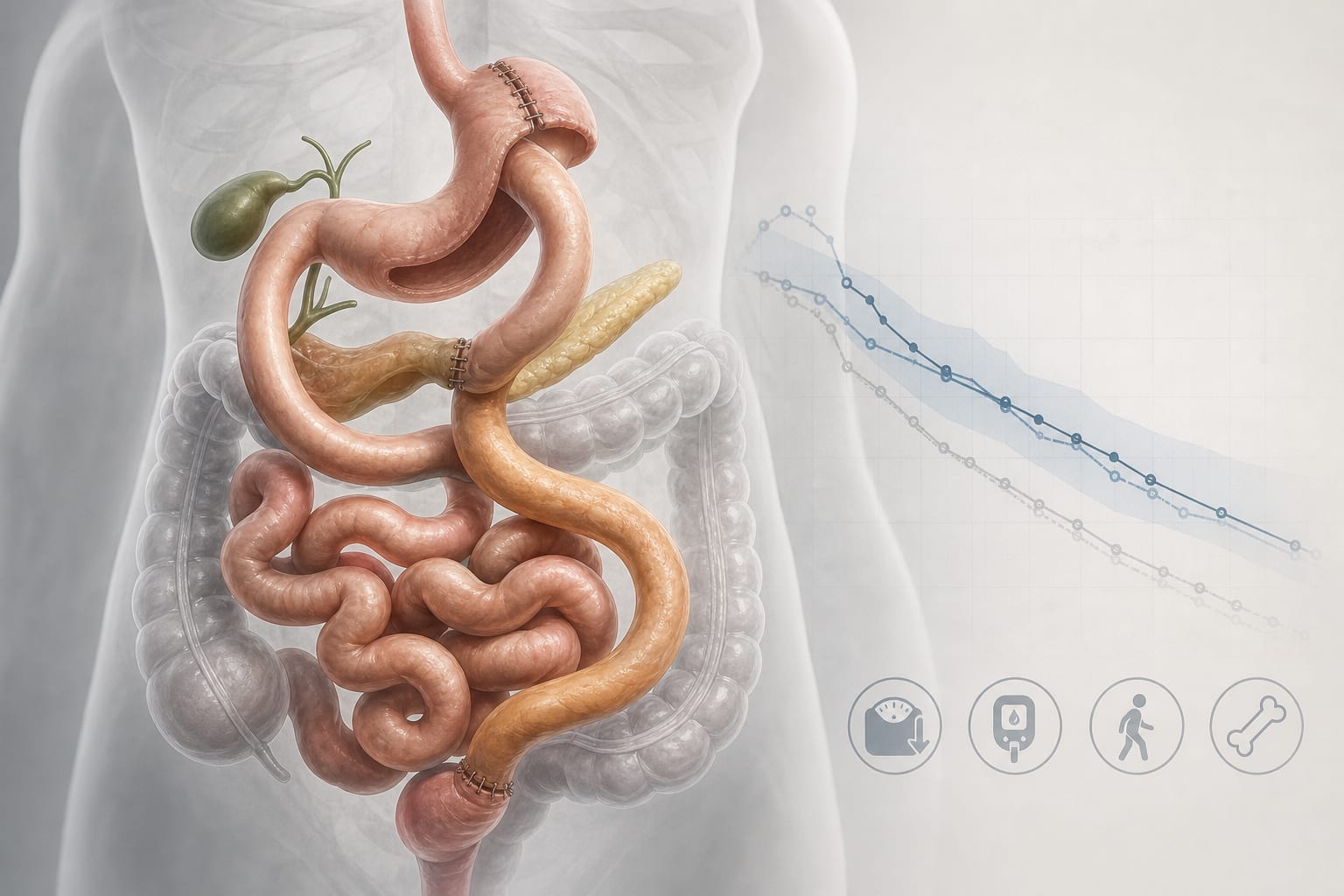
This cross-sectional study assessed chronic abdominal pain and gastrointestinal symptoms in patients 10–15 years after primary Roux-en-Y gastric bypass (RYGB) compared to a matched general population control group. Findings revealed a significantly higher prevalence of chronic abdominal pain and GI symptoms in the RYGB group, highlighting persistent long-term complications.
Background
Metabolic bariatric surgery, including Roux-en-Y gastric bypass (RYGB), is effective for severe obesity and related comorbidities. Despite overall health improvements, many RYGB patients experience adverse effects such as chronic abdominal pain, which remains unexplained in a substantial subset. Chronic abdominal pain and gastrointestinal symptoms are common in the general population but appear more frequent and severe after RYGB, potentially due to anatomical and physiological changes, surgical complications, or altered gut-brain interactions.
Data Highlights
Parameter
RYGB Patients (10–15 years post-op)
General Population Controls
Chronic abdominal pain prevalence
Significantly higher (exact % not provided)
Lower prevalence
GI symptoms (nausea, reflux, bloating, diarrhea, constipation)
Increased frequency and severity
Lower frequency and severity
Severe chronic abdominal pain
Sub-analysis performed; associated with other GI symptoms and risk factors
Not applicable
Key Findings
Chronic abdominal pain lasting more than 3 months and occurring at least weekly was more common in RYGB patients 10–15 years post-surgery compared to controls.
RYGB patients reported higher severity of gastrointestinal symptoms including nausea, reflux, bloating, diarrhea, and constipation.
Severe chronic abdominal pain was associated with additional GI symptoms and certain independent risk factors identified via multivariate logistic regression.
RYGB-induced anatomical and physiological changes likely contribute to persistent GI symptoms and chronic pain.
Despite thorough clinical evaluations, a significant proportion of chronic abdominal pain cases remain unexplained in RYGB patients.
Clinical Implications
Clinicians should be aware of the high prevalence of chronic abdominal pain and gastrointestinal symptoms in patients many years after RYGB surgery. Long-term follow-up should include assessment and management of these symptoms to improve patient quality of life. Understanding the multifactorial etiology, including possible gut-brain interaction disorders, is essential for targeted interventions.
Conclusion
Chronic abdominal pain and gastrointestinal symptoms remain significant long-term complications following primary RYGB, persisting up to 12 years postoperatively. These findings underscore the need for ongoing clinical attention and research into effective management strategies.
References
BAROBS Study / HUNT Study / 2018-2020 -- Long-Term GI Symptoms and Chronic Abdominal Pain Following Primary Roux-en-Y Gastric Bypass