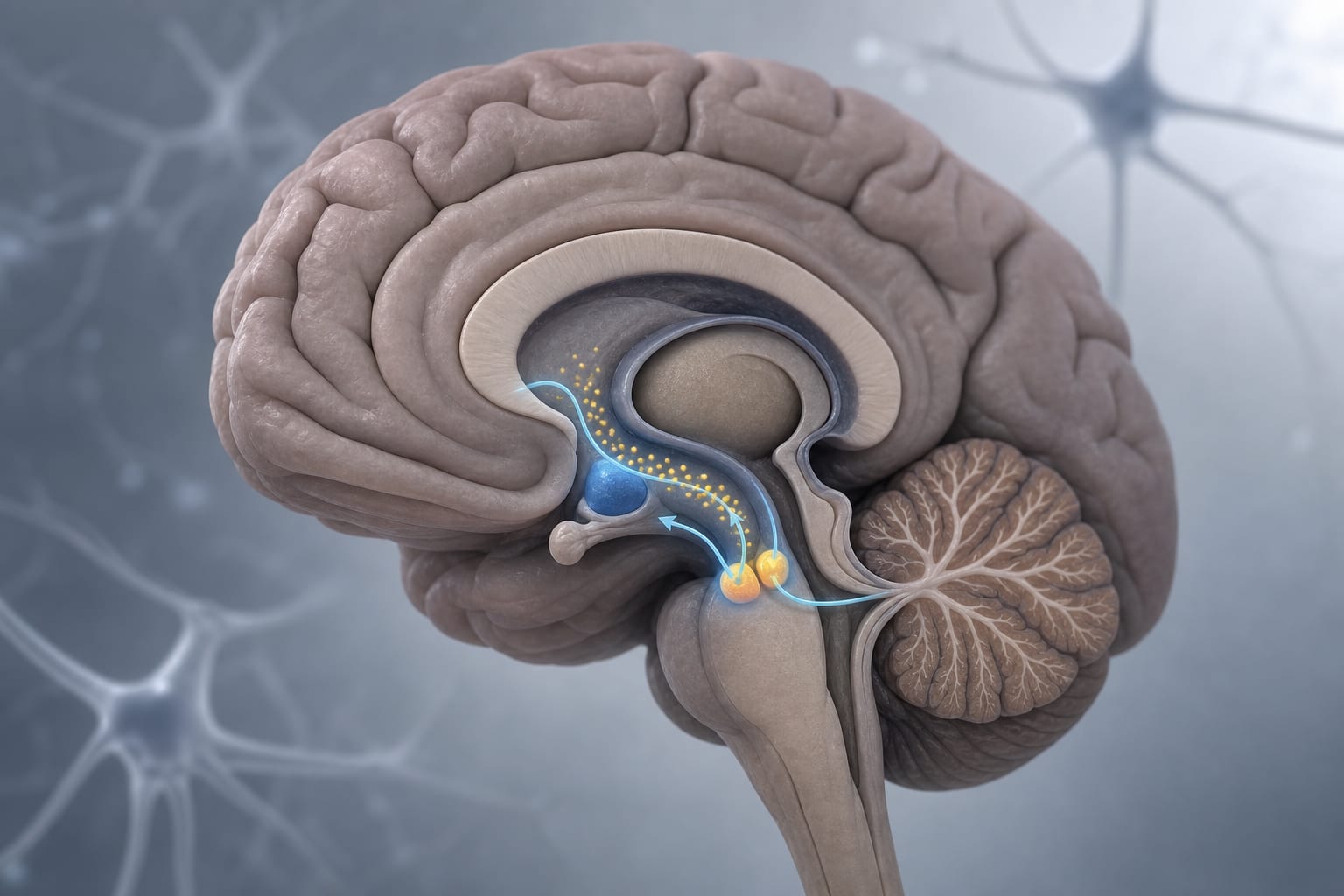
Clinical Report: Randomized Clinical Trial of Fixed-Dose Tavapadon in Patients with Early Parkinson's Disease
Overview
The TEMPO-1 trial evaluated the efficacy and safety of fixed doses of tavapadon in early Parkinson's disease, demonstrating significant improvements in motor function compared to placebo. Tavapadon, a selective D1/D5 partial agonist, may offer a promising alternative to traditional dopaminergic therapies.
Background
Parkinson's disease (PD) affects millions globally and is characterized by debilitating motor symptoms due to dopamine neuron loss. Current treatments, primarily levodopa, can lead to motor complications over time, highlighting the need for new therapies that improve motor function while minimizing adverse effects. Tavapadon represents a novel approach by selectively targeting D1/D5 receptors, potentially reducing the risk of common side effects associated with traditional dopamine agonists.
Data Highlights
No numerical data provided in the source material.
Key Findings
Tavapadon was tested in a phase 3, multicenter, double-blind, placebo-controlled trial involving adults aged 40 to 80 with early PD.
Participants were randomized to receive either 5 mg or 15 mg of tavapadon or placebo for 27 weeks.
The primary endpoint was the change in motor function, with tavapadon showing significant improvement over placebo.
Both doses of tavapadon were well tolerated, with an acceptable safety profile.
The trial adhered to ethical guidelines and included diverse international sites.
Clinical Implications
The findings suggest that tavapadon may be a viable option for managing early Parkinson's disease, potentially offering better motor control with fewer adverse effects than traditional therapies. Clinicians should consider tavapadon as part of the treatment plan for patients who are early in their disease course and may benefit from a novel dopaminergic approach.
Conclusion
Tavapadon demonstrates promise as a new treatment for early Parkinson's disease, with significant efficacy in improving motor symptoms and a favorable safety profile. Further studies are warranted to confirm these findings and establish long-term outcomes.
by Rajesh Pahwa, Elena Moro, Alberto J. Espay, Andrew Evans, Marie Saint-Hilaire, Diego Torres-Russotto, Raymond Sanchez, Matthew Leoni, Sridhar Duvvuri, Cari Combs, Ih Chang, Stacey Tringali, Joey Boiser, Cindy Zadikoff, Angelo Antonini