Editorial: Clinical and surgical perspectives in sublobar resection for lung cancer
-
By
-
Takuya Fujita
-
April 1, 2026
-
0 min
Clinical and Surgical Insights on Sublobar Resection in Lung Cancer
Overview
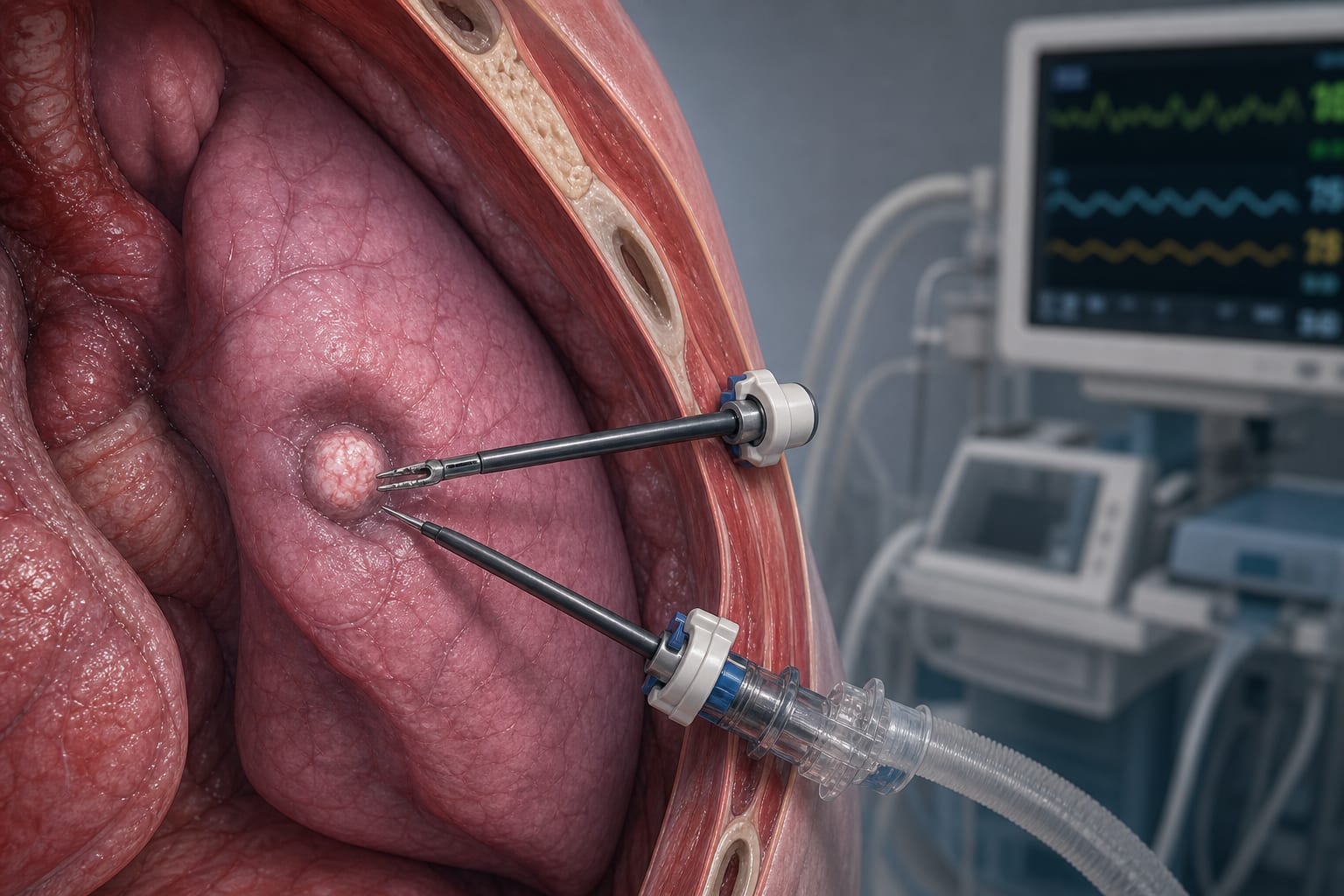
This editorial summarizes key findings from five studies on sublobar resection for lung cancer, highlighting improved postoperative quality of life, prognostic lymph node metrics, and novel diagnostic biomarkers. The research underscores the potential benefits of sublobar resection and adjunct therapies in selected patient populations.
Background
Sublobar resection is an increasingly considered surgical option for early-stage lung cancer, offering a less extensive alternative to lobectomy. Understanding its clinical outcomes, prognostic factors, and integration with adjunct therapies is critical for optimizing patient management. Recent studies have explored quality of life, survival benefits, and predictive biomarkers to refine surgical decision-making. These insights aim to enhance personalized treatment strategies in non-small cell lung cancer (NSCLC).
Data Highlights
| Study | Sample Size | Key Findings |
|---|---|---|
| Magouliotis et al. | 1,149 cases | Sublobar resection showed significantly better postoperative quality of life than lobectomy. |
| Zhu et al. | Not specified | Postoperative radiotherapy improved overall survival in pN2 stage IIIA NSCLC, especially with multiple lymph node metastases. |
| Huang et al. (LODDS study) | Stage I-IIIA NSCLC patients | LODDS outperformed nPLN and LNR in prognostic prediction after lobectomy or pneumonectomy. |
| Ye et al. | Clinically stage IA lung adenocarcinoma | CT-based radiomic model accurately predicted airspace diffusion (STAS) using AI. |
| Huang et al. (lymph node metrics) | NSCLC patients post complete resection | NLN, NPLN, and LNR were independent prognostic indicators; NLN model showed slightly superior predictive value. |
Key Findings
- Sublobar resection is associated with better postoperative quality of life compared to lobectomy.
- Postoperative radiotherapy may improve overall survival in pN2 stage IIIA NSCLC patients with multiple lymph node metastases.
- Log odds ratio for positive lymph nodes (LODDS) provides superior prognostic prediction over other lymph node staging systems in NSCLC.
- Non-invasive CT-based radiomic biomarkers can effectively predict airspace diffusion (STAS) in early-stage lung adenocarcinoma.
- Negative lymph node count (NLN), positive lymph node count (NPLN), and lymph node ratio (LNR) independently predict survival outcomes, with NLN showing the best prognostic value.
Clinical Implications
Sublobar resection should be considered a viable surgical option for selected lung cancer patients due to its favorable impact on quality of life. Incorporating postoperative radiotherapy may benefit patients with extensive lymph node involvement. Utilizing advanced lymph node metrics and radiomic biomarkers can enhance prognostic accuracy and guide personalized treatment planning. Further prospective studies are warranted to validate these findings and optimize clinical protocols.
Conclusion
The collected research advances understanding of sublobar resection's role in lung cancer management, emphasizing improved quality of life, prognostic tools, and adjunct therapies. These insights promise to inform and improve future clinical practice.
References
- Magouliotis et al. -- Systematic review comparing lobectomy, sublobar resection, and stereotactic body radiotherapy
- Zhu et al. -- Impact of postoperative radiotherapy on survival in pN2 stage IIIA NSCLC
- Huang et al. -- Prognostic value of LODDS in NSCLC patients
- Ye et al. -- CT-based radiomic model for predicting STAS in lung adenocarcinoma
- Huang et al. -- Comparative evaluation of lymph node metrics in NSCLC prognosis
This content is an AI-generated, fully rewritten summary based on a published scholarly article. It does not reproduce the original text and is not a substitute for the original publication. Readers are encouraged to consult the source for full context, data, and methodology.