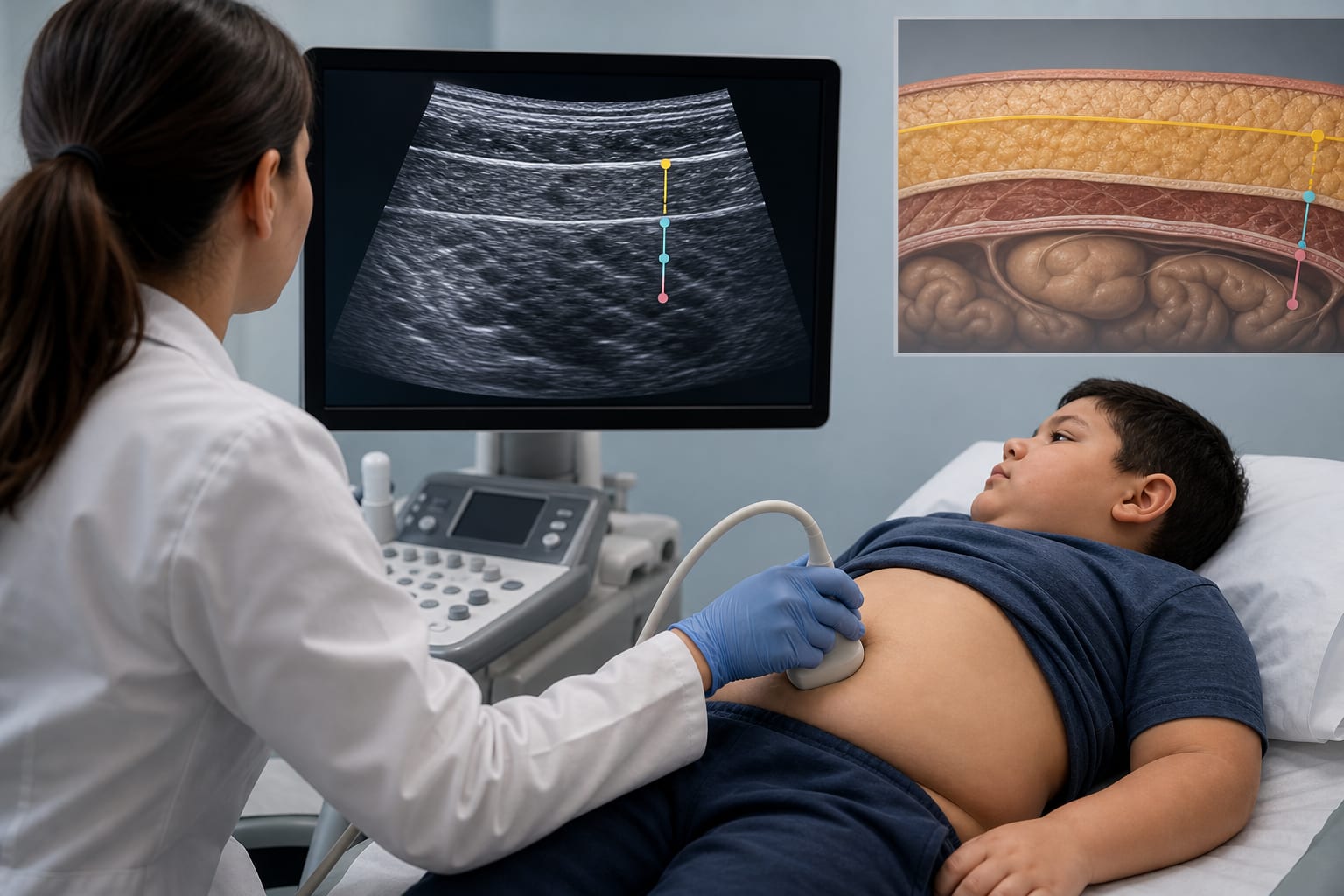
Clinical Report: Ultrasound Assessment of Omental Fat in Pediatric Obesity
Overview
This study evaluates the Eco-Obesity ultrasound protocol's effectiveness in assessing omental fat as a marker of metabolic risk in pediatric patients with obesity. Findings indicate that omental fat thickness correlates with various metabolic parameters, highlighting its potential role in early risk stratification.
Background
Childhood obesity is a significant public health issue, with rising prevalence rates contributing to adult obesity. Understanding the distribution of visceral fat, particularly omental fat, is crucial as it is linked to increased cardiometabolic risk. Current assessment methods often fail to differentiate between visceral fat compartments, limiting effective risk stratification in pediatric populations.
Data Highlights
Parameter
Value
Mean Age
14.0 ± 2.6 years
Mean BMI SDS
2.8 ± 1.1
Obesity Classification
71.3% Obese, 28.7% Overweight
Hepatic Steatosis
28.3%
Omental Fat Thickness (Males)
40.5 mm
Omental Fat Thickness (Females)
27.3 mm
Key Findings
Omental fat thickness is significantly associated with anthropometric obesity indices and metabolic parameters.
Sex-specific differences in omental fat thickness were observed, with males having greater thickness than females.
ROC analysis identified optimal cut-offs for omental fat thickness to predict metabolic syndrome: 34.6 mm for males and 19.6 mm for females.
28.3% of the cohort presented with ultrasound-diagnosed hepatic steatosis.
Omental fat was the only compartment consistently linked to insulin resistance and LDL cholesterol levels.
Clinical Implications
The Eco-Obesity ultrasound protocol may provide a valuable tool for clinicians to assess visceral fat distribution in pediatric patients. Identifying omental fat thickness can aid in early detection of metabolic risks, allowing for timely interventions.
Conclusion
Omental fat serves as a critical indicator of metabolic risk in pediatric obesity, necessitating the establishment of pediatric-specific cut-off values for effective clinical assessment.