Machine learning-assisted prognosis prediction and surgical decision-making for glioblastoma: perceived benefits and concerns of patients, caregivers, and neurosurgeons - Report - MDSpire
Conexiant’s news site is now MDSpire News. Learn more
Advertisement
Utilizing Machine Learning for Prognostic Assessment and Surgical Choices in Glioblastoma: Insights and Concerns from Patients, Caregivers, and Neurosurgeons
Clinical Report: Utilizing Machine Learning for Prognostic Assessment in Glioblastoma
Overview
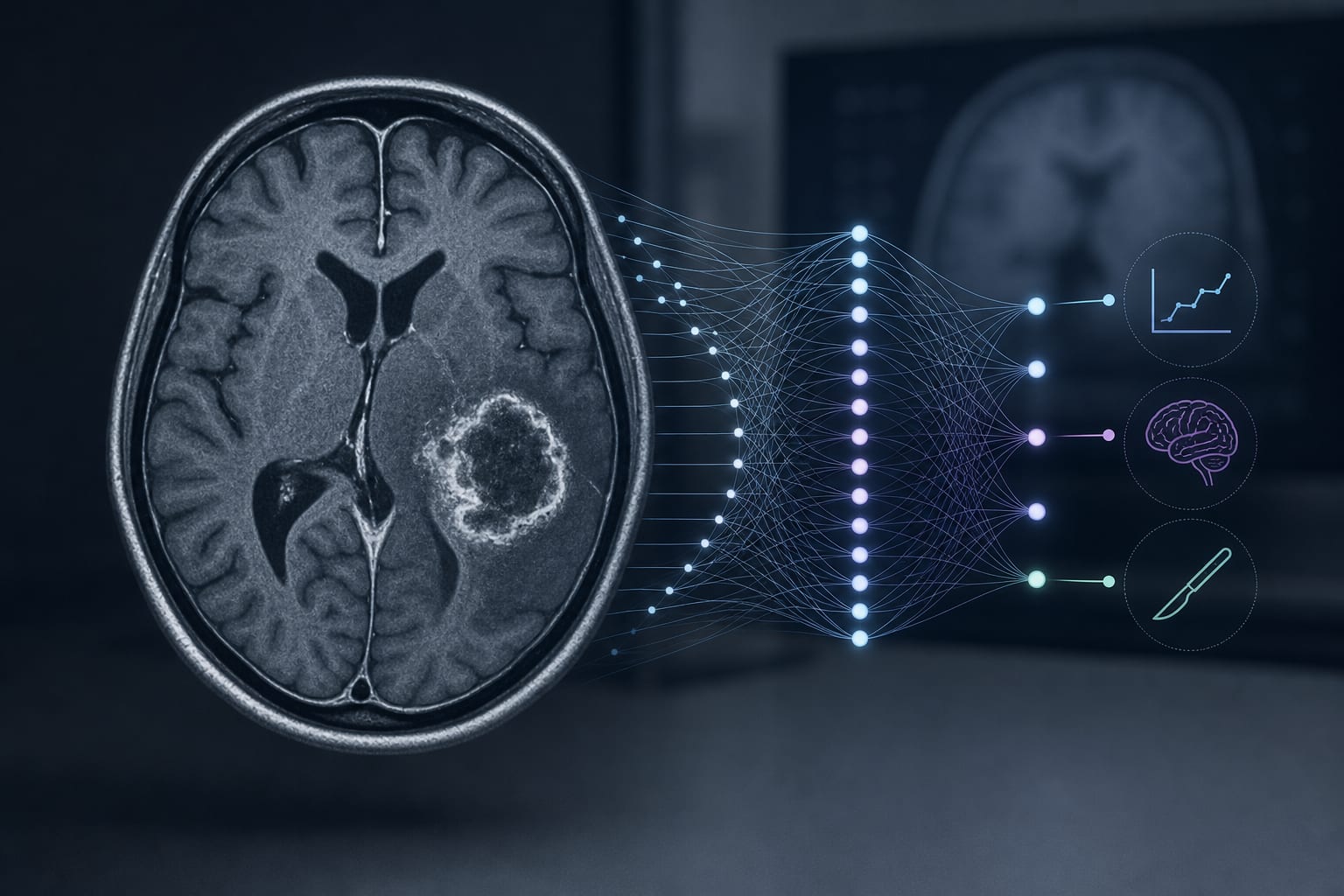
This study explores the perspectives of glioblastoma patients, caregivers, and neurosurgeons on a machine learning model designed for prognostic assessment and surgical decision-making. Participants recognized the model's ability to process extensive patient data but expressed concerns regarding its accuracy and implications for clinical judgment.
Background
Glioblastoma (GBM) is the most aggressive primary brain tumor in adults, with a median survival of only 9 to 16 months despite treatment. Traditional prognostic methods have limitations in capturing the biological heterogeneity of GBM, leading to uncertainty in treatment planning. Machine learning (ML) models have emerged as tools to enhance prognostic precision.
Data Highlights
No numerical data or trial data presented in the article.
Key Findings
Participants acknowledged the ML model's ability to process extensive patient data.
Concerns were raised about potential inaccuracies or biases in the model's predictions.
Participants worried about the model replacing clinical judgment of neurosurgeons.
Some patients and caregivers expressed fears about the model's early development stage affecting hope and understanding.
Engaging multiple stakeholders is crucial for the integration of ML in clinical decision-making.
Clinical Implications
Understanding stakeholder perspectives is important when implementing ML models in clinical settings. Clinicians should be aware of the potential for biases in ML outputs.
Conclusion
Stakeholder engagement is essential to navigate the complexities of using ML in clinical practice.