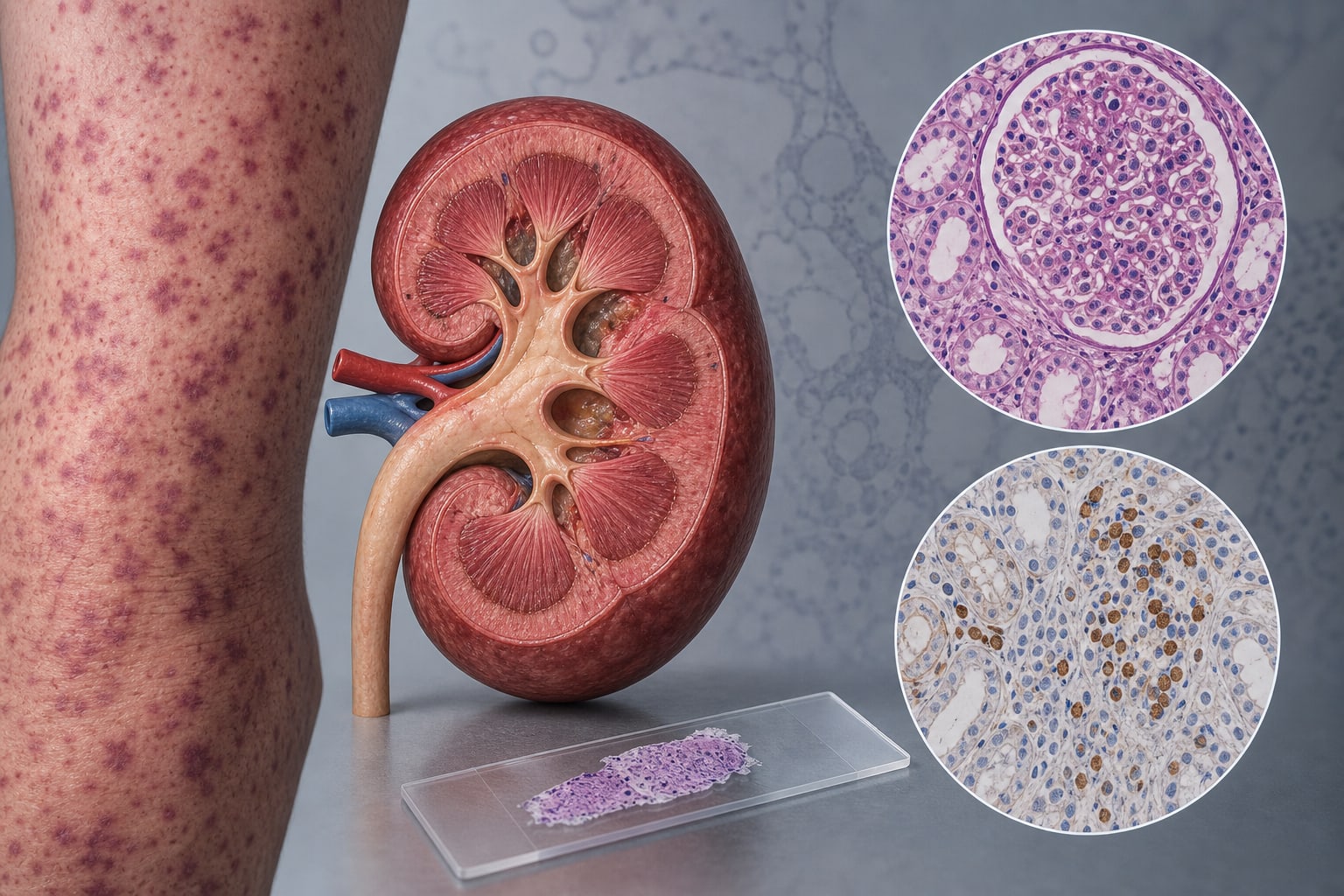
Clinical Report: Initial Presentation of Purpura in IgG4-RD and SLE
Background
Purpura can indicate a variety of underlying conditions, making its etiology complex, especially when it presents as an initial symptom. IgG4-related disease is a systemic fibro-inflammatory disorder that can complicate the clinical picture of systemic lupus erythematosus, which is known for its renal involvement.
Data Highlights
No numerical or trial data provided in the source material.
Key Findings
A 61-year-old man presented with purpura as the initial symptom of concurrent IgG4-related disease and systemic lupus erythematosus.
Laboratory tests revealed normal platelet counts and coagulation function, but persistent hematuria and proteinuria.
The patient was treated with prednisone, hydroxychloroquine, and mycophenolate mofetil.
Purpura resolved within one month of treatment, and urine protein testing turned negative.
During an 8-month follow-up, sustained clinical improvement was observed.
This case describes a renal pathological overlap between IgG4-related tubulointerstitial injury and lupus-induced mesangioproliferative glomerulonephritis.
Clinical Implications
Clinicians should consider the possibility of concurrent IgG4-related disease in patients presenting with purpura, especially when accompanied by renal symptoms. Early diagnosis and a tailored treatment approach may lead to significant clinical improvement.
Conclusion
This case highlights purpura as a potential initial manifestation of concurrent IgG4-related disease and systemic lupus erythematosus.