Impact of serum potassium levels on success of electrical cardioversion in atrial fibrillation - Report - MDSpire

Impact of serum potassium levels on success of electrical cardioversion in atrial fibrillation

  • By

  • Manuel J. Vogel

  • Kilian Hacker

  • Jonas Herting

  • Moritz T. Huttelmaier

  • Stefan Frantz

  • Thomas H. Fischer

  • May 26, 2026

  • 0 min

Share

Clinical Report: Influence of Serum Potassium on ECV Efficacy in Atrial Fibrillation

Overview

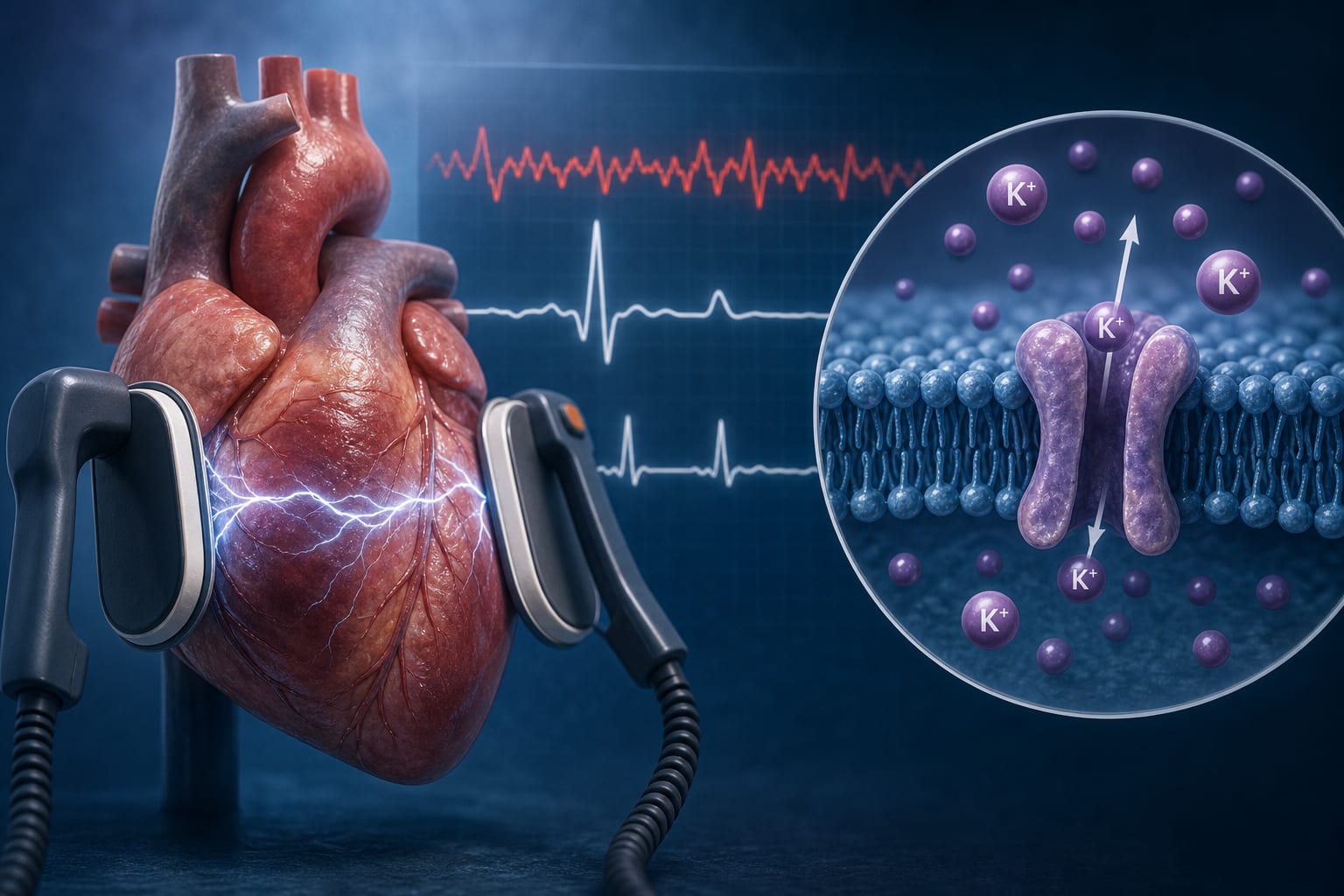
This study evaluates the impact of serum potassium levels on the immediate success of electrical cardioversion (ECV) in patients with atrial fibrillation (AFib). It finds no significant advantage of high-normal potassium levels over low-normal levels in achieving successful rhythm conversion.

Background

Electrical cardioversion is a common procedure for restoring sinus rhythm in patients with atrial fibrillation and flutter. Understanding the factors that influence the success of this procedure is crucial for optimizing patient outcomes. Serum potassium levels are thought to play a role in myocardial excitability, yet evidence regarding their effect on ECV success remains limited and inconsistent.

Data Highlights

No numerical data available in the provided source material.

Key Findings

  • Serum potassium levels were categorized into low-normal (3.5-4.4 mmol/l) and high-normal (4.5-5.5 mmol/l).
  • The study was a retrospective observational analysis conducted at a single center.
  • No significant difference in immediate ECV success rates was observed between low-normal and high-normal potassium groups.
  • Immediate ECV success was defined as the presence of sinus rhythm post-procedure.
  • Short-term success included maintenance of sinus rhythm until discharge.

Clinical Implications

Clinicians should be aware that elevating serum potassium levels within the normal range may not enhance the success of electrical cardioversion in atrial fibrillation. This finding suggests that routine pre-procedural potassium adjustments may not be necessary for improving immediate outcomes.

Conclusion

The study indicates that serum potassium levels within the normal range do not significantly influence the immediate success of electrical cardioversion in atrial fibrillation. Further research may be needed to explore other factors affecting ECV outcomes.

Related Resources & Content

  1. Author(s)/Org, Source, Year -- Title
  2. Journal of Cardiac Failure — Targeted Potassium Levels, Mineralocorticoid Receptor Antagonism, and Cardiovascular Outcomes in Patients With High Arrhythmic Risk: A Reinterpretation of the POTCAST Trial
  3. Frontiers in Medicine — The association between the sodium-potassium ratio and ICU mortality in cardiac arrest patients: an analysis of the eICU database
  4. Journal of Cardiac Failure — Patiromer for Patients With Heart Failure at Risk of Hyperkalemia: CARE-HK in HF Registry
  5. Clinical Research in Cardiology — Comparison of Edoxaban and Warfarin in Patients with Prior Vitamin K Antagonist Experience and Naïve Individuals from the ENSURE-AF Randomized Trial on Atrial Fibrillation Cardioversion
  6. 2024 Essential Messages from ESC Guidelines
  7. Targeted Potassium Levels and Cardiovascular Outcomes
  8. Sodium-Potassium Ratio and ICU Mortality
  9. 26-A-16394-ACC IS HIGHER ENERGY BETTER? HIGH FIXED VS ESCALATING CARDIOVERSION FOR PERSISTENT ATRIAL FIBRILLATION: A GRADE-ASSESSED META-ANALYSIS OF RANDOMIZED TRIALS WITH TRIAL SEQUENTIAL ANALYSIS | JACC
  10. (PDF) Impact of serum potassium levels on success of electrical cardioversion in atrial fibrillation

Original Source(s)

Related Content