Identification of predictors of the ovarian response to clomiphene citrate in infertile women with polycystic ovary syndrome: A post-hoc analysis of a randomized controlled trial - Report - MDSpire
Conexiant’s news site is now MDSpire News. Learn more
Advertisement
Predictors of Ovarian Response to Clomiphene Citrate in Infertile Women with Polycystic Ovary Syndrome: Insights from a Post-Hoc Analysis of a Randomized Controlled Trial
Predictors of Ovarian Response to Clomiphene Citrate in Infertile Women
Overview
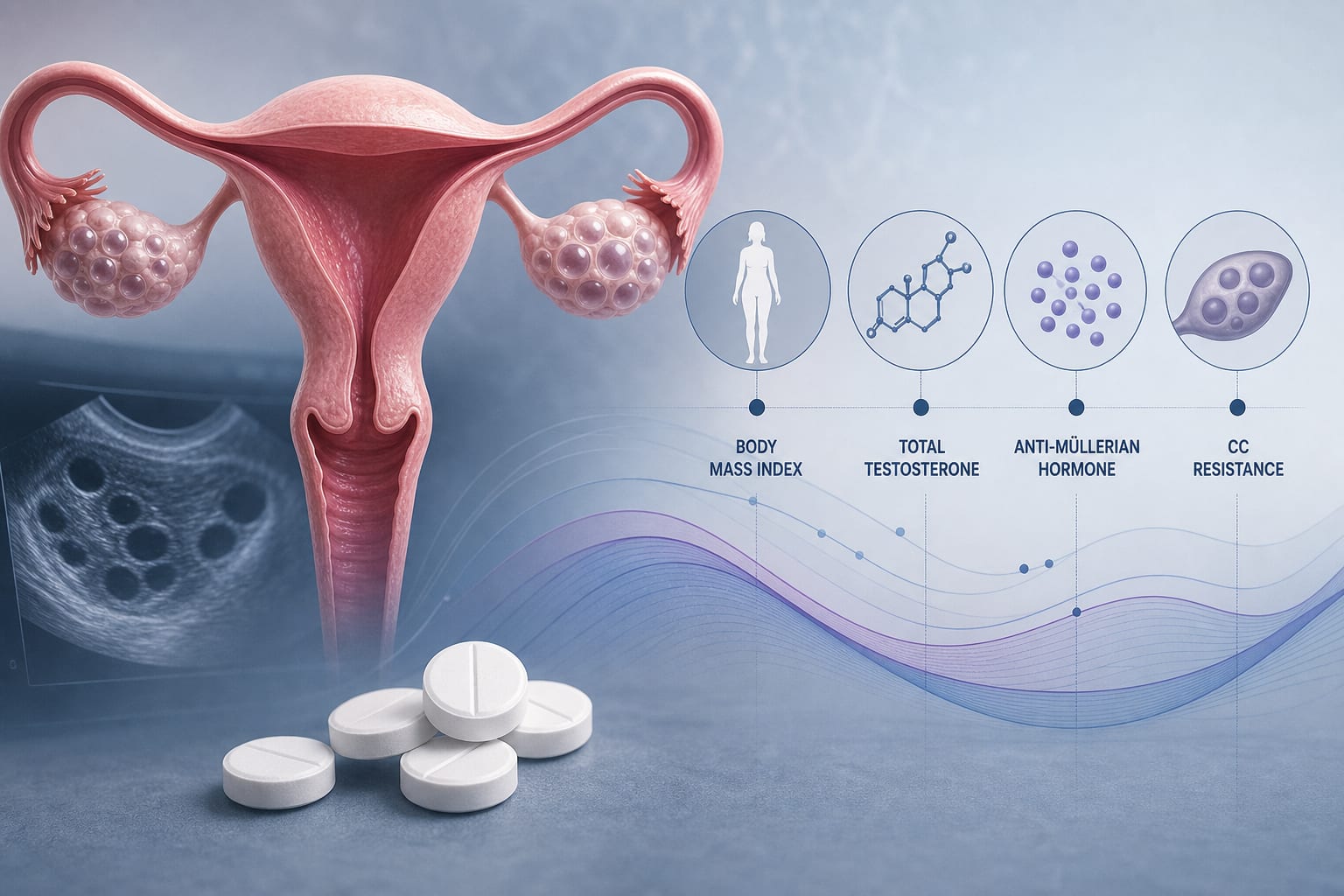
This study identifies baseline predictors of clomiphene citrate (CC) resistance in women with polycystic ovary syndrome (PCOS). Key predictors include Body Mass Index (BMI), Total Testosterone (TT), and Anti-Müllerian Hormone (AMH).
Background
Polycystic ovary syndrome (PCOS) is a prevalent endocrine disorder affecting reproductive-age women and is a leading cause of anovulatory infertility. Clomiphene citrate (CC) is commonly used for ovulation induction, but approximately 20% of PCOS patients exhibit resistance to this treatment. Identifying predictors of CC resistance can facilitate timely alternative therapeutic strategies.
Data Highlights
Predictor
Odds Ratio (OR)
Total Testosterone (TT)
2.73 per 1-unit
Body Mass Index (BMI)
2.49 per 1-SD
CC Resistance Rate
6.8%
Key Findings
CC resistance was observed in 6.8% of participants.
TT was identified as the strongest individual predictor of CC resistance.
BMI was noted as the most significant modifiable risk factor.
The dual-factor model using TT and BMI showed an AUC of 0.801.
The three-factor model including AMH had an AUC of 0.818.
Clinical Implications
The identification of TT and BMI as predictors of CC resistance can guide clinicians in personalizing treatment plans for women with PCOS.
Conclusion
This study provides insights into the predictors of ovarian response to CC in PCOS.