Effects of HIIT and MICT on cardiovascular function in essential hypertension: roles of inflammation, oxidative stress, and RAS axis - Report - MDSpire
Advertisement
Impact of HIIT versus MICT on cardiovascular health in essential hypertension: examining inflammation, oxidative stress, and the RAS pathway
Clinical Report: Impact of HIIT versus MICT on cardiovascular health in essential hypertension
Overview
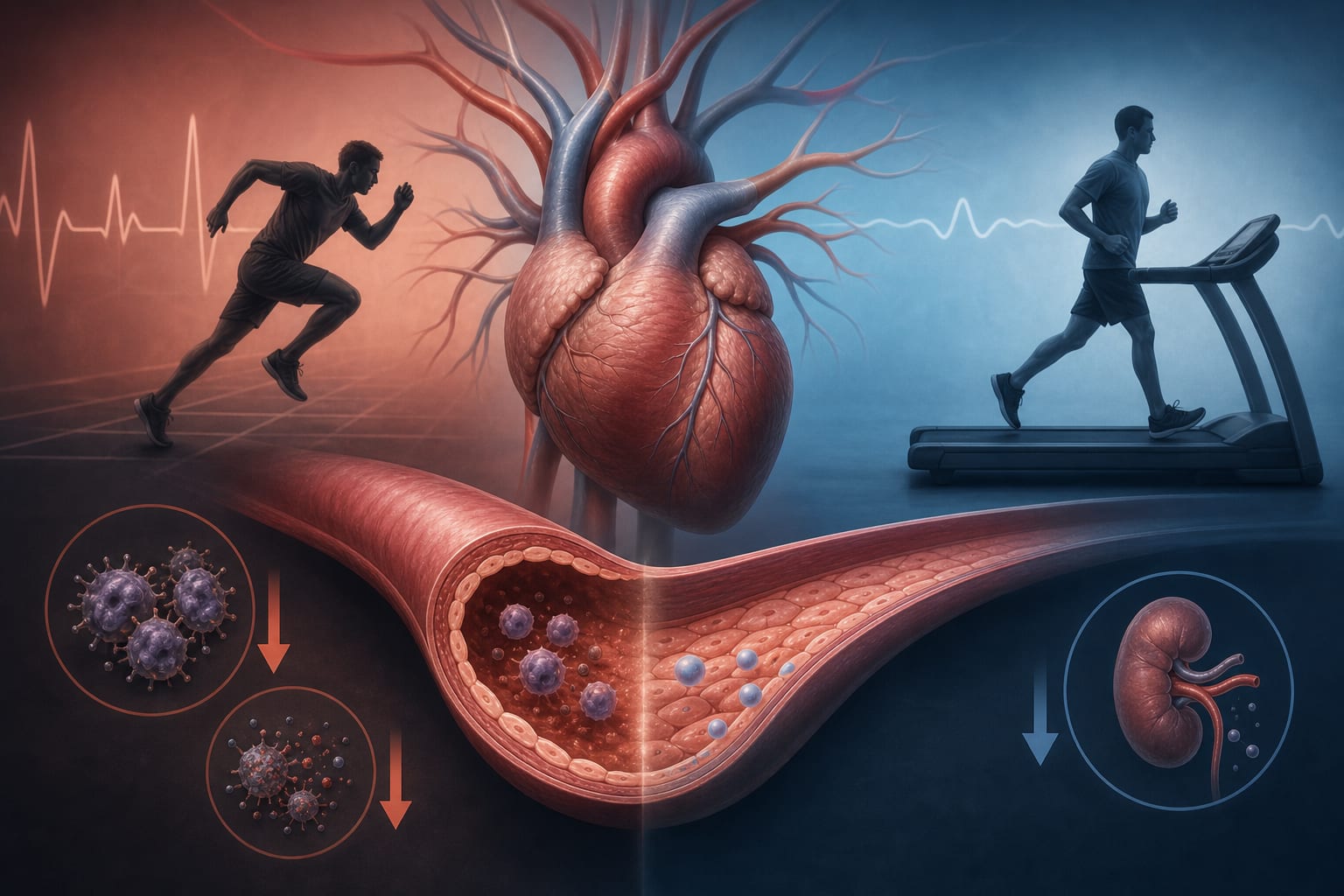
This study compares the effects of High Intensity Interval Training (HIIT) and Moderate Intensity Continuous Training (MICT) on cardiovascular health in patients with essential hypertension. HIIT demonstrated a greater improvement in flow-mediated dilation compared to MICT, while both modalities effectively reduced systolic blood pressure and influenced neurohumoral factors.
Background
Essential hypertension (EH) is a prevalent condition that can lead to serious cardiovascular complications if not managed effectively. This study aims to clarify the comparative benefits of HIIT and MICT in managing EH.
HIIT resulted in a greater improvement in FMD compared to MICT.
Both HIIT and MICT significantly lowered systolic blood pressure in patients with EH.
HIIT showed changes in nitric oxide, endothelin-1, and C-reactive protein.
No significant differences were found between HIIT and MICT regarding the reduction of angiotensin II and norepinephrine.
HIIT demonstrated efficacy in arterial stiffness and cardiac diastolic function.
Clinical Implications
Both exercise modalities are beneficial for lowering blood pressure and regulating neurohumoral factors.
Conclusion
HIIT and MICT both provide cardiovascular benefits in patients with essential hypertension, with HIIT showing improvements in specific vascular functions.