Clinical Report: Evaluating the Diagnostic Accuracy of Shear-Wave Elastography
Overview
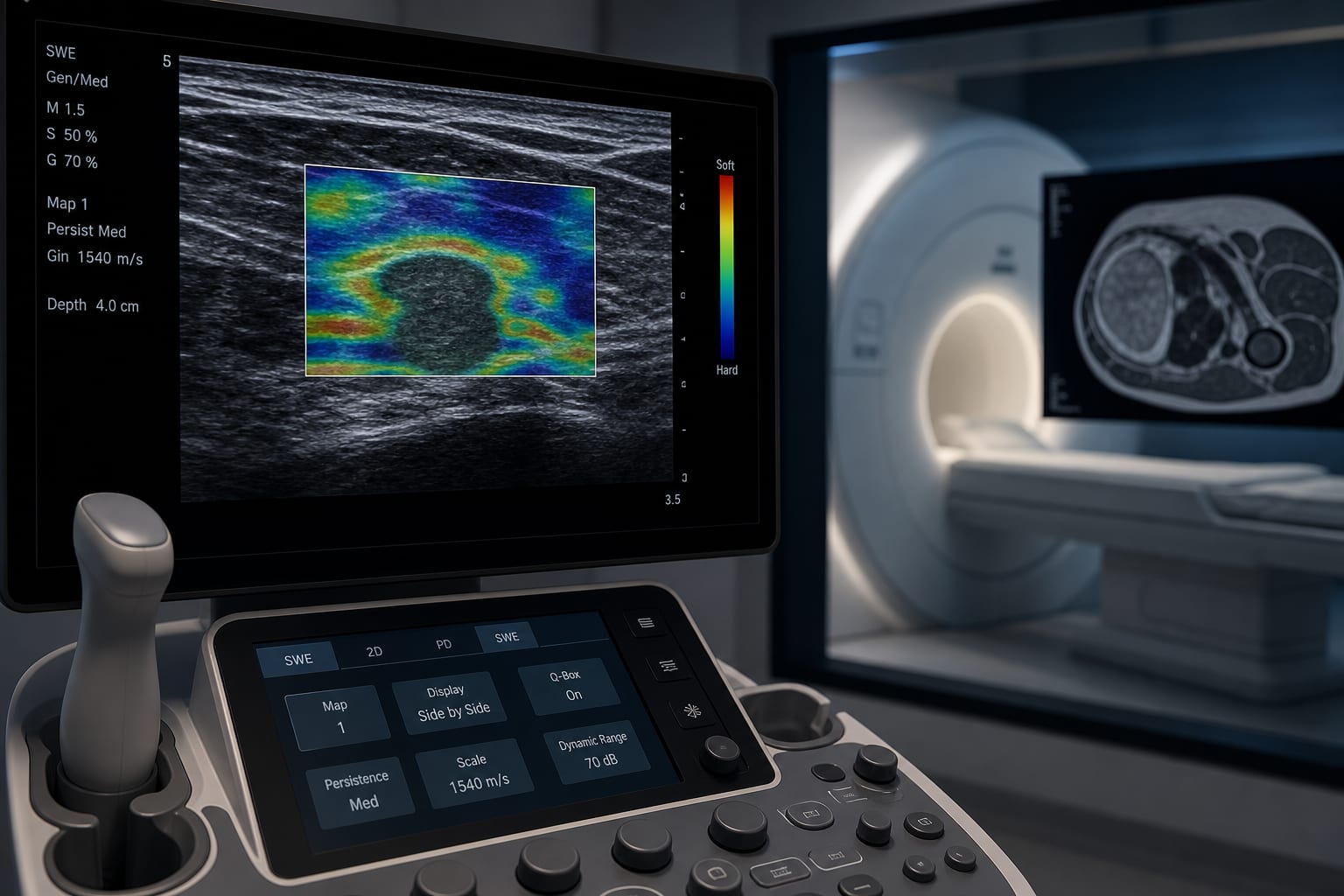
This systematic review evaluates the diagnostic accuracy of shear-wave elastography (SWE) for differentiating benign and malignant musculoskeletal soft-tissue tumors. The findings indicate high reproducibility of SWE.
Background
Accurate differentiation between benign and malignant soft-tissue tumors is crucial for timely oncologic care. Shear-wave elastography (SWE) is a technique that measures tissue stiffness, which may aid in this differentiation. Its diagnostic performance compared to established modalities like ultrasonography (US) and magnetic resonance imaging (MRI) is still being evaluated.
Data Highlights
Study Characteristics
Findings
Number of Studies
10
Total Lesions
1,335
Malignant Lesions Percentage
22-41%
Reproducibility (ICC)
> 0.85 in 4 studies
AUC Range
0.57-0.87
Key Findings
SWE demonstrated high reproducibility with an ICC > 0.85 in four studies.
The diagnostic performance of SWE varied widely, with AUC ranging from 0.57 to 0.87.
SWE showed higher specificity in benign-appearing or superficial lesions compared to US in some studies.
SWE was less effective in distinguishing lipomatous or deep lesions from malignancy.
MRI remained superior to SWE in most direct comparisons, with AUC values between 0.85 and 0.90.
Certainty of evidence was rated moderate for superficial lesions and low for deep or lipomatous tumors.
Clinical Implications
SWE may be useful for evaluating superficial, non-fatty lesions, but its diagnostic utility varies across different lesion types.
Conclusion
SWE shows excellent reproducibility, but its diagnostic utility is inconsistent across lesion types.