Transanal endoscopic microsurgery was associated with higher recurrence rate in both low- and high-risk T1 rectal cancer compared to surgical resection - Report - MDSpire
Advertisement
Transanal endoscopic microsurgery was associated with higher recurrence rate in both low- and high-risk T1 rectal cancer compared to surgical resection
Clinical Report: TEM Shows Increased Recurrence Rates in T1 Rectal Cancer
Overview
Revise to specify the comparison basis for recurrence rates between TEM and traditional resection.
Background
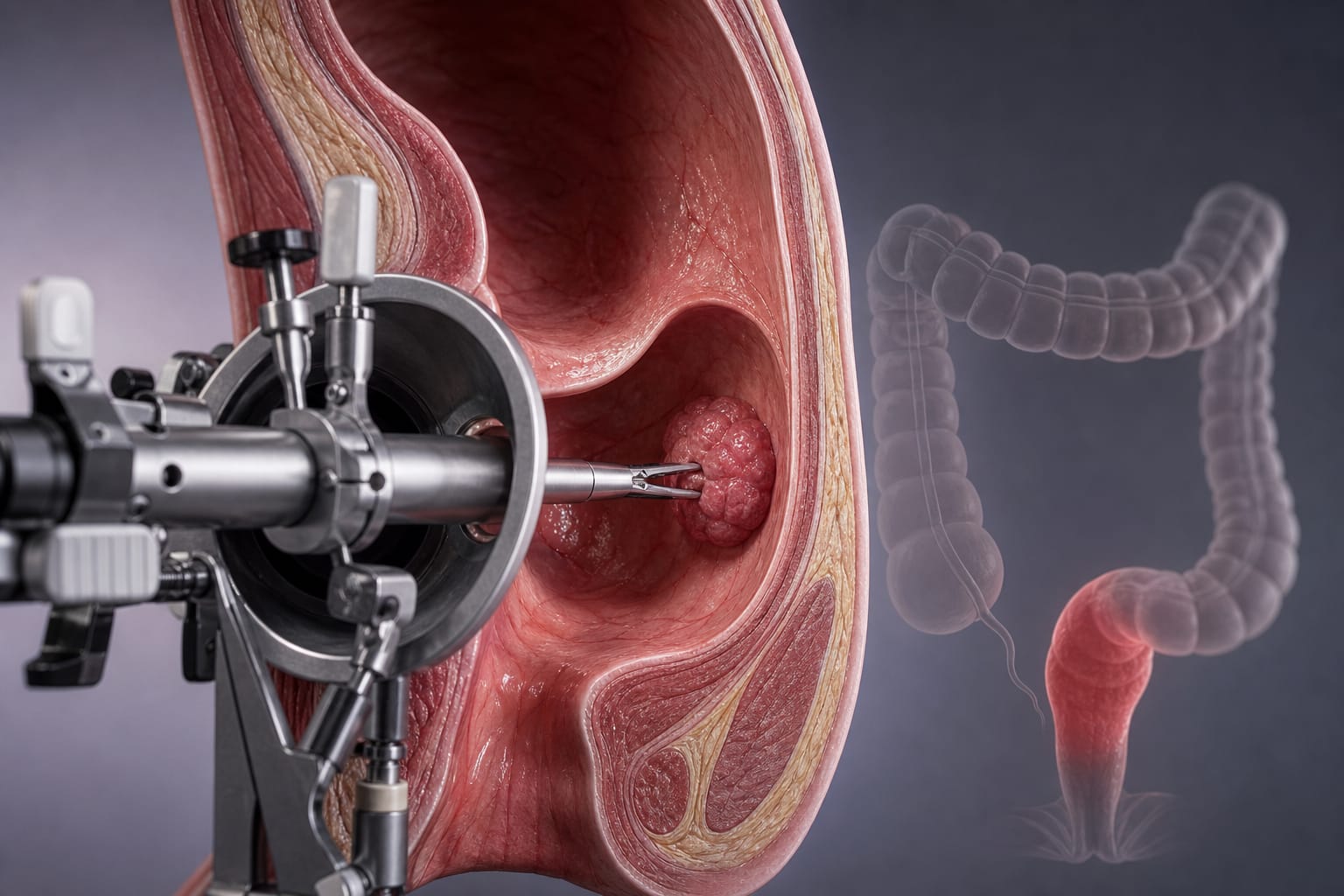
Surgical resection has been the gold standard for treating pT1 rectal cancer, providing excellent oncological outcomes but with significant risks of complications. As early-stage rectal cancer diagnoses increase, the exploration of local resection techniques like TEM has gained interest due to their potential for fewer complications. However, concerns about higher local recurrence rates following TEM compared to traditional surgery necessitate further investigation.
Data Highlights
Remove placeholder text and provide relevant data or state explicitly that data is not available.
Key Findings
TEM is associated with higher local recurrence rates compared to surgical resection in T1 rectal cancer patients.
Current guidelines recommend completion surgical resection for high-risk tumors, while TEM may be considered for low-risk tumors.
Recurrence rates were evaluated across risk groups, highlighting the inadequacy of current risk classification in predicting outcomes.
Patients with adverse histopathological features after local excision may require additional treatment to mitigate recurrence risks.
The study utilized data from the Swedish Colorectal Cancer Registry, ensuring a comprehensive analysis of patient outcomes.
Clinical Implications
Clinicians should carefully evaluate the risks of local recurrence when considering TEM for T1 rectal cancer, especially in patients with high-risk features. Adherence to current guidelines regarding additional surgical interventions is crucial to optimize patient outcomes.
Conclusion
Reiterate the necessity for further research to validate findings and improve treatment protocols.