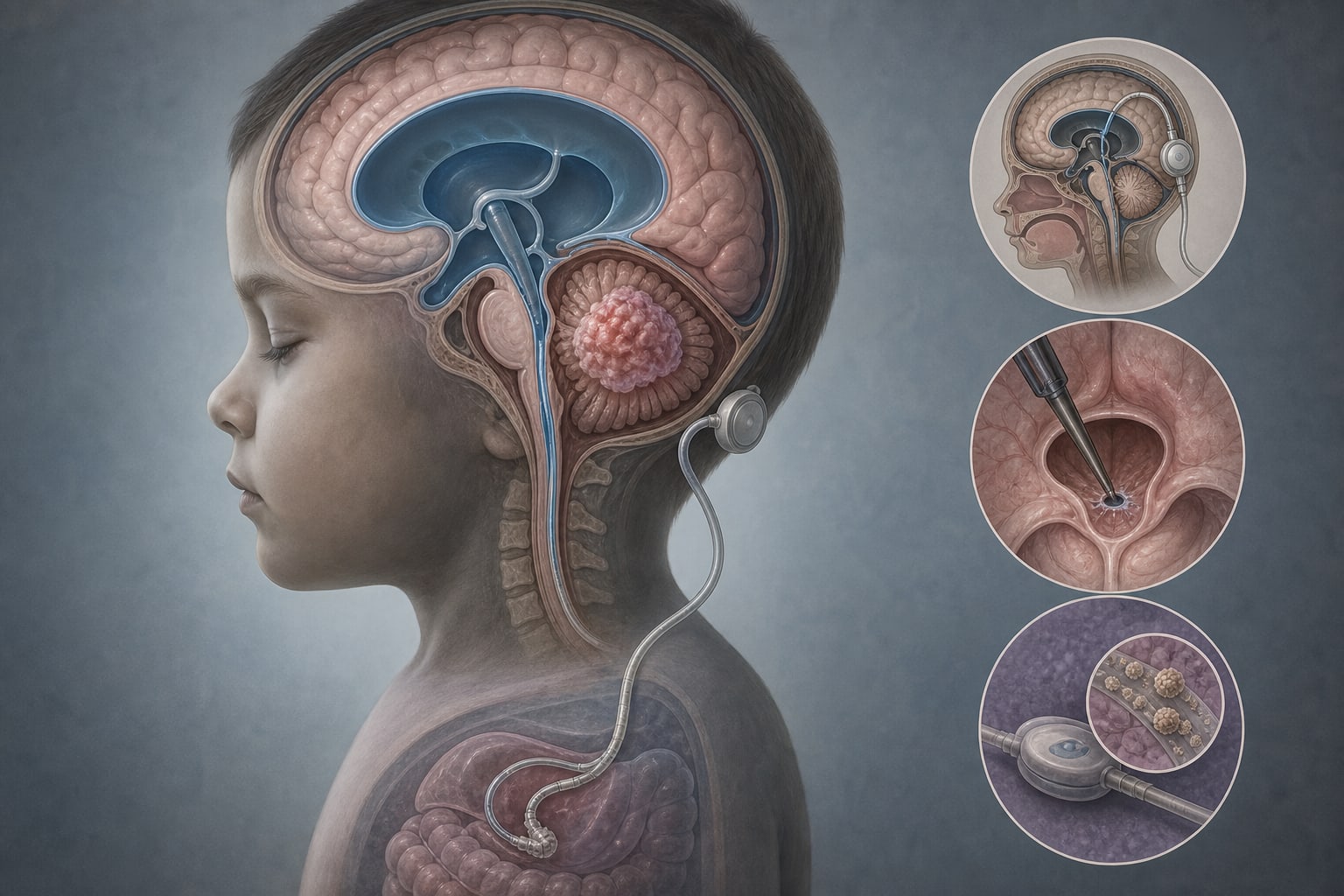
Management Strategies for Hydrocephalus in Pediatric Medulloblastoma
Overview
This study evaluates postoperative outcomes in pediatric medulloblastoma patients with hydrocephalus across three management strategies: VP shunting, upfront tumor resection, and ETV. The findings indicate differences in infection rates and recurrent hydrocephalus, although statistical significance was not achieved.
Background
Hydrocephalus is a common complication in children with medulloblastoma, necessitating timely surgical intervention to manage intracranial pressure. The choice of management strategy can influence postoperative outcomes, including infection rates and recurrence of hydrocephalus.
Data Highlights
Management Strategy
Postoperative Infection Rate
Recurrent Hydrocephalus Rate
VP Shunt
24.2%
2.2%
Upfront Resection
22.1%
24.3%
ETV
9.4%
9.4%
Key Findings
ETV showed a lower infection frequency compared to VP shunting (10.0% vs. 24.0%), though not statistically significant (P = 0.118).
Recurrent hydrocephalus occurred in 10.0% of ETV patients and 8.0% of VP-shunt patients (P = 1.000).
Postoperative infection affected 24.2% of patients receiving VP shunts.
Recurrent hydrocephalus or rescue diversion was recorded in 24.3% of upfront-resection patients.
The internally selected logistic model for VP-shunt infection had an AUC of 0.627.
Statistical significance was not achieved in matched comparisons for ETV.
Clinical Implications
The findings highlight the need for careful consideration of management strategies for hydrocephalus in pediatric medulloblastoma patients, particularly regarding the risk of infection and recurrence. Clinicians should weigh the benefits and risks of VP shunting, upfront resection, and ETV in individual patient contexts.
Conclusion
This study provides insights into the management of hydrocephalus in pediatric medulloblastoma, indicating that ETV may reduce infection rates.