Development and validation of a prediction model for psychological distress in patients with differentiated thyroid cancer undergoing ¹³¹I therapy - Report - MDSpire
Advertisement
Development and validation of a prediction model for psychological distress in patients with differentiated thyroid cancer undergoing ¹³¹I therapy
Clinical Report: Predictive Model for Psychological Distress in DTC Patients
Overview
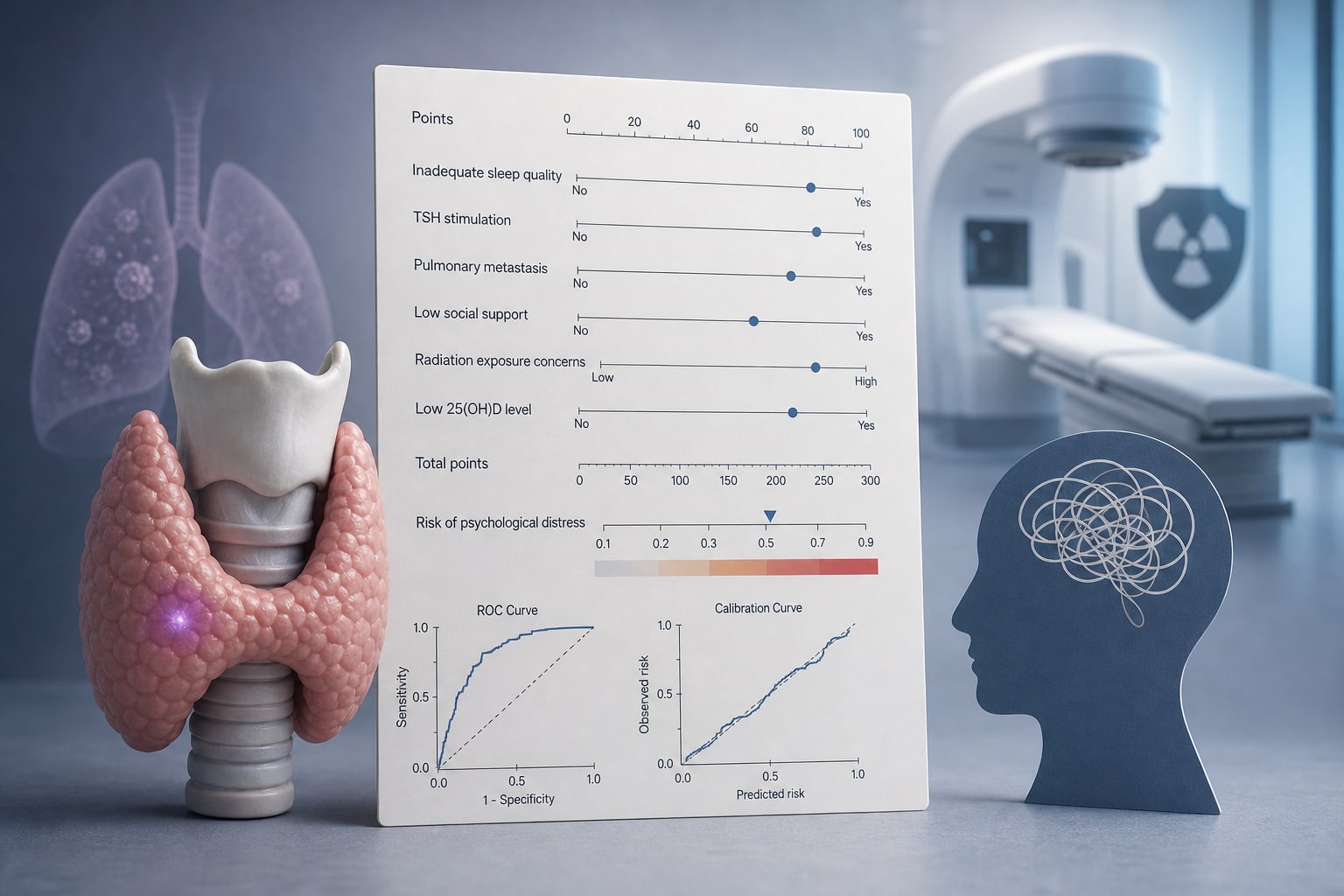
A predictive model for psychological distress in differentiated thyroid cancer (DTC) patients undergoing ¹³¹I therapy was developed and validated. Key independent risk factors identified include poor sleep quality and low serum 25-hydroxyvitamin D levels.
Background
Differentiated thyroid cancer (DTC) is the most prevalent endocrine malignancy, often requiring ¹³¹I therapy post-thyroidectomy. While the prognosis is generally favorable, psychological distress is common among these patients.
Data Highlights
Metric
Value
AUC
0.835
Sensitivity
83.1%
Specificity
68.2%
Hosmer-Lemeshow χ²
12.064 (P = 0.148)
Internal Validation AUC (Bootstrap)
0.82
Internal Validation AUC (10-fold CV)
0.77
Key Findings
Independent risk factors for psychological distress include poor sleep quality and low serum 25-hydroxyvitamin D levels.
The model achieved an AUC of 0.835, indicating good predictive performance.
Sensitivity and specificity of the model were 83.1% and 68.2%, respectively.
Internal validation showed AUCs of 0.82 and 0.77 using bootstrap resampling and 10-fold cross-validation.
The model demonstrated good calibration as confirmed by the Hosmer-Lemeshow test.
Clinical Implications
The developed nomogram can assist healthcare providers in identifying DTC patients at high risk for psychological distress.
Conclusion
The internally validated predictive model represents a tool for addressing psychological distress in DTC patients undergoing ¹³¹I therapy.