Epicardial adipose tissue in cardiovascular diseases: a potential therapeutic target
-
By
-
Zhaoting Gong
-
Yuyan Xiong
-
June 18, 2026
-
0 min
Clinical Report: Epicardial Fat Tissue and Its Role in Cardiovascular Disorders
Overview
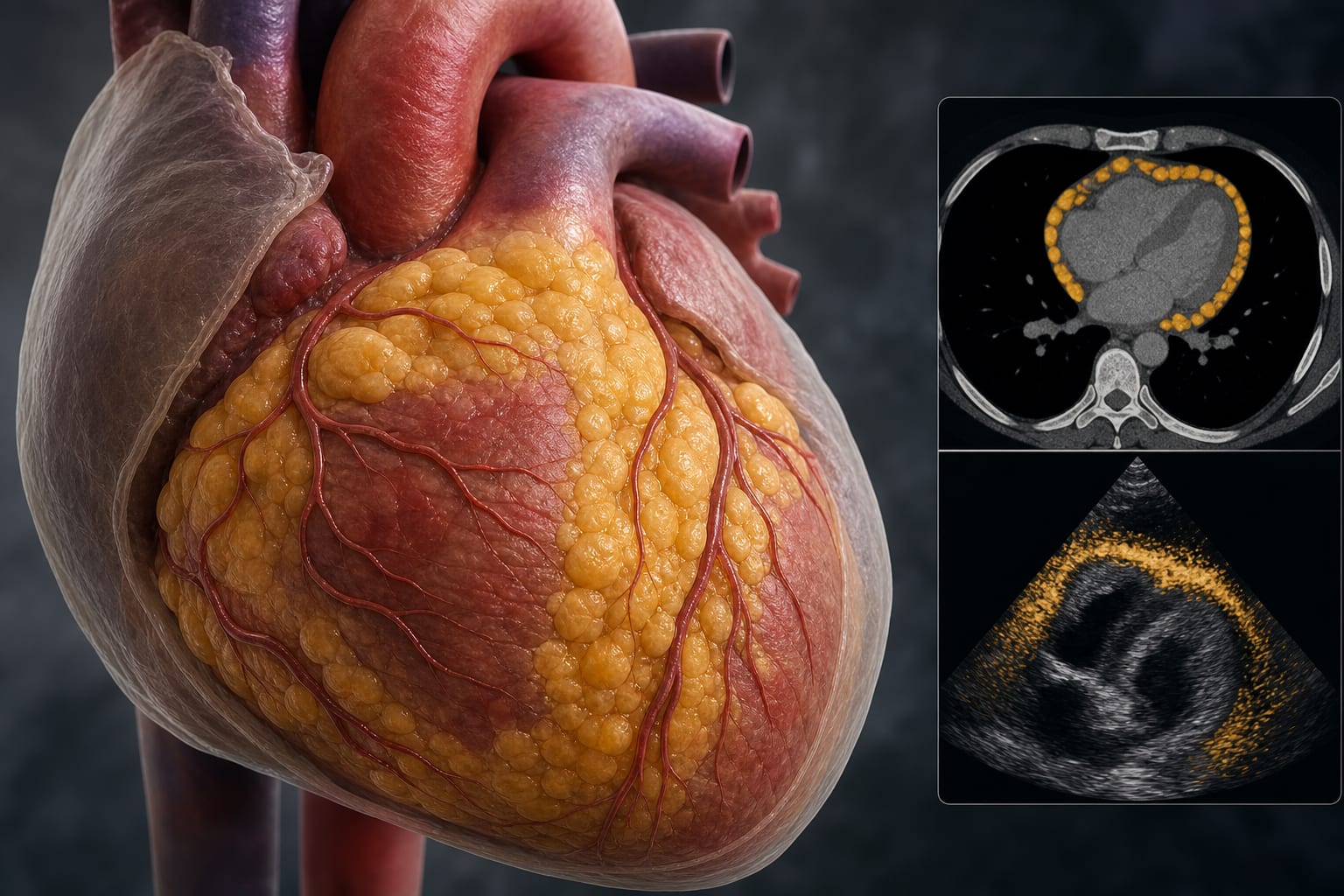
Epicardial adipose tissue (EAT) is increasingly recognized for its association with cardiovascular diseases (CVDs) and is being explored as a potential therapeutic target. This review highlights the anatomical and physiological characteristics of EAT, its role in CVDs, and its potential as a biomarker.
Background
Cardiovascular diseases (CVDs) are the leading cause of mortality worldwide, with obesity being a significant risk factor. Epicardial adipose tissue (EAT) is a unique adipose depot located adjacent to the heart, exhibiting both protective and detrimental effects on cardiac health. Understanding EAT's role in CVDs may provide insights into novel therapeutic strategies.
Data Highlights
No specific numerical data provided in the article.
Key Findings
- EAT is anatomically distinct and located between the myocardium and visceral pericardium.
- It accounts for approximately 80% of the heart's surface area and 20% of its total weight.
- EAT has both cardioprotective and detrimental effects through its secretion of cytokines.
- Non-invasive imaging techniques like echocardiography and MRI are used to assess EAT and evaluate CVD risk.
- EAT-derived extracellular vesicles may play a role in intercellular communication related to CVD progression.
Clinical Implications
EAT may serve as a valuable biomarker for assessing cardiovascular risk and guiding therapeutic interventions. Clinicians should consider the implications of EAT in the management of patients with obesity and CVDs, as targeting EAT may offer new treatment avenues.
Conclusion
The emerging understanding of EAT's role in cardiovascular health underscores its potential as both a biomarker and a therapeutic target in managing cardiovascular diseases.
Related Resources & Content
- Obesity and Endocrinology, 2023 -- The Relationship Between Epicardial Adipose Tissue and Obstructive Sleep Apnea: Mechanisms, Diagnostic Approaches, and Treatment Options
- BMC Cardiovascular Disorders, 2023 -- Targeting epicardial adipose tissue in heart failure with preserved ejection fraction: exploring the dapagliflozin connection
- European Journal of Preventive Cardiology, 2023 -- Combining Epicardial Adipose Tissue and Heart Rate Recovery in Adults with Cardiometabolic Risk Factors
- Frontiers in Medicine, 2023 -- Association between region-specific epicardial adipose tissue and CT-derived fractional flow reserve-defined myocardial ischemia: a retrospective coronary CTA study stratified by hypertension and type 2 diabetes mellitus
- Nature Reviews Cardiology, 2023 -- Role of systemic and epicardial adipose tissue in cardiometabolic disease
- International Journal of Obesity, 2023 -- SGLT2 inhibitors are associated with reductions in epicardial adipose tissue volume and thickness: a meta-analysis
- BMC Cardiovascular Disorders, 2023 -- Difference of pericoronary adipose tissue attenuation between culprit and non-culprit lesions in acute coronary syndrome: a systematic review and meta-analysis
- Role of systemic and epicardial adipose tissue in cardiometabolic disease | Nature Reviews Cardiology
- SGLT2 inhibitors are associated with reductions in epicardial adipose tissue volume and thickness: a meta-analysis | International Journal of Obesity
- Difference of pericoronary adipose tissue attenuation between culprit and non-culprit lesions in acute coronary syndrome: a systematic review and meta-analysis | BMC Cardiovascular Disorders | Springer Nature Link
This content is an AI-generated, fully rewritten summary based on a published scholarly article. It does not reproduce the original text and is not a substitute for the original publication. Readers are encouraged to consult the source for full context, data, and methodology.