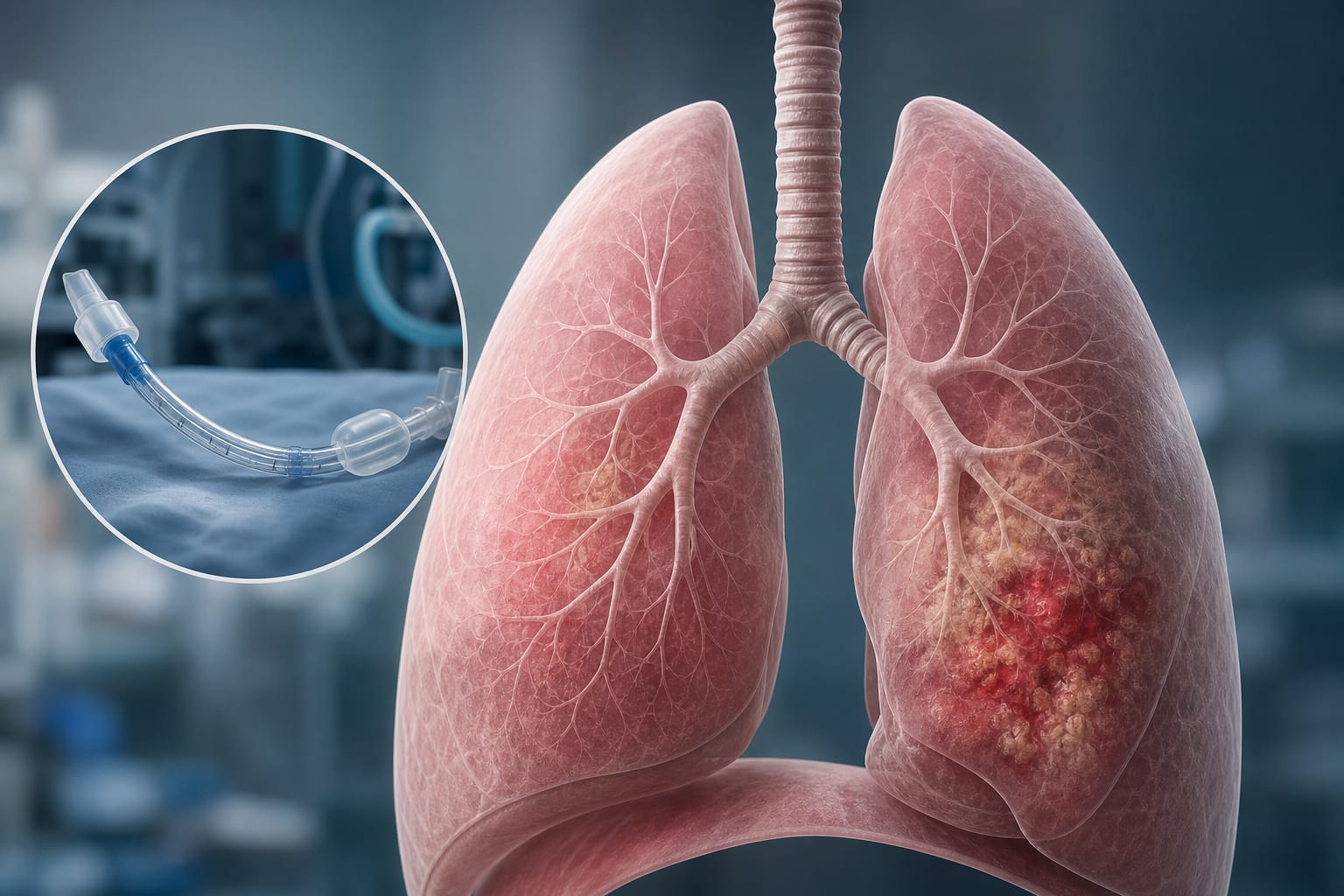
Increased Focus Needed on Pneumonia Following Extubation
-
By
-
Debbie Bunch
-
May 19, 2026
Clinical Report: Increased Focus Needed on Pneumonia Following Extubation
Overview
Revise to clarify the comparison of pneumonia risks during intubation versus post-extubation.
Background
Pneumonia following extubation, termed post-extubation pneumonia (PEP), poses significant risks to surgical patients. Understanding the incidence and risk factors associated with PEP is crucial for improving patient outcomes and reducing healthcare costs. This condition is particularly concerning as it may occur more frequently than ventilator-associated pneumonia (VAP) in certain populations.
Data Highlights
In a cohort study of over 31,000 patients, PEP was found to occur in 0.67% of cases, with most instances presenting within the first two weeks post-extubation. Key risk factors included advanced age, male sex, low BMI, impaired consciousness, and reduced activities of daily living.
Key Findings
- PEP occurs more frequently than VAP among surgical patients post-extubation.
- Approximately 80% of PEP cases present within one week of extubation.
- Independent risk factors for PEP include advanced age, male sex, and low BMI.
- Post-extubation dysphagia is closely linked to the development of PEP.
- Dysphagia rehabilitation has been shown to reduce the incidence of pneumonia.
Clinical Implications
Healthcare providers should implement systematic screening for dysphagia in patients post-extubation to mitigate the risk of pneumonia. Additionally, targeted interventions and monitoring strategies should be established to address the identified risk factors associated with PEP.
Conclusion
Increased awareness and proactive management of post-extubation pneumonia are essential for improving patient safety and outcomes in surgical settings. Further research is needed to refine prevention strategies.
Related Resources & Content
- Scientific Reports, 2026 -- Risk factors for postextubation pneumonia using diagnosis procedure combination and claims data in Japan
- European Journal of Medical Research, 2024 -- Incidence of post-extubation dysphagia among critical care patients undergoing orotracheal intubation: a systematic review and meta-analysis
- Intensive Care Medicine, 2010 -- Highlights from Intensive Care Medicine in 2010: Focus on Pneumonia, Infections, Cardiovascular Dynamics, Healthcare Organization, Education, Hematology, Nutrition, Ethics, and Additional Topics
- Intensive Care Medicine, 2009 -- Highlights from Intensive Care Medicine 2009: I. Pneumonia, Infections, Sepsis, Outcomes, Acute Kidney Injury, Acid-Base Balance, Nutrition, and Glycemic Management
- Intensive Care Medicine, 2026 -- Rethinking extubation readiness in the neurocritical patient: from respiratory load to airway protection
- the pathologist — The Overlooked Key to Pneumonia Prevention
- The Overlooked Key to Pneumonia Prevention
- Risk factors for postextubation pneumonia using diagnosis procedure combination and claims data in Japan | Scientific Reports
- Incidence of post-extubation dysphagia among critical care patients undergoing orotracheal intubation: a systematic review and meta-analysis | European Journal of Medical Research | Springer Nature Link
- Noninvasive respiratory support after extubation: a systematic review and network meta-analysis | European Respiratory Society
Based on findings from:
Post-Extubation Pneumonia Deserves More Attention
Debbie Bunch. American Association For Respiratory Care (Aarc), 2026.
https://rccentral.aarc.org/post-extubation-pneumonia-deserves-more-attention/
This content is an AI-generated, fully rewritten summary based on a published scholarly article. It does not reproduce the original text and is not a substitute for the original publication. Readers are encouraged to consult the source for full context, data, and methodology.