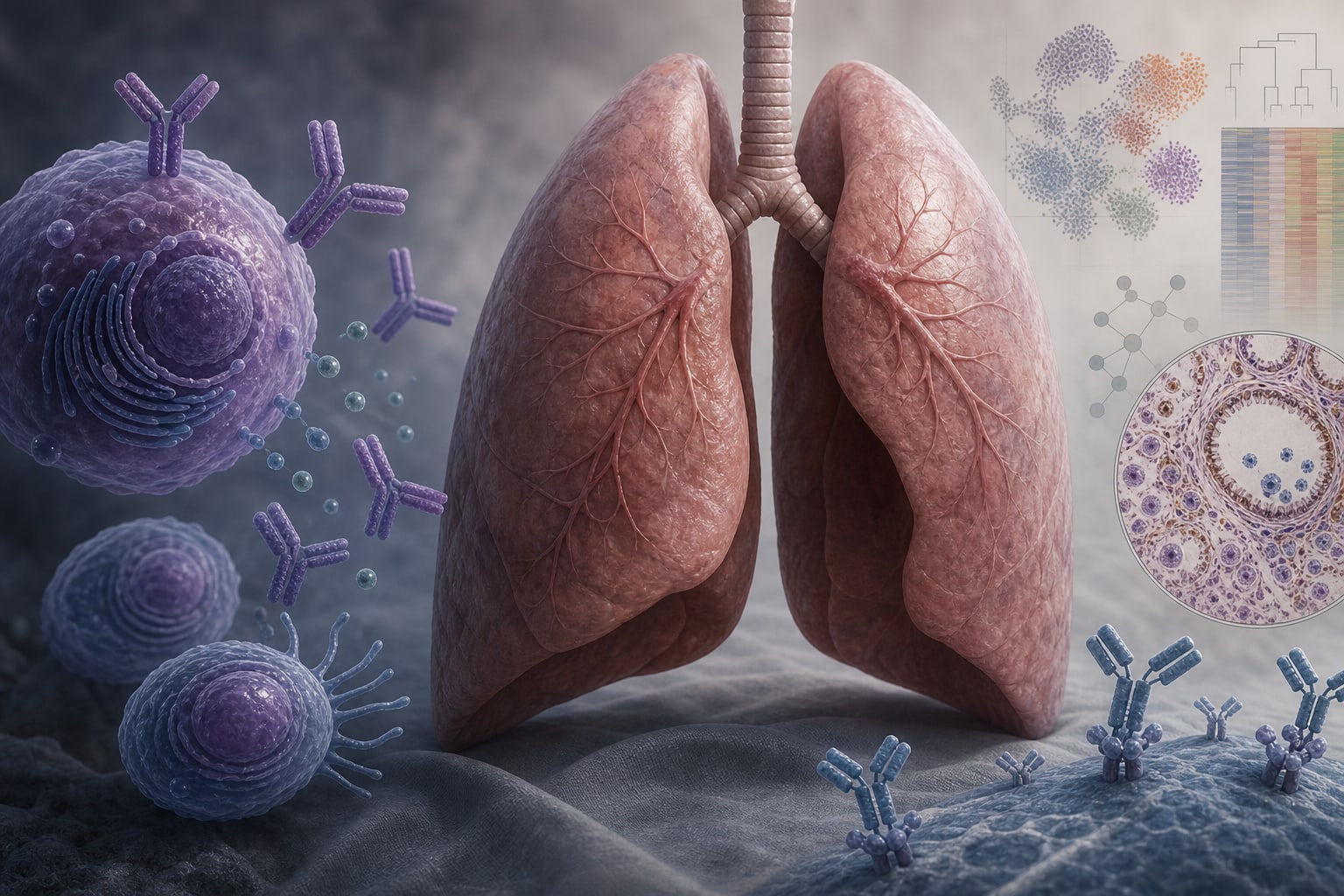
Clinical Report: Immune Reconstitution Mediated by B Cells Following Lung Transplantation
Background
Lung transplantation is a vital intervention for patients with end-stage lung disease, yet long-term outcomes are hindered by chronic rejection and infection. The role of B cells in transplant immunology is increasingly recognized, as they contribute to both protective immunity and the risk of antibody-mediated rejection through the production of donor-specific antibodies. Understanding B cell dynamics is essential for improving post-transplant outcomes.
Data Highlights
No numerical data is available in the source material.
Key Findings
B cells play a central role in orchestrating immune responses post-lung transplantation.
Donor-specific antibodies (DSAs) produced by B cells are linked to chronic lung allograft dysfunction (CLAD).
B cell dysregulation can result from ischemia-reperfusion injury, infection, and immunosuppressive agents like tacrolimus.
Advancements in single-cell RNA sequencing and B cell receptor profiling enhance the understanding of B cell dynamics.
Multi-omics technologies may support personalized immunomodulation and prognostic assessment in lung transplant recipients.
Clinical Implications
Clinicians should be aware of the dual role of B cells in both protective immunity and the risk of rejection in lung transplant patients. Monitoring B cell dynamics and DSAs may provide insights into patient risk profiles and guide immunosuppressive strategies.
Conclusion
B cells are critical regulators of immune responses following lung transplantation, and their dysregulation can significantly impact patient outcomes. Further research into B cell dynamics and therapeutic approaches is warranted to enhance long-term transplant success.