Conexiant’s news site is now MDSpire News. Learn more
Advertisement
Thyroid Cancer: What Are the Latest Advances in Treatment?
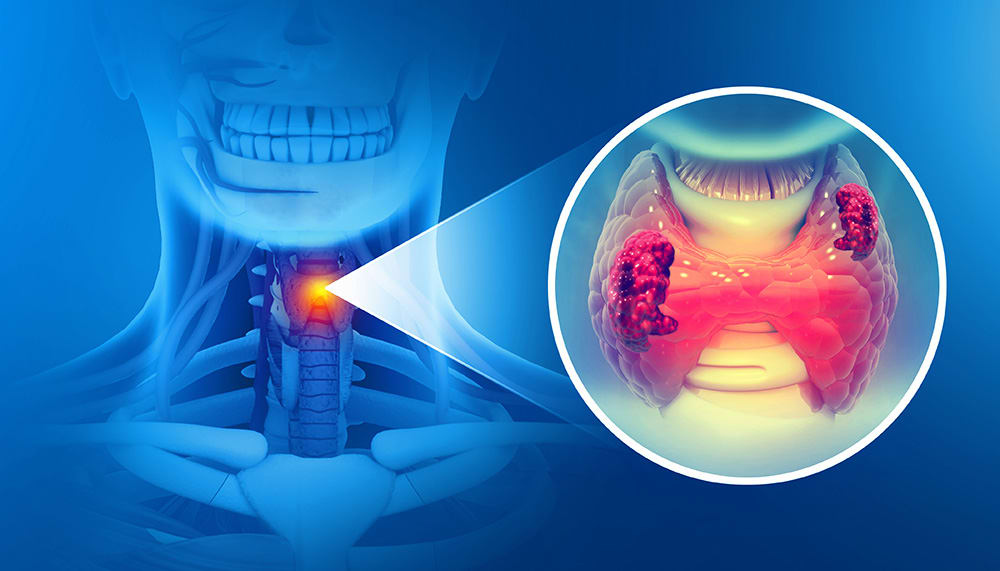
Thyroid cancer is usually a highly treatable malignancy with overall five-year survival rates over 98%. Many patients with thyroid cancer go on to live for several decades after their disease is cured.
Clinical Report: Thyroid Cancer: What Are the Latest Advances in Treatment?
Overview
Recent advancements in thyroid cancer treatment include the use of molecular testing to aid in treatment decisions and reduce unnecessary surgeries.
Background
Thyroid cancer is generally highly treatable, with five-year survival rates exceeding 98%. The evolution of treatment strategies, including molecular testing and updated guidelines, is important.
Data Highlights
No numerical data provided in the source material.
Key Findings
Molecular testing is now standard in thyroid cancer care, helping classify nodules and guide therapy.
Updated American Thyroid Association guidelines have introduced four risk categories for recurrence.
De-escalation of treatment is emphasized, allowing for lobectomy instead of total thyroidectomy in low-risk cases.
Radioactive iodine treatment remains a cornerstone for high-risk patients, with long-term complications being rare.
Active surveillance is recommended for patients with small, slow-growing tumors.
Clinical Implications
The integration of molecular testing allows for more tailored treatment approaches.
Conclusion
Advancements in thyroid cancer treatment reflect ongoing developments in care.
Standardized preprocessing, multicenter datasets, external validation, and interpretable models may matter more than further gains in classification accuracy
Pancreatic adenocarcinoma, the most common form of pancreatic cancer, accounts for roughly 90 to 95 percent of cases. It's notoriously difficult to catch early, because symptoms often don't appear until the disease has already spread