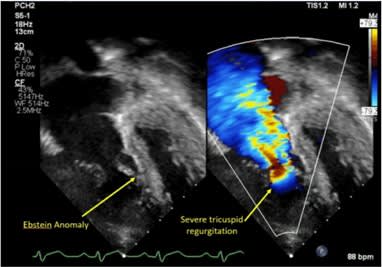
Clinical Report: Cone Procedure to Treat Ebstein's Anomaly
Overview
The cone reconstruction procedure for Ebstein's anomaly shows promising outcomes, with higher success rates and lower incidence of tricuspid regurgitation compared to traditional valve replacement. This technique allows for growth and adaptation in pediatric patients, making it a preferred surgical option.
Background
Ebstein's anomaly is a rare congenital heart defect that significantly impacts the tricuspid valve and right ventricle, leading to serious complications if untreated. Traditional management has often involved valve replacement, which can result in poor long-term outcomes. The cone reconstruction technique offers a viable alternative that utilizes the patient's own tissue, potentially improving longevity and functionality of the repair.
Data Highlights
No specific numerical data provided in the source material.
Key Findings
The cone reconstruction procedure was first implemented in 1993 and has become the gold standard for treating Ebstein's anomaly.
Dr. Velez and his team have successfully performed ten cone repairs since 2017 on patients ranging from neonates to adults.
A retrospective study indicated that cone reconstruction has a higher success rate and lower incidence of tricuspid regurgitation compared to valve replacement.
Patients undergoing cone reconstruction can expect consistent results and long-term durability across various tricuspid valve conditions.
Ongoing monitoring and cardiovascular therapy are essential for patients with Ebstein's anomaly post-surgery.
Clinical Implications
The cone reconstruction procedure should be considered as a primary treatment option for pediatric patients with Ebstein's anomaly due to its favorable outcomes. Healthcare providers must ensure that patients receive lifelong follow-up care to manage potential complications effectively.
Conclusion
The cone reconstruction technique represents a significant advancement in the surgical management of Ebstein's anomaly, offering improved outcomes and adaptability for growing children. Continued collaboration and expertise sharing among specialists will enhance care for affected patients.