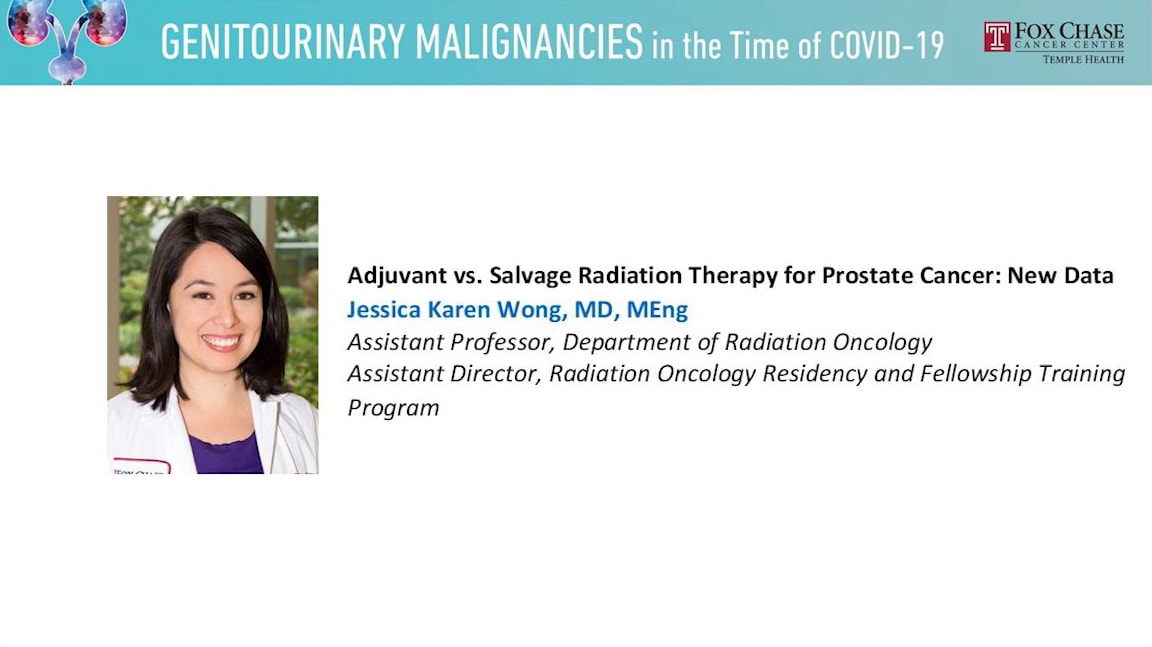
Adjuvant vs Salvage Radiation Therapy for Prostate Cancer: New Data
-
July 19, 2021
Clinical Report: Adjuvant vs Salvage Radiation Therapy for Prostate Cancer
Overview
This report discusses the differences between adjuvant and salvage radiation therapy for prostate cancer, highlighting new data that suggests early salvage therapy may be more beneficial than routine adjuvant therapy. Recent trials indicate that biochemical recurrence-free survival is significantly improved with adjuvant therapy, yet practical application remains low.
Background
Prostate cancer is a leading cause of cancer-related morbidity in men, and the management of recurrence post-prostatectomy is critical. Adjuvant radiation therapy is administered based on pathological findings, while salvage therapy is reserved for rising PSA levels. Understanding the efficacy and timing of these therapies is essential for optimizing patient outcomes.
Data Highlights
No specific numerical data was provided in the source material.
Key Findings
- Adjuvant radiation therapy significantly reduces the risk of PSA recurrence by over 50% compared to salvage therapy.
- Fewer than 10% of high-risk patients receive adjuvant radiation therapy, highlighting a gap in clinical practice.
- Recent trials (RADICALS, RAVES, and GETUG-AFU 17) show no improvement in outcomes with routine adjuvant therapy compared to early salvage therapy.
- Timing of salvage therapy is crucial; initiating treatment at lower PSA levels improves outcomes.
- Current guidelines emphasize personalized management based on PSA kinetics and pathologic risk factors.
Clinical Implications
Healthcare providers should consider early salvage radiation therapy for patients with rising PSA levels post-prostatectomy, as it may offer similar efficacy to adjuvant therapy with potentially less toxicity. Adherence to updated guidelines can help improve patient outcomes and reduce unnecessary treatments.
Conclusion
The evolving landscape of prostate cancer management underscores the importance of timely intervention and personalized treatment strategies. Continued research is necessary to refine approaches to adjuvant and salvage radiation therapy.
References
- ASCO Post, ASCO Endorses AUA/ASTRO Guideline on Adjuvant and Salvage Radiotherapy After Prostatectomy, 2014 -- ASCO Endorses AUA/ASTRO Guideline on Adjuvant and Salvage Radiotherapy After Prostatectomy
- ASCO Post, Androgen Blockade and Salvage Radiation Therapy in Prostate Cancer: Cautious Optimism Amid Unanswered Questions, 2017 -- Androgen Blockade and Salvage Radiation Therapy in Prostate Cancer: Cautious Optimism Amid Unanswered Questions
- ASCO Post, AUA, ASTRO, SUO Release Clinical Practice Guidelines on Salvage Therapy for Prostate Cancer, 2024 -- AUA, ASTRO, SUO Release Clinical Practice Guidelines on Salvage Therapy for Prostate Cancer
- ScienceDirect, Timing of radiotherapy after radical prostatectomy (RADICALS-RT): a randomised, controlled phase 3 trial -- Timing of radiotherapy after radical prostatectomy (RADICALS-RT): a randomised, controlled phase 3 trial
- the asco post — PSMA PET/CT and Salvage Radiotherapy in Recurrent Prostate Cancer
- ASTRO Guidelines on Salvage Therapy for Prostate Cancer
- Timing of radiotherapy after radical prostatectomy (RADICALS-RT): a randomised, controlled phase 3 trial - ScienceDirect
- https://d56bochluxqnz.cloudfront.net/documents/full-guideline/EAU-EANM-ESTRO-ESUR-ISUP-SIOG-Guidelines-on-Prostate-Cancer-2025_updated.pdf
- Association of Presalvage Radiotherapy PSA Levels After Prostatectomy With Outcomes of Long-term Antiandrogen Therapy in Men With Prostate Cancer | Oncology | JAMA Oncology | JAMA Network
- The addition of androgen deprivation therapy and pelvic lymph node treatment to prostate bed salvage radiotherapy (NRG Oncology/RTOG 0534 SPPORT): an international, multicentre, randomised phase 3 trial - PubMed
This content is an AI-generated, fully rewritten summary based on a published scholarly article. It does not reproduce the original text and is not a substitute for the original publication. Readers are encouraged to consult the source for full context, data, and methodology.