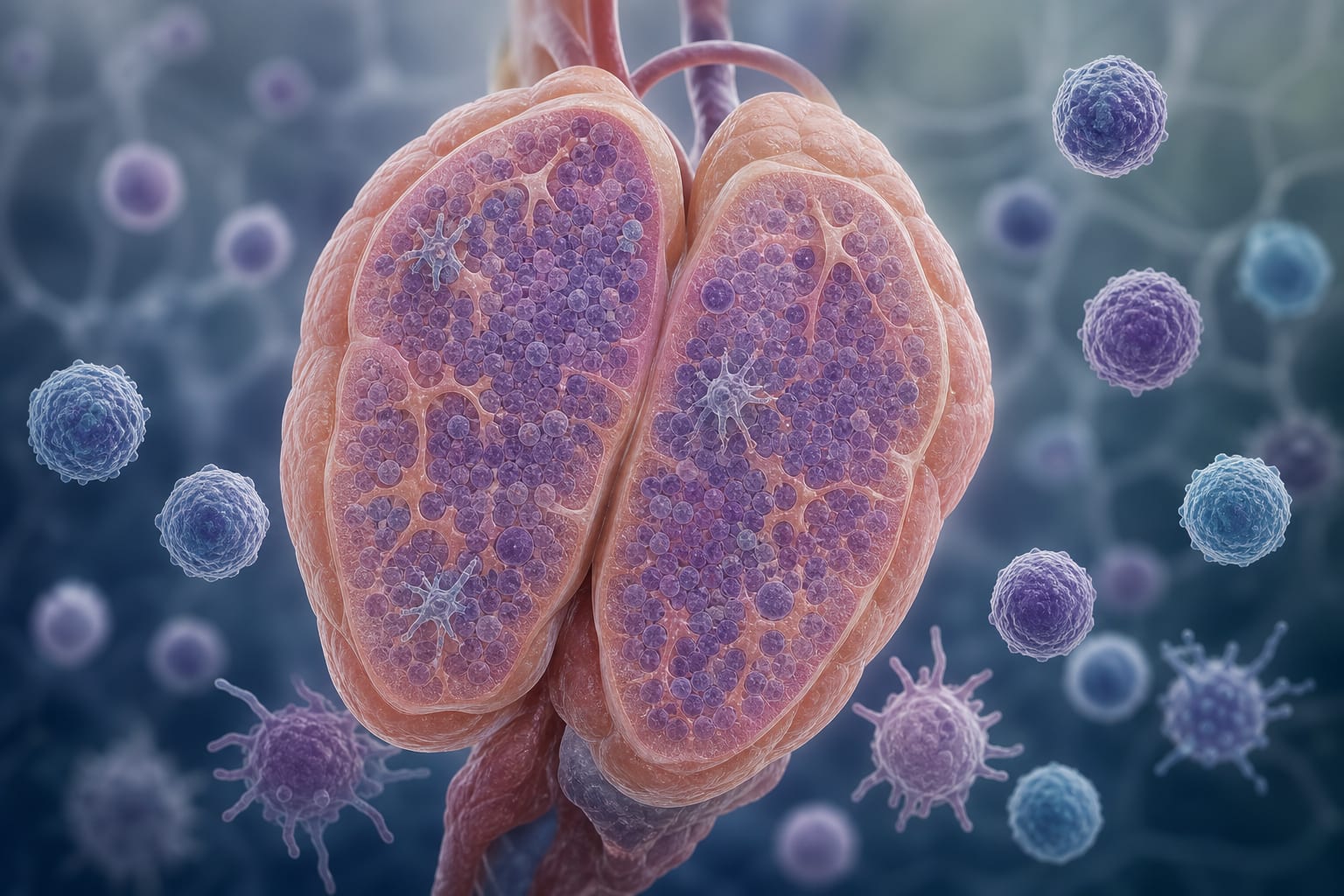
Clinical Report: Perspectives on Thymus Research and Development
Background
Thymic research has historically been contentious, particularly due to the practice of thymectomy in pediatric cardiac surgery, which raised questions about the organ's physiological significance. Recent studies have established the thymus as essential for producing a diverse T-cell repertoire and maintaining immune homeostasis throughout life. The renewed focus on thymic function is driven by advancements in research methodologies and a better understanding of its implications for immunosenescence and disease susceptibility.
Data Highlights
No numerical data or trial data presented in the source material.
Key Findings
The thymus is crucial for the development of a diverse and self-tolerant T-cell repertoire.
Technological advances have enabled detailed characterization of thymic cellular heterogeneity and mechanisms of thymic regeneration.
Keratinocyte growth factor (KGF) modulates thymocyte development through Notch signaling.
Thymically committed regulatory CD4 T cells (tTregs) are essential for immune homeostasis and self-tolerance.
Thymic involution impacts immunosenescence, infection susceptibility, and cancer treatment responses.
Clinical Implications
Understanding the role of the thymus in immune function is important for managing conditions associated with thymic dysfunction.
Conclusion
Thymus research is entering a transformative phase, with significant implications for understanding immune development.