Clinical Report: Utilizing Four-Dimensional Computed Tomography Ventilation Imaging for Radiotherapy Planning Techniques in Lung Cancer Management
Overview
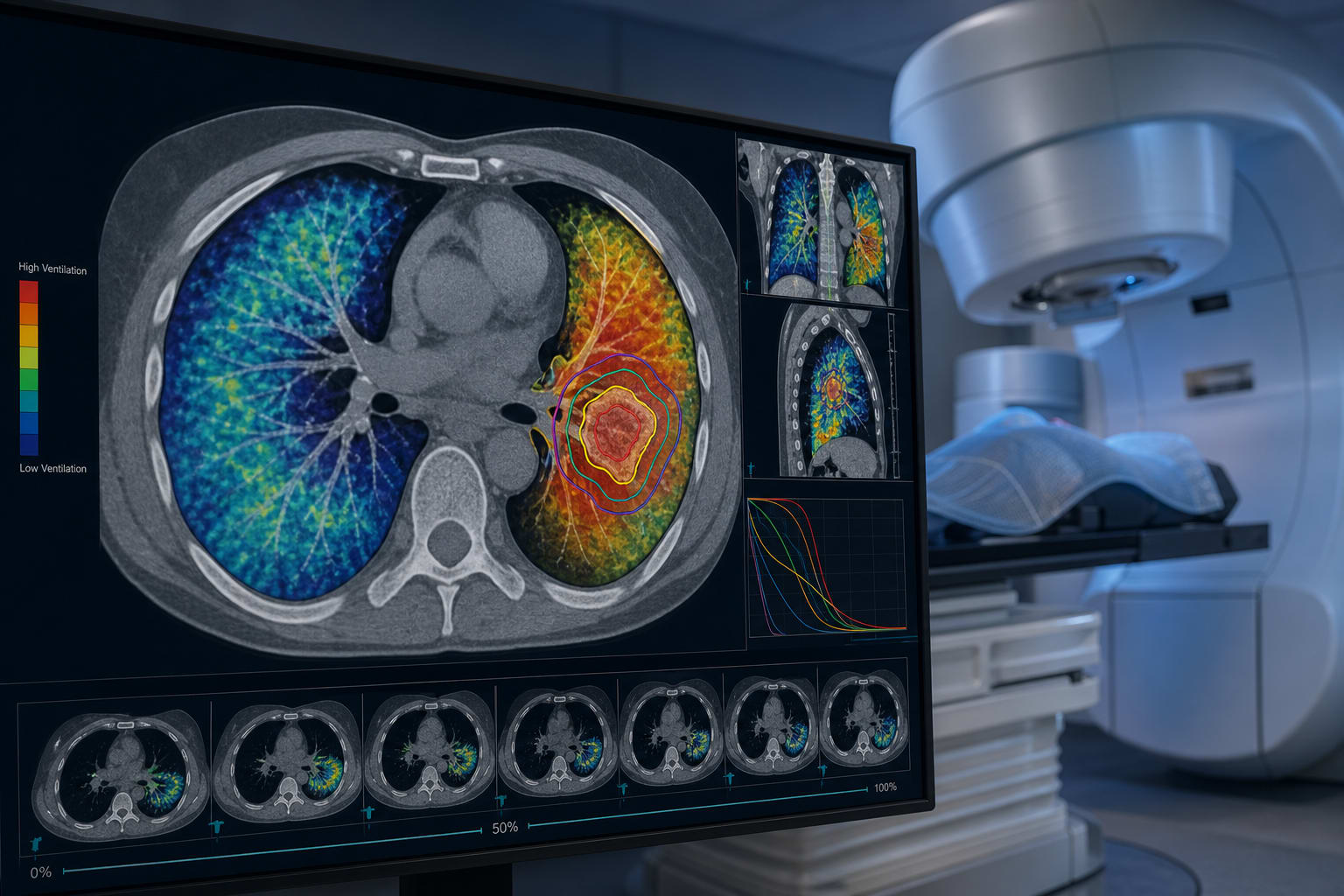
This study demonstrates that integrating four-dimensional computed tomography (4DCT) ventilation imaging into radiotherapy planning significantly reduces radiation doses to functional lung tissue while maintaining target coverage. Among the techniques evaluated, functional volumetric modulated arc therapy (f-VMAT) emerged as the most effective in minimizing doses to both functional lung and organs at risk.
Background
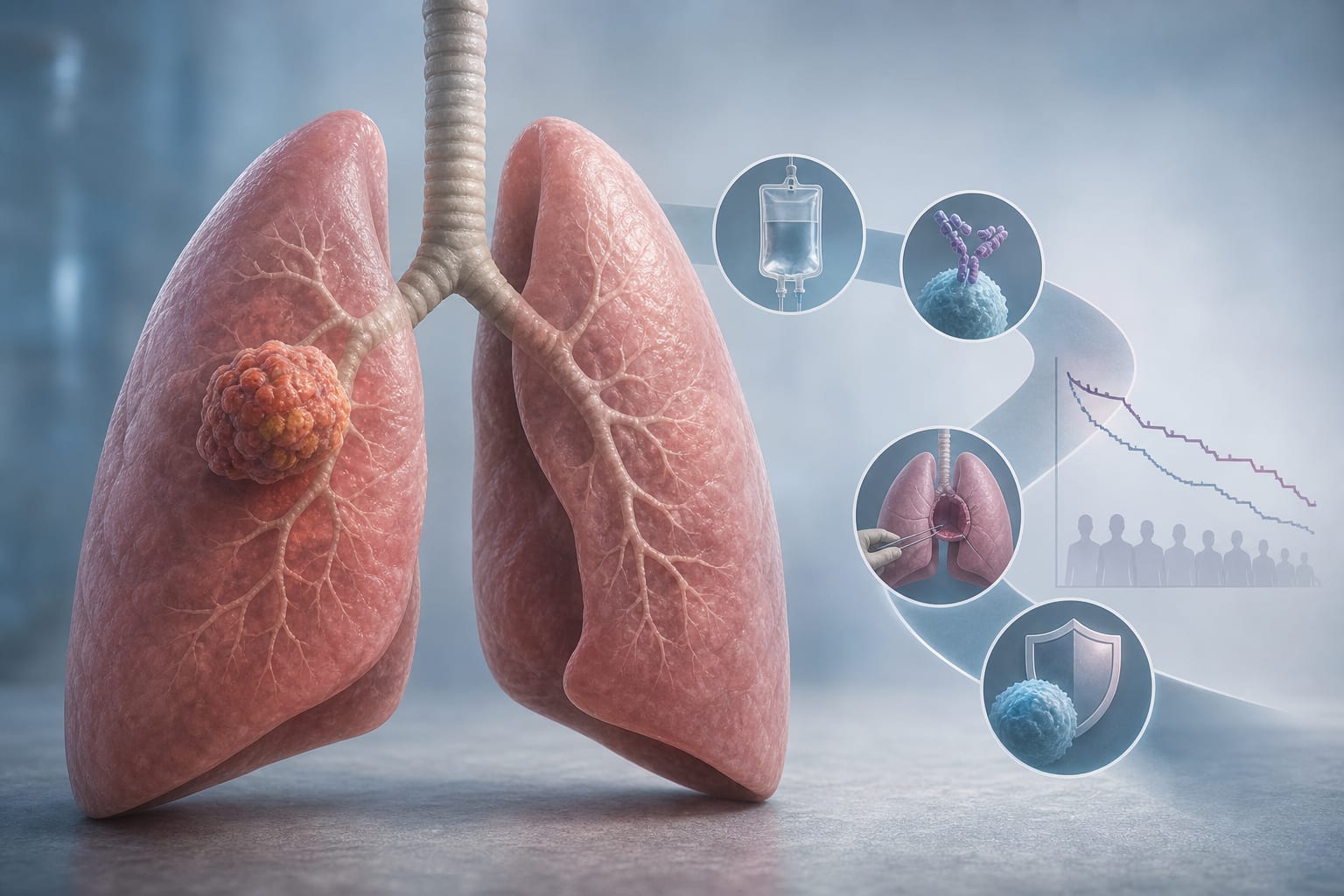
Lung cancer remains the leading cause of cancer mortality globally, with radiotherapy being a critical treatment modality. Traditional anatomical planning often fails to account for the heterogeneous distribution of lung function, potentially exposing healthy lung tissue to unnecessary radiation. The development of functional imaging techniques, particularly 4DCT, offers a promising approach to optimize radiotherapy planning and minimize radiation-induced lung injury.
Data Highlights
RT Technique
fV5
fV10
fV20
fV30
fMLD
f-IMRT
Reduced
Reduced
Reduced
Reduced
Reduced
f-hybrid IMRT
Reduced
Reduced
Reduced
Reduced
Reduced
f-VMAT
Reduced
Reduced
Reduced
Reduced
Lower Dmean to esophagus
Key Findings
Functional planning significantly reduced radiation doses to functional lung volumes (fV5, fV10, fV20, fV30) across all RT techniques.
Functional mean lung dose (fMLD) was also decreased while maintaining planning target volume (PTV) coverage.
Functional IMRT (f-IMRT) and f-VMAT provided superior PTV conformity compared to f-hybrid IMRT.
f-VMAT resulted in a lower mean dose to the esophagus compared to f-hybrid IMRT.
Increases in radiation dose to organs at risk (OARs) were observed but were not statistically significant.
Clinical Implications
The findings suggest that incorporating 4DCT ventilation imaging into radiotherapy planning can enhance treatment efficacy by protecting functional lung tissue. Clinicians should consider f-VMAT as a preferred technique for lung cancer patients to optimize dosimetric outcomes while adhering to safety constraints.
Conclusion
The integration of 4DCT ventilation imaging into radiotherapy planning represents a significant advancement in lung cancer management, with f-VMAT showing particular promise in reducing radiation exposure to healthy lung tissue.