Clinical Report: Efficient Deep Learning Framework with Attention Mechanism for Screening Gastrointestinal Precancerous Lesions
Overview
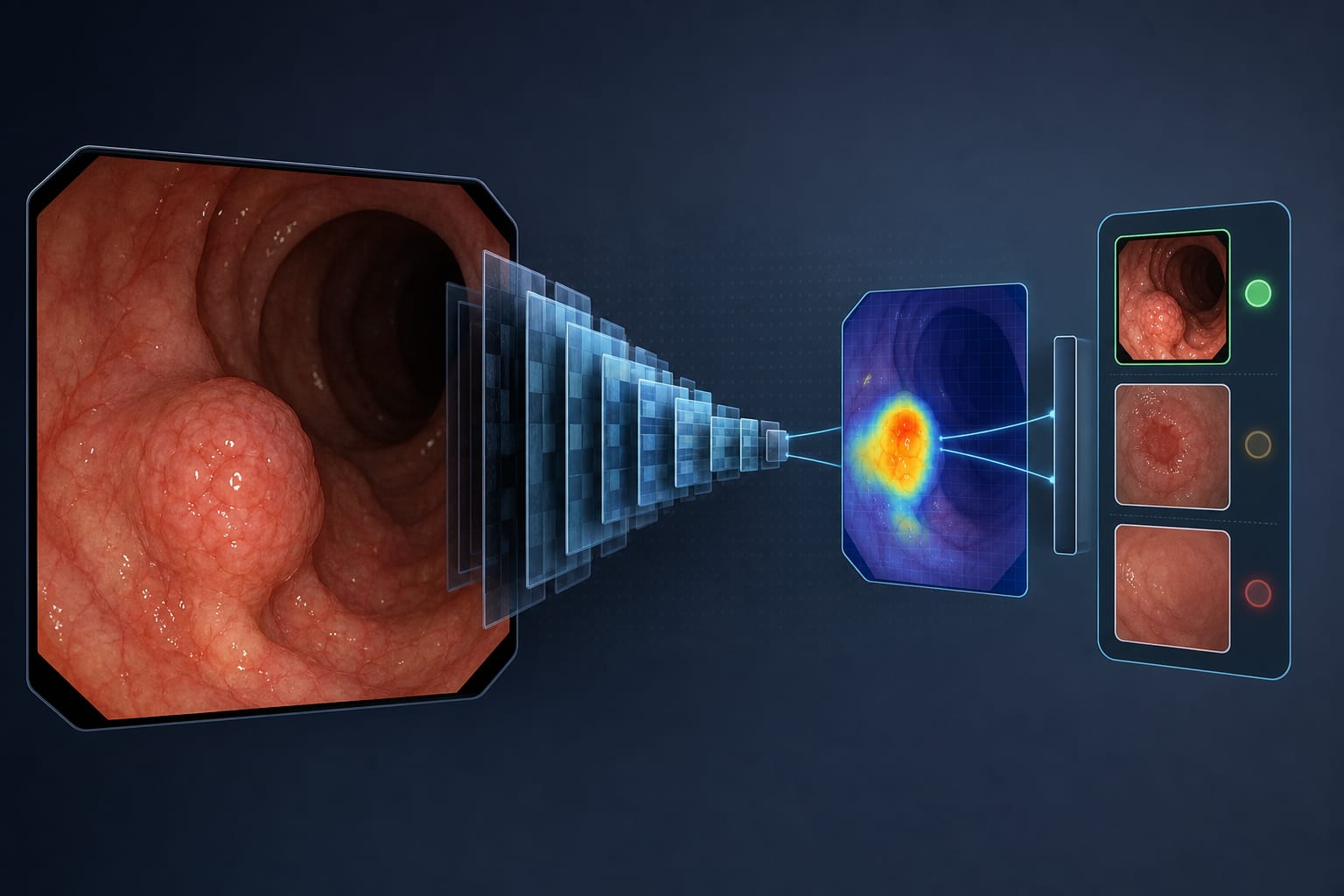
This study presents a lightweight attention-enhanced MobileNetV3 model for classifying gastrointestinal precancerous lesions, achieving an overall accuracy of 99.10% on the Kvasir dataset. The model demonstrates high precision and recall for polyp detection, addressing the need for effective AI tools in clinical endoscopic image analysis.
Background
Gastric cancer is a leading cause of cancer-related mortality, with early detection of precancerous lesions being critical for improving patient outcomes. Traditional endoscopic methods rely heavily on clinician expertise, which can be limited in underserved areas. The integration of artificial intelligence in endoscopic image analysis offers a promising solution to enhance diagnostic accuracy and accessibility.
Data Highlights
Metric
Value
Overall Accuracy
99.10%
Weighted F1-Score
99.10%
Polyp Precision
100%
Polyp Recall
98%
Total Parameters
1.05 M
Parameter Storage
3.99 MB
Key Findings
The proposed model achieved an overall accuracy of 99.10% on the Kvasir dataset.
For polyp detection, the model reached 100% precision and 98% recall.
The integration of the Spatial-Channel Attention (SCA) module improved core metrics by 0.07% without increasing computational load.
The model's lightweight design allows for real-time deployment on endoscopic devices.
GradCAM visualizations confirmed the model's focus on clinically relevant regions, aligning with endoscopists' observational habits.
Clinical Implications
The lightweight and highly accurate model provides a feasible AI-assisted tool for the early detection of gastrointestinal precancerous lesions, potentially reducing the risks of misdiagnosis. Its design supports integration into existing endoscopic workflows, enhancing the capabilities of clinicians, especially in resource-limited settings.
Conclusion
The study successfully demonstrates a balance between performance, accuracy, and interpretability in AI models for gastrointestinal lesion classification. This advancement could significantly improve early diagnosis and intervention strategies in gastric cancer screening.