Clinical Report: Autoimmune Pancreatitis Associated with Elevated IgG4 Levels
Overview
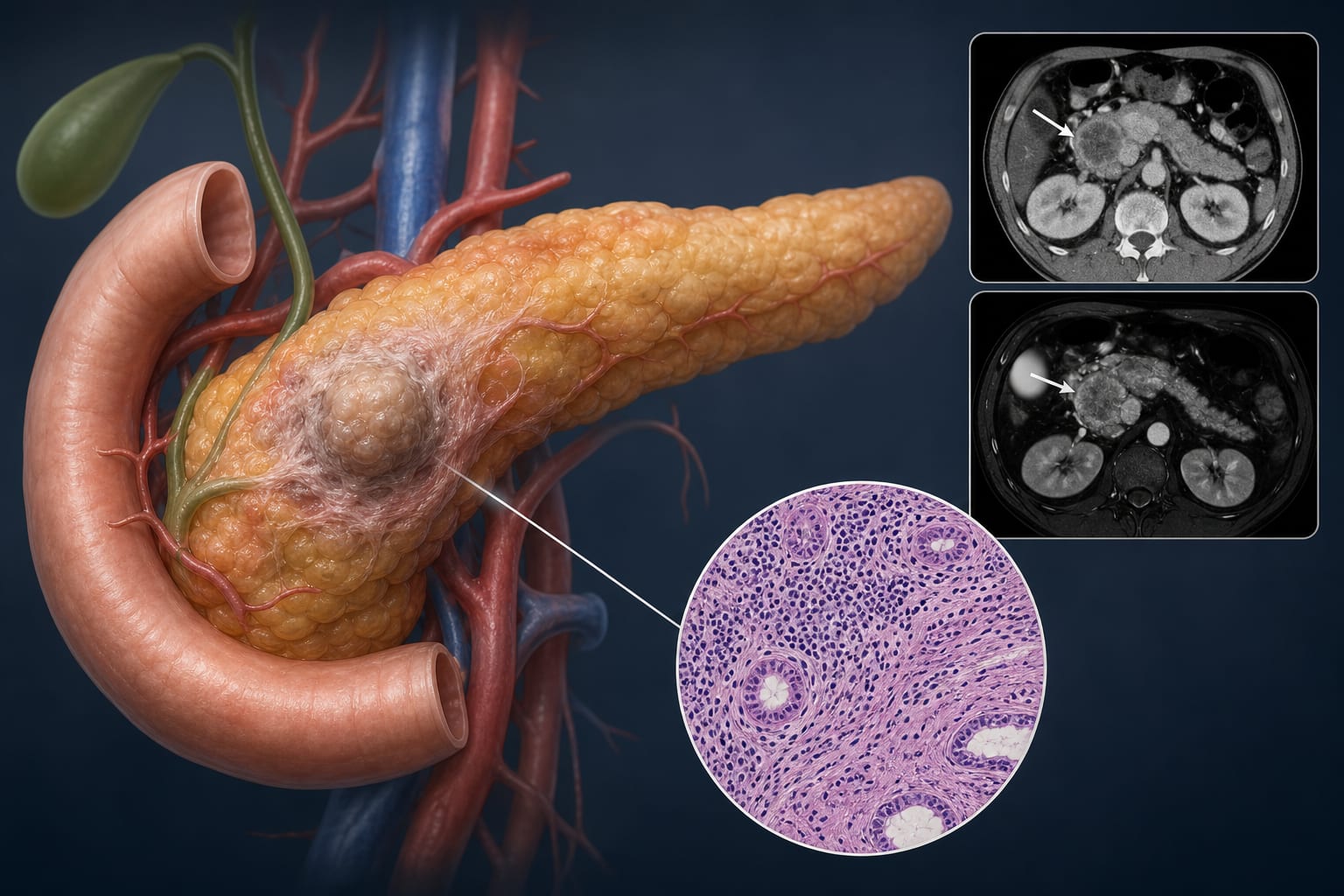
This case study presents a 59-year-old woman diagnosed with autoimmune pancreatitis (AIP) after initial suspicion of pancreatic cancer due to imaging findings and elevated CA19-9 levels. The diagnosis was confirmed through elevated serum IgG4 levels and histopathological examination.
Background
Autoimmune pancreatitis is a rare form of chronic pancreatitis that can mimic pancreatic cancer, leading to unnecessary surgical interventions. Distinguishing between these conditions is crucial for appropriate management, as AIP responds well to glucocorticoid therapy while pancreatic cancer requires surgical resection.
Data Highlights
Parameter
Value
Reference Range
CA19-9
189.00 U/mL
0–25 U/mL
Serum IgG4
10,022 μg/mL
36–2,000 μg/mL
Serum Amylase
108 U/L
35–135 U/L
Serum Lipase
37 U/L
13–60 U/L
Key Findings
The patient had a pancreatic mass initially suspected to be pancreatic cancer.
Serum IgG4 was markedly elevated at 10,022 μg/mL, indicating type 1 autoimmune pancreatitis.
Histopathological examination revealed benign ductal epithelium with no evidence of adenocarcinoma.
After treatment with glucocorticoids, serum IgG4 levels normalized to 489 μg/mL.
CA19-9 levels decreased to 16 U/mL, and imaging showed resolution of the pancreatic mass.
Clinical Implications
Accurate diagnosis through serological testing and histopathology is essential to avoid unnecessary surgical procedures.
Conclusion
This case highlights the importance of including IgG4-related autoimmune pancreatitis in the differential diagnosis of pancreatic masses.
For hepatologists and other physicians who treat patients with advanced liver disease, the gap between the number of patients who need transplant and the number of available organs is a familiar challenge.