Effects of inspiratory muscle training on inspiratory muscle strength and exercise tolerance in patients with COPD: a meta-analysis and systematic review - Report - MDSpire
Advertisement
Effects of inspiratory muscle training on inspiratory muscle strength and exercise tolerance in patients with COPD: a meta-analysis and systematic review
Clinical Report: Impact of Inspiratory Muscle Training on Strength and Exercise Capacity in COPD Patients
Overview
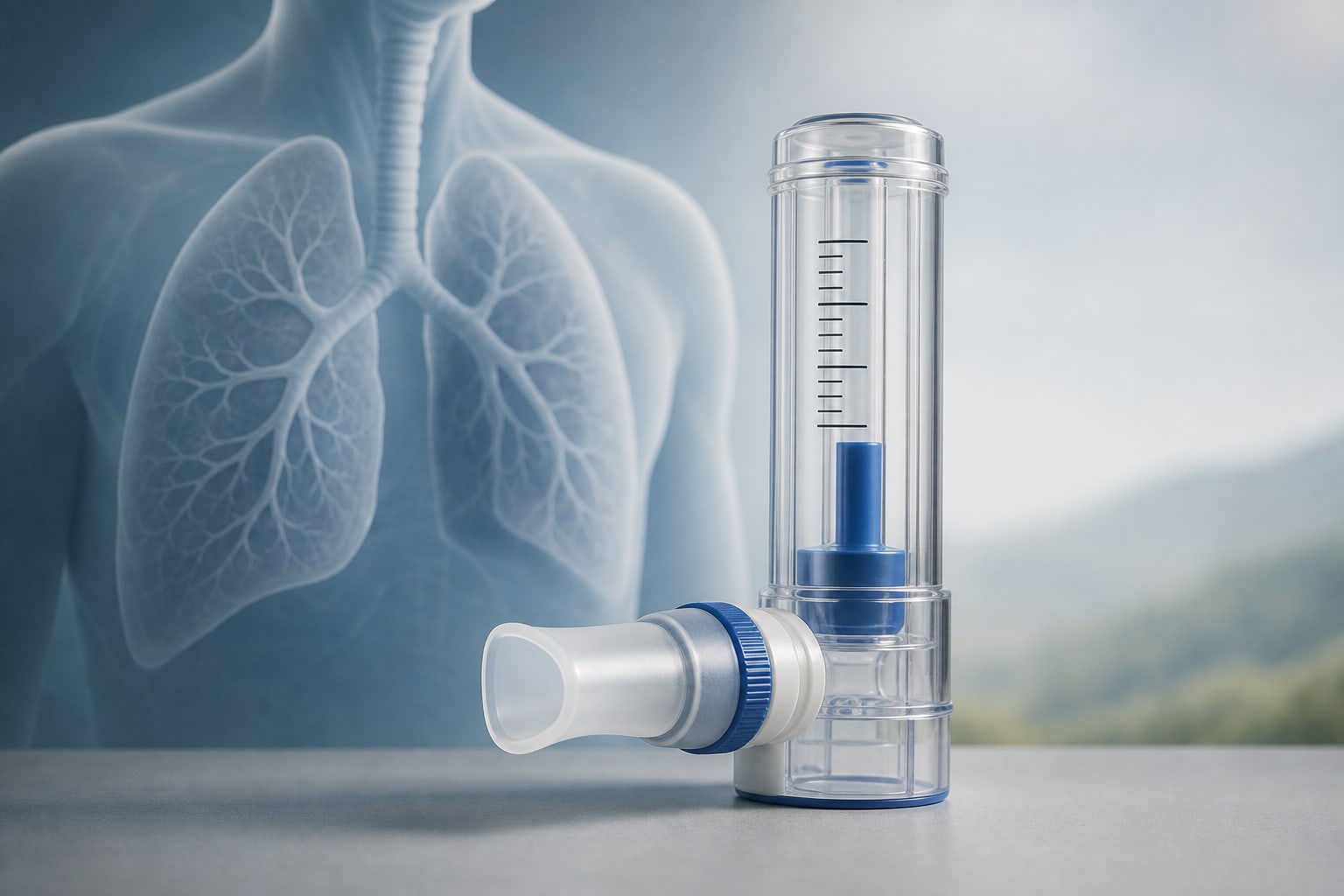
This systematic review and meta-analysis evaluated the effects of inspiratory muscle training (IMT) on inspiratory muscle strength, exercise tolerance, and dyspnea in COPD patients.
Background
Chronic obstructive pulmonary disease (COPD) is a prevalent respiratory condition that leads to significant morbidity and impaired quality of life. Effective non-pharmacological interventions, such as inspiratory muscle training, are essential for managing symptoms in COPD patients.
Data Highlights
Outcome
Effect Size (SMD)
95% Confidence Interval
p-value
PImax
1.23
0.12–2.34
0.034
6MWD
0.43
0.09–0.77
0.018
Dyspnea
0.33
−0.11–0.77
0.129
FEV₁
0.14 L
−0.17–0.44
0.190
Key Findings
IMT significantly improved PImax (SMD = 1.23, p = 0.034).
IMT also significantly enhanced 6MWD (SMD = 0.43, p = 0.018).
Statistical significance for 6MWD was observed only in sham-controlled trials.
No significant improvement in dyspnea was found (SMD = 0.33, p = 0.129).
FEV₁ did not show significant changes (MD = 0.14 L, p = 0.190).
Comparator type explained 37.8% of the heterogeneity in 6MWD outcomes.
Clinical Implications
The effectiveness of IMT appears to be influenced by the type of comparator used in studies.
Conclusion
IMT can enhance inspiratory muscle strength and exercise tolerance in COPD patients, with varying efficacy depending on the comparator type.