Ultrasound Morphological Variations in Symptomatic Versus Asymptomatic Carotid Webs
Overview
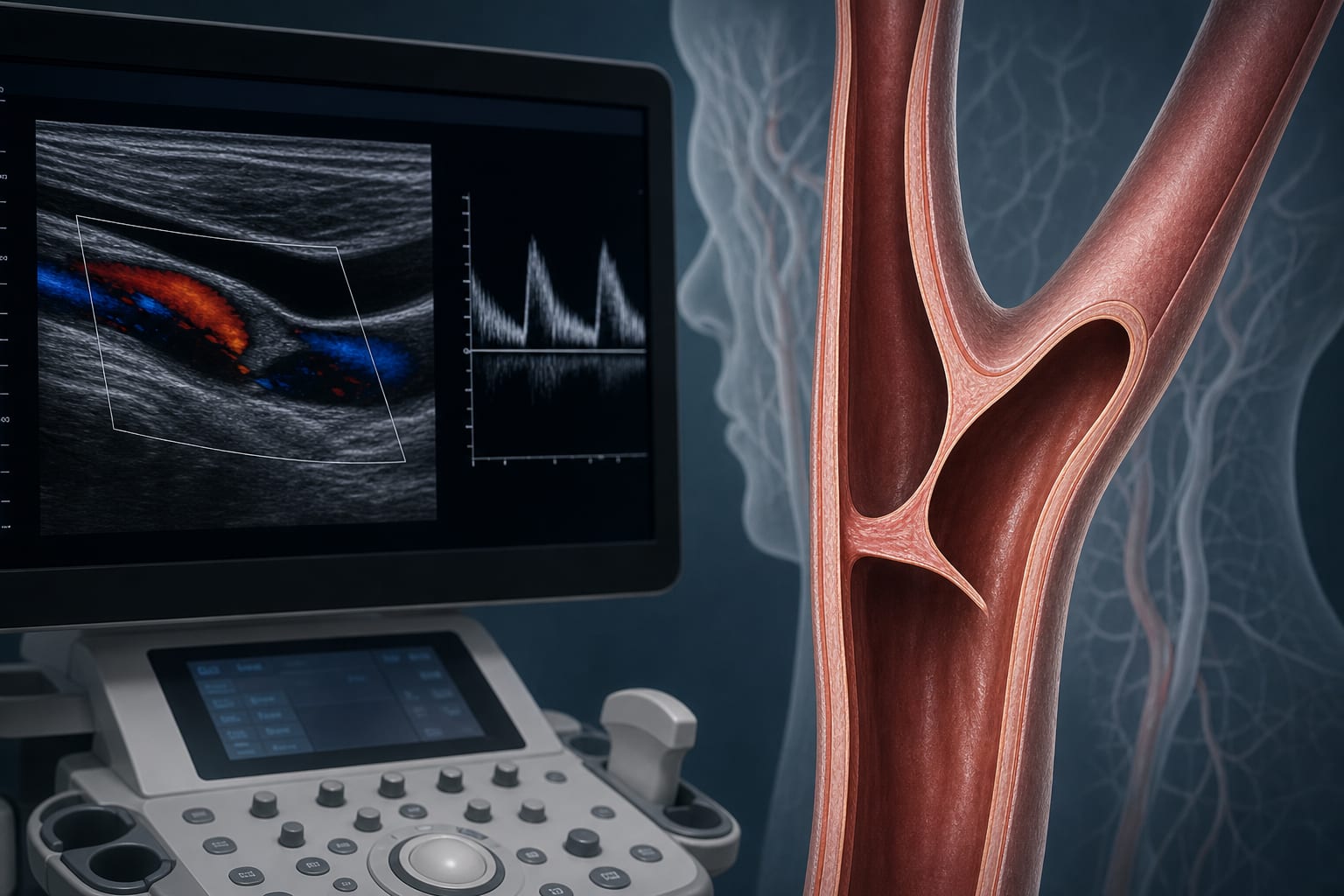
This study investigates the differences in ultrasound morphological features between symptomatic and asymptomatic carotid webs (CWs) and identifies risk factors for CW-associated ischemic stroke. Key findings indicate that symptomatic CWs exhibit larger dimensions, a higher prevalence of curved shapes, and distinct hemodynamic characteristics compared to asymptomatic CWs.
Background
Carotid webs are increasingly recognized as a potential cause of cryptogenic ischemic stroke, particularly in younger patients. Current diagnostic approaches, including ultrasound, play a vital role in the detection of CWs.
Data Highlights
Characteristic
Symptomatic (n=15)
Asymptomatic (n=30)
p-value
Web Length (mm)
5.80 ± 1.64
4.41 ± 1.67
0.011
Web Thickness (mm)
1.88 ± 0.43
1.38 ± 0.39
<0.001
Curved Shape Prevalence (%)
80.0
43.3
0.044
Stenosis Severity (%)
46.35 ± 9.89
40.13 ± 11.44
-
Resistance Index
0.59 ± 0.10
0.65 ± 0.07
0.02
Key Findings
Symptomatic CWs have larger dimensions (length and thickness) compared to asymptomatic CWs.
There is a higher prevalence of curved CW shapes in symptomatic patients (80.0% vs. 43.3%).
Symptomatic CWs exhibit more severe stenosis, although most stenoses are mild (<50%).
Lower resistance index values are associated with symptomatic CWs.
Multivariate analysis identified CW length, thickness, and lower resistance index as independent risk factors for symptomatic CWs.
Clinical Implications
The distinct morphological and hemodynamic features of symptomatic CWs can aid in identifying patients at higher risk for ischemic stroke. Utilizing ultrasound to assess these characteristics may enhance early detection and intervention strategies.
Conclusion
The findings highlight the importance of ultrasound in differentiating symptomatic from asymptomatic carotid webs, which may inform stroke prevention strategies.
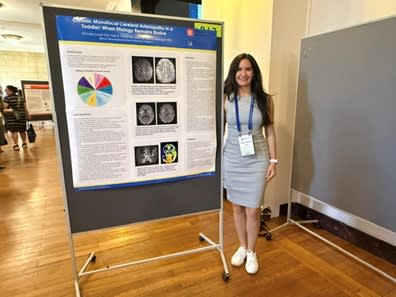
At the IPSO 2026 Congress in Paris, France, Victoria Lorah, DO, Child Neurology Co-Chief Resident at Phoenix Children's, presented a complex pediatric stroke case involving a two-year-old with an acute right middle cerebral artery (MCA) ischemic stroke.