Time-dependent microbiology of peripancreatic drainage fluid in severe acute pancreatitis: a prospective real-world observational study using metagenomic sequencing and culture - Report - MDSpire
Advertisement
Time-dependent microbiology of peripancreatic drainage fluid in severe acute pancreatitis: a prospective real-world observational study using metagenomic sequencing and culture
Clinical Report: Temporal Changes in Microbial Composition of Peripancreatic Drainage Fluid
Overview
Expand on the implications of increased pathogen detection in later collections.
Background
Severe acute pancreatitis (SAP) is associated with high morbidity and mortality, particularly due to infectious complications such as infected pancreatic necrosis (IPN). Accurate diagnosis and management of IPN are critical, yet traditional microbiological methods often fail to detect pathogens early in the disease course. Understanding the temporal changes in microbial composition can inform better diagnostic and therapeutic strategies.
Data Highlights
Time from Disease Onset
mNGS Positivity
Culture Positivity
≤14 days
1/7 (14.3%)
1/7 (14.3%)
>14 days
8/13 (61.5%)
5/13 (38.5%)
Key Findings
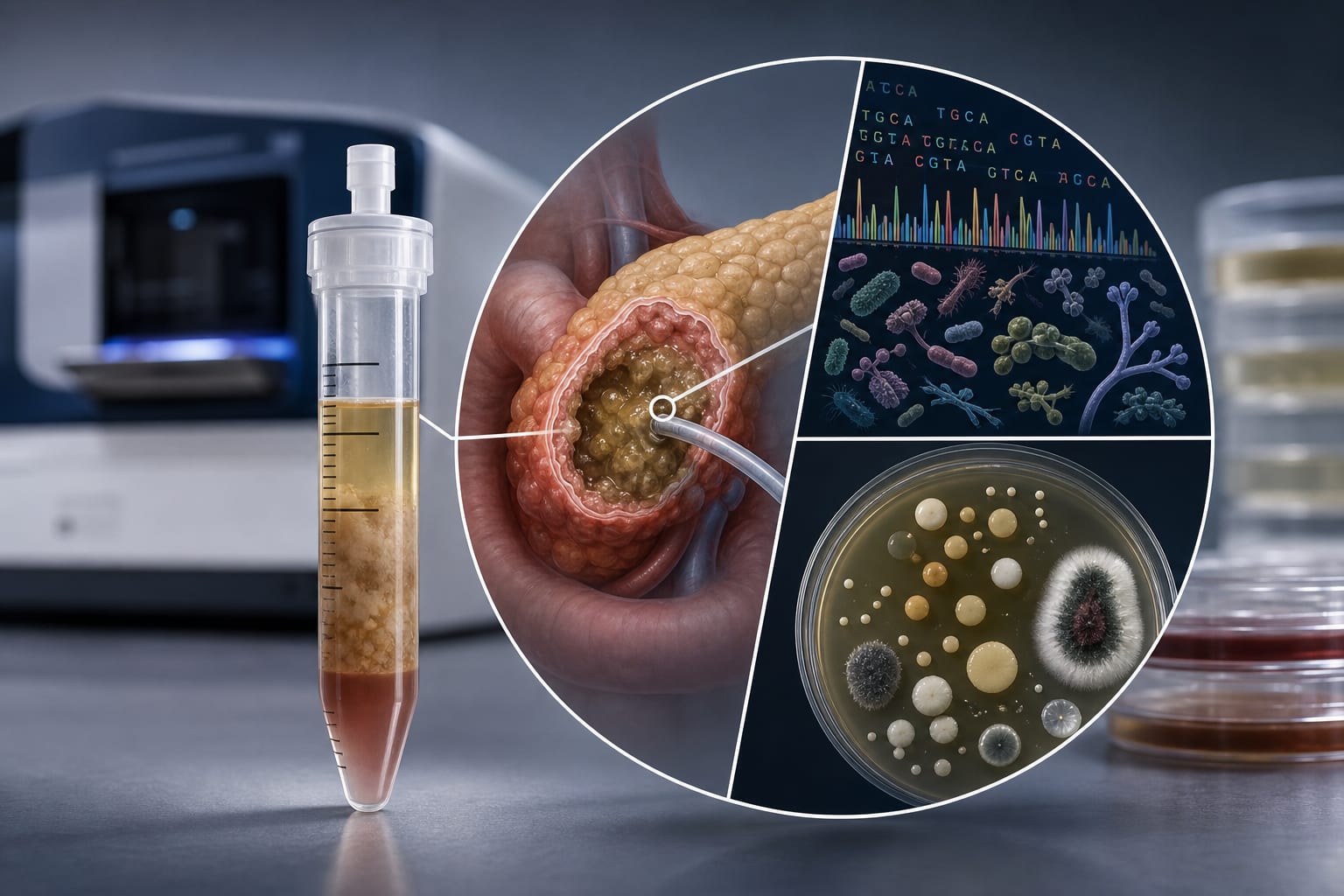
mNGS identified pathogens in 45% of cases, compared to 30% for conventional culture.
Microbiological positivity was significantly lower within 14 days of disease onset.
Polymicrobial, anaerobic, and fungal organisms were more frequently detected in later stages of SAP.
Enterococcus species and Klebsiella pneumoniae were the most commonly identified pathogens.
Early peripancreatic collections were predominantly sterile, supporting the notion of sterile necrosis.
Clinical Implications
The findings suggest that clinicians should be cautious in interpreting microbiological results early in the course of SAP, as infections are less likely. The use of mNGS may enhance pathogen detection in later stages, potentially guiding more effective antimicrobial therapy.
Conclusion
This study highlights the evolving nature of microbial composition in peripancreatic drainage fluid during SAP, emphasizing the need for updated diagnostic approaches as the disease progresses.