Thyroid-stimulating hormone, fasting blood glucose and suicidal ideation in Chinese adolescents with major depressive disorder: a cross-sectional study - Report - MDSpire
Advertisement
Association of Thyroid-Stimulating Hormone, Fasting Glucose Levels, and Suicidal Thoughts in Chinese Adolescents Diagnosed with Major Depressive Disorder: A Cross-Sectional Analysis
Association of TSH, Fasting Glucose Levels, and Suicidal Thoughts in Adolescents
Overview
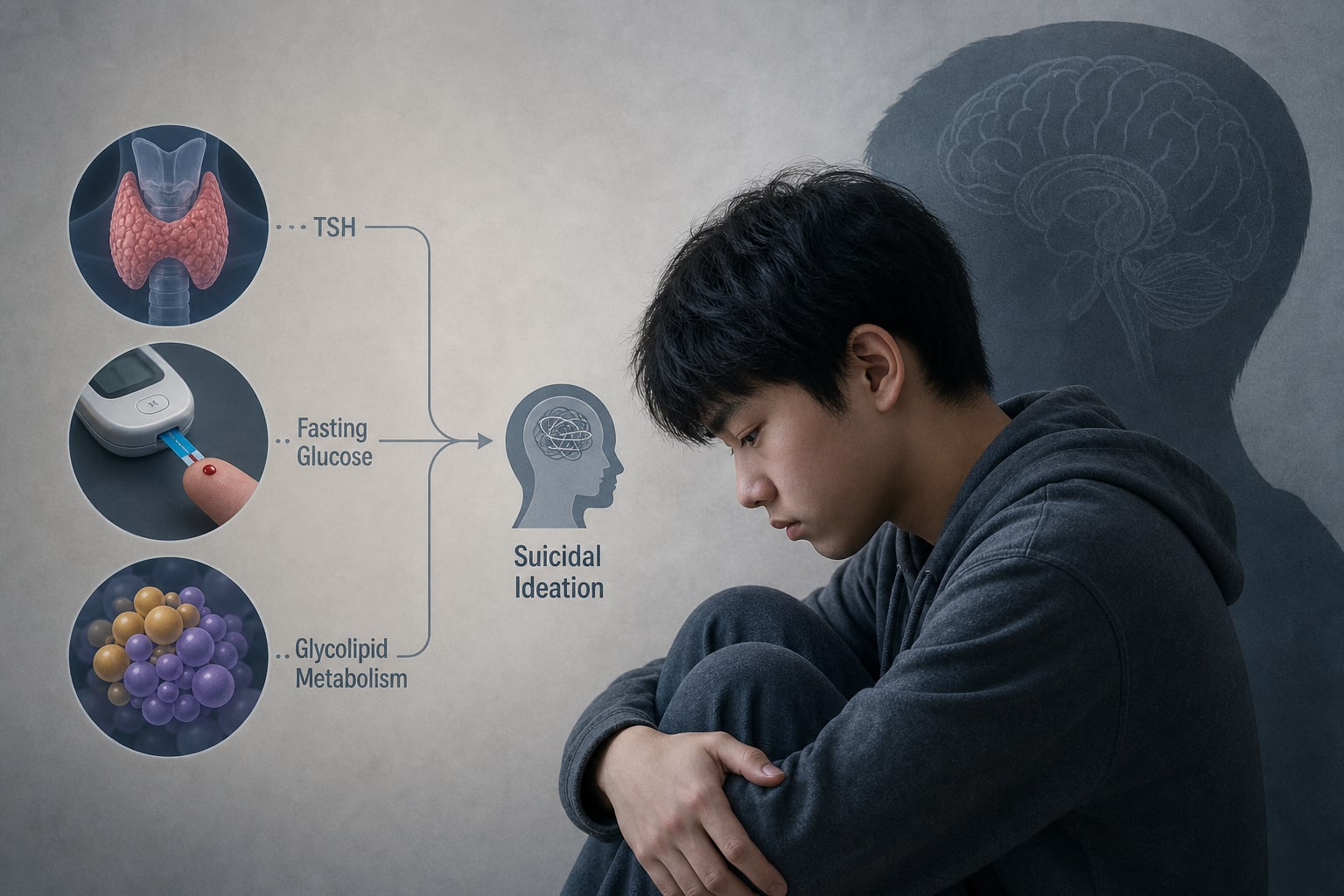
This study investigates the relationship between thyroid-stimulating hormone (TSH) levels, fasting blood glucose (FBG) levels, and suicidal ideation (SI) in adolescents diagnosed with major depressive disorder (MDD).
Background
Major depressive disorder (MDD) is a leading cause of disability among adolescents and is closely linked to increased suicide risk. This study explores the potential roles of thyroid function and metabolic parameters in adolescents with MDD.
Data Highlights
Parameter
Adolescents with MDD
Healthy Controls
P-value
Fasting Blood Glucose (FBG)
Lower
Higher
< 0.001
Key Findings
Lower fasting blood glucose levels were observed in adolescents with MDD compared to healthy controls.
Logistic regression identified family relationship quality, HAMD-24 total score, TSH, and FBG levels as factors associated with SI.
Higher TSH levels were linked to increased SI in adolescents with MDD.
Adolescents with MDD had a prevalence of SI at 68%.
Clinical Implications
Clinicians should consider assessing TSH and fasting glucose levels in adolescents with MDD as part of a comprehensive evaluation for suicide risk. Understanding the interplay between metabolic and psychological factors may enhance risk stratification and intervention strategies.
Conclusion
The study highlights the association between thyroid and metabolic parameters with suicidal ideation in adolescents with MDD.