A stepwise decannulation pathway for patients with prolonged disorders of consciousness after brain injury: a retrospective feasibility study - Report - MDSpire
Advertisement
A stepwise decannulation pathway for patients with prolonged disorders of consciousness after brain injury: a retrospective feasibility study
Clinical Report: A Gradual Decannulation Approach for pDoC After Brain Injury
Overview
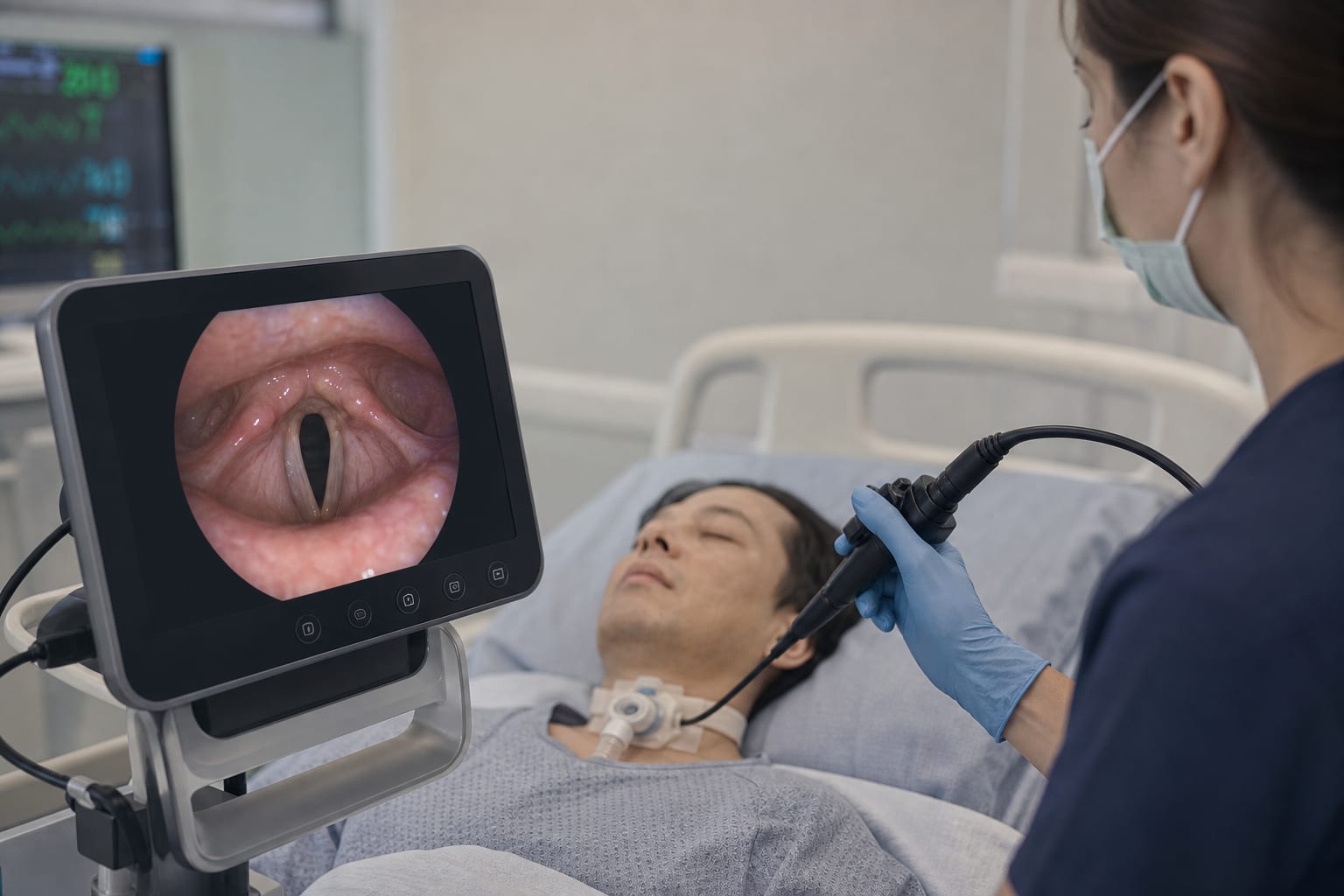
This study evaluates a stepwise decannulation pathway for patients with prolonged disorders of consciousness (pDoC) following brain injury, demonstrating a 57.4% decannulation success rate without immediate reintubation or ICU transfers. The findings suggest that a structured approach may enhance safety and feasibility in this vulnerable population.
Background
Prolonged disorders of consciousness (pDoC) following brain injury present significant challenges in clinical management, particularly regarding airway safety and tracheostomy decannulation. Patients with pDoC are at increased risk for pulmonary complications, necessitating careful evaluation and management of airway patency and secretion burden. Establishing effective decannulation protocols is crucial for reducing complications and improving patient outcomes.
Data Highlights
Outcome
Result
Decannulation Rate
57.4%
No Reintubation/ICU Transfer (48h)
0%
Mean Time to Decannulation
19.8 ± 8.2 days
Airway Lesions Identified
88.5%
SCSS < 3
19.7%
Key Findings
57.4% of patients were successfully decannulated.
No patients required reintubation or ICU transfer within 48 hours post-decannulation.
Mean time from referral to decannulation was 19.8 days.
88.5% of patients had identified airway lesions.
Main barriers to decannulation included airway stenosis, uncontrolled secretion burden, and inadequate cough strength.
Clinical Implications
The study supports the implementation of a structured decannulation pathway for patients with pDoC, emphasizing the importance of thorough airway assessment and monitoring. Clinicians should consider this approach to enhance safety and facilitate timely decannulation in this population.
Conclusion
The stepwise decannulation pathway appears feasible and safe for patients with pDoC following brain injury, warranting further investigation through prospective multicenter studies.