Exploring Digital Health Solutions for the Assessment and Management of Fatigue in Inflammatory Bowel Disease: A Scoping Review
-
By
-
Tianrong Zhu
-
Guixiao Sheng
-
Xiaoli Zhou
-
Liping Yang
-
April 28, 2026
Clinical Report: Exploring Digital Health Solutions for Fatigue in IBD
Overview
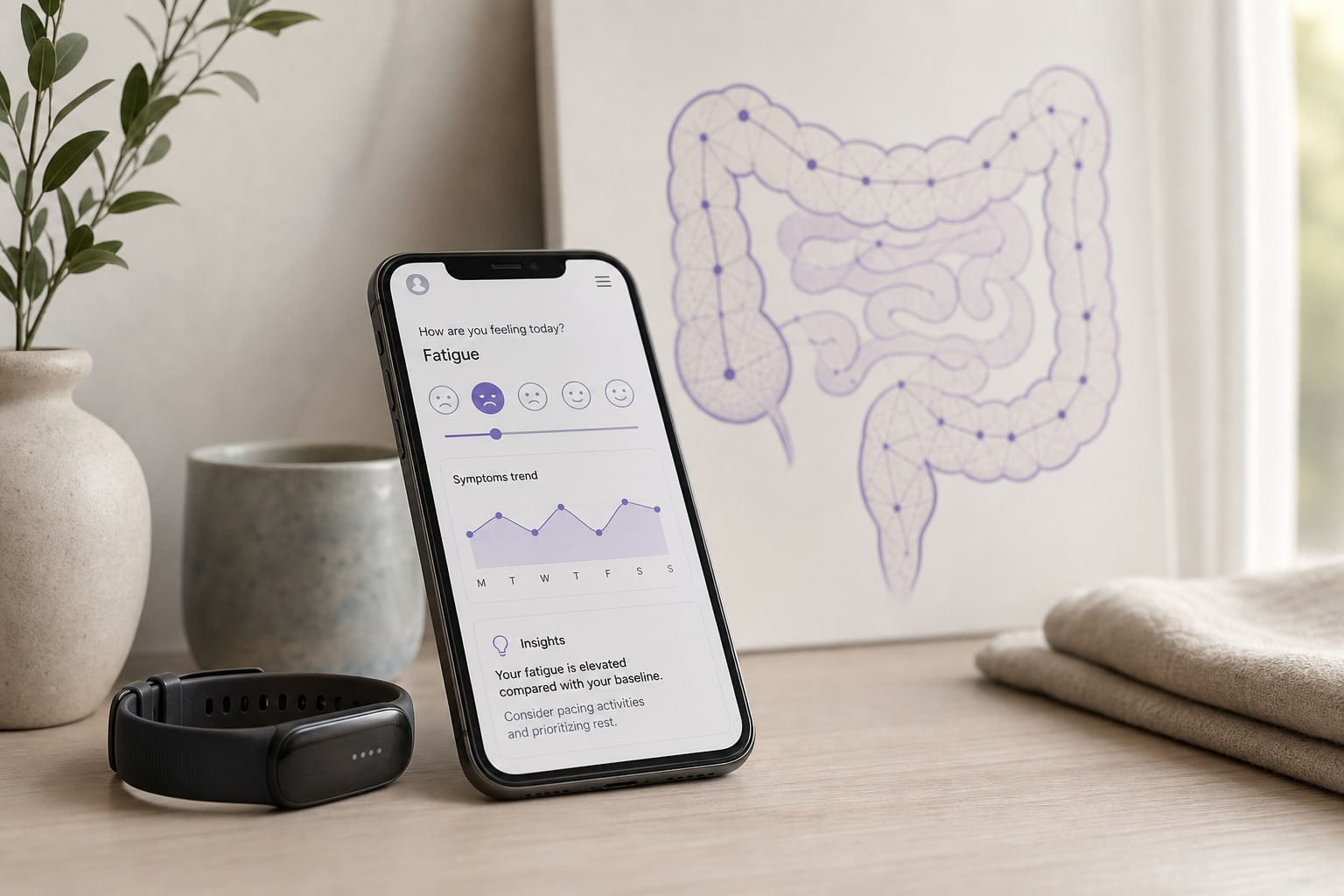
This scoping review synthesizes current evidence on digital health technologies (DHTs) for monitoring and managing fatigue in inflammatory bowel disease (IBD). It identifies key types of DHTs and digital biomarkers.
Background
Inflammatory bowel disease (IBD) significantly impacts patient quality of life, with fatigue being a prevalent symptom affecting nearly 80% of patients with active inflammation. Fatigue often persists even in patients who are clinically in remission, indicating a need for effective management strategies. Current assessment methods are inadequate, necessitating innovative solutions such as digital health technologies.
Data Highlights
No numerical data was provided in the source material.
Key Findings
- Fatigue affects nearly 80% of patients with active IBD and persists in about 40% of those in remission.
- Standard clinical practice often overlooks fatigue, focusing instead on endoscopic outcomes.
- Digital health technologies (DHTs) can facilitate continuous symptom tracking.
- Existing DHTs primarily address physical symptoms, neglecting fatigue.
- Emerging evidence supports the use of wearable-derived data to track fatigue.
- A scoping review methodology was employed to map the use of DHTs in managing IBD-related fatigue.
Clinical Implications
Healthcare professionals should consider integrating digital health technologies into routine practice to monitor and manage fatigue in IBD patients. Continuous tracking of fatigue symptoms may enhance patient care and facilitate timely interventions.
Conclusion
The review highlights the potential of digital health technologies in addressing fatigue in IBD.
Related Resources & Content
- Journal of Crohn's and Colitis, 2025 -- The Substantial Role of Sleep, Stress, and Physical Activity in Persistent High Levels of Fatigue in Patients With Inflammatory Bowel Disease: A Longitudinal Trajectory Study
- Journal of Crohn's and Colitis, 2025 -- Deconditioning in quiescent Crohn’s disease patients with heightened fatigue perception
- npj Digital Medicine, 2025 -- Systematic review: digital biomarkers of fatigue in chronic diseases
- Efficacy of digital health technologies in the management of inflammatory bowel disease: an umbrella review - ScienceDirect
- Digital health technologies for monitoring and managing IBD-related fatigue: A scoping review
- Journal of Crohn's and Colitis — Modifiable Psychological Factors are Associated With Clusters of Pain, Fatigue, Fecal Incontinence, and Irritable Bowel Syndrome-Type Symptoms in Inflammatory Bowel Disease: A Latent Profile Analysis
- 2024 ECCO Guideline on Extraintestinal Manifestations
- 2025 multi-society ECCO–ESGAR–ESP–IBUS Guideline on Diagnostics and Monitoring
- Efficacy of digital health technologies in the management of inflammatory bowel disease: an umbrella review - ScienceDirect
- Digital health technologies for monitoring and managing IBD-related fatigue: A scoping review
- Substantial Role of Sleep, Stress, and Physical Activity in Persistent High Levels of Fatigue in Patients With Inflammatory Bowel Disease: A Longitudinal Trajectory Study | Journal of Crohn's and Colitis | Oxford Academic
- Physiological Data Collected from Wearable Devices Identify and Predict Inflammatory Bowel Disease Flares - PMC
- A systematic review of digital and imaging technologies for measuring fatigue in immune mediated inflammatory diseases | npj Digital Medicine
Based on findings from:
Digital health technologies for monitoring and managing IBD-related fatigue: A scoping review
Tianrong Zhu, Guixiao Sheng, Xiaoli Zhou, Liping Yang. Digital Health, 2026.
https://journals.sagepub.com/doi/10.1177/20552076261444043
This content is an AI-generated, fully rewritten summary based on a published scholarly article. It does not reproduce the original text and is not a substitute for the original publication. Readers are encouraged to consult the source for full context, data, and methodology.