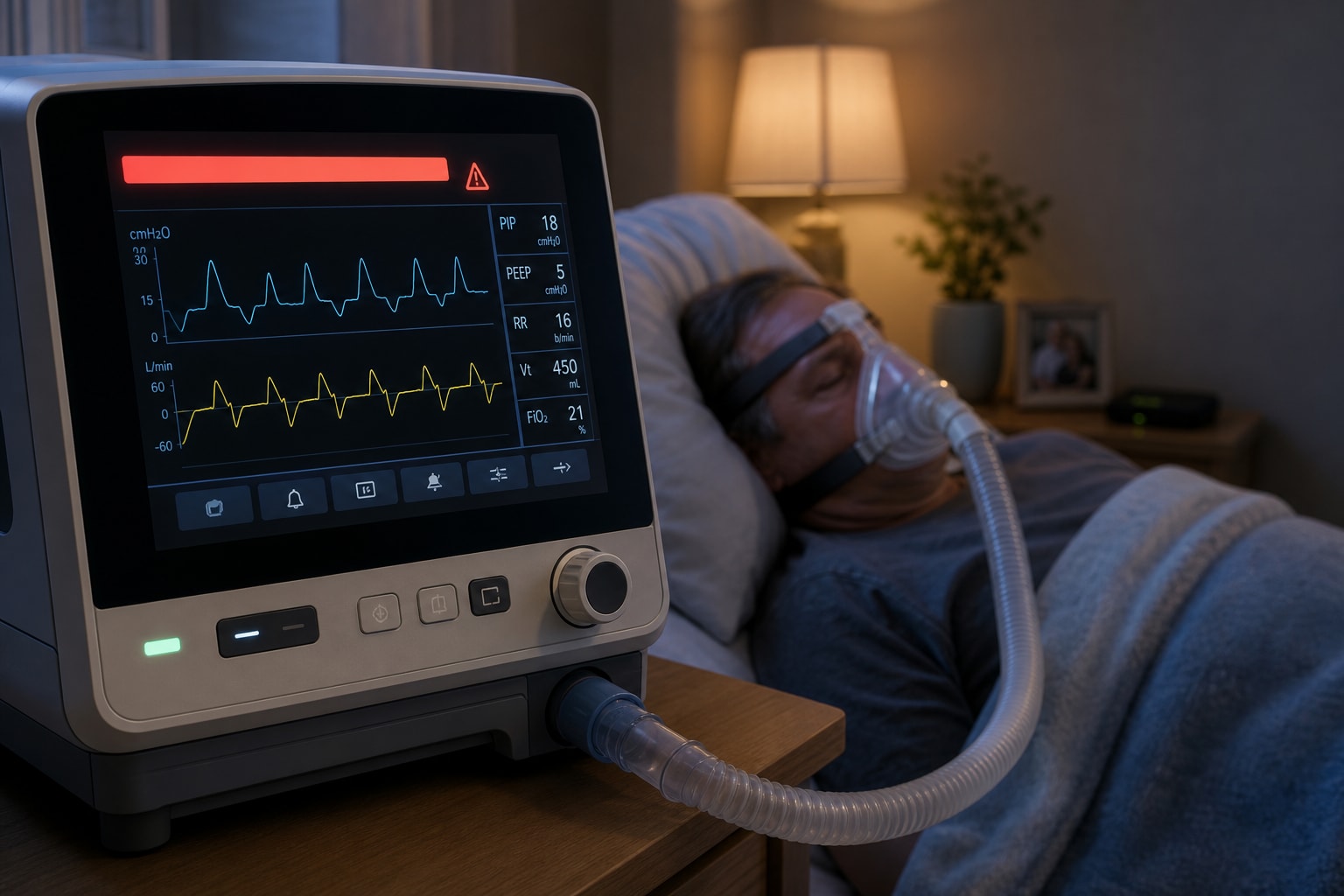
Clinical Report: Monitoring Alerts in Extended Home Mechanical Ventilation
Overview
This report reviews the importance of effective alarm settings in home mechanical ventilation for both invasive and noninvasive patients. It emphasizes the need for personalized alarm configurations to enhance patient safety and prevent adverse events.
Background
Home mechanical ventilation is increasingly utilized for patients requiring long-term respiratory support, including both invasive and noninvasive methods. Proper alarm settings are crucial for detecting potential complications, as ventilator-dependent patients are at high risk for life-threatening events. Despite the growing use of home ventilation, there is a lack of standardized guidelines for optimal alarm management.
Data Highlights
No numerical data presented in the source material.
Key Findings
Ventilator alarms are essential for detecting significant ventilatory events and ensuring patient safety.
Alarm settings should be personalized based on the patient's condition and ability to communicate.
External monitoring devices, such as pulse oximeters, are recommended for patients on invasive ventilation or NIV.
Excessive false alarms can lead to alarm fatigue, reducing caregiver vigilance.
Education for patients and caregivers on alarm management is critical for effective response to alerts.
Clinical Implications
Healthcare providers must prioritize the personalization of ventilator alarm settings to balance sensitivity and specificity while minimizing alarm fatigue. Regular monitoring and reassessment of alarm configurations are necessary to adapt to the patient's evolving needs.
Conclusion
Effective management of ventilator alarms is vital for the safety of patients on home mechanical ventilation. Ongoing education and tailored alarm settings can significantly reduce the risk of adverse events.
Brazilian pediatric intensive care unit study found underweight status was associated with respiratory complications, longer hospitalization, and mortality among critically ill patients with COVID-19.