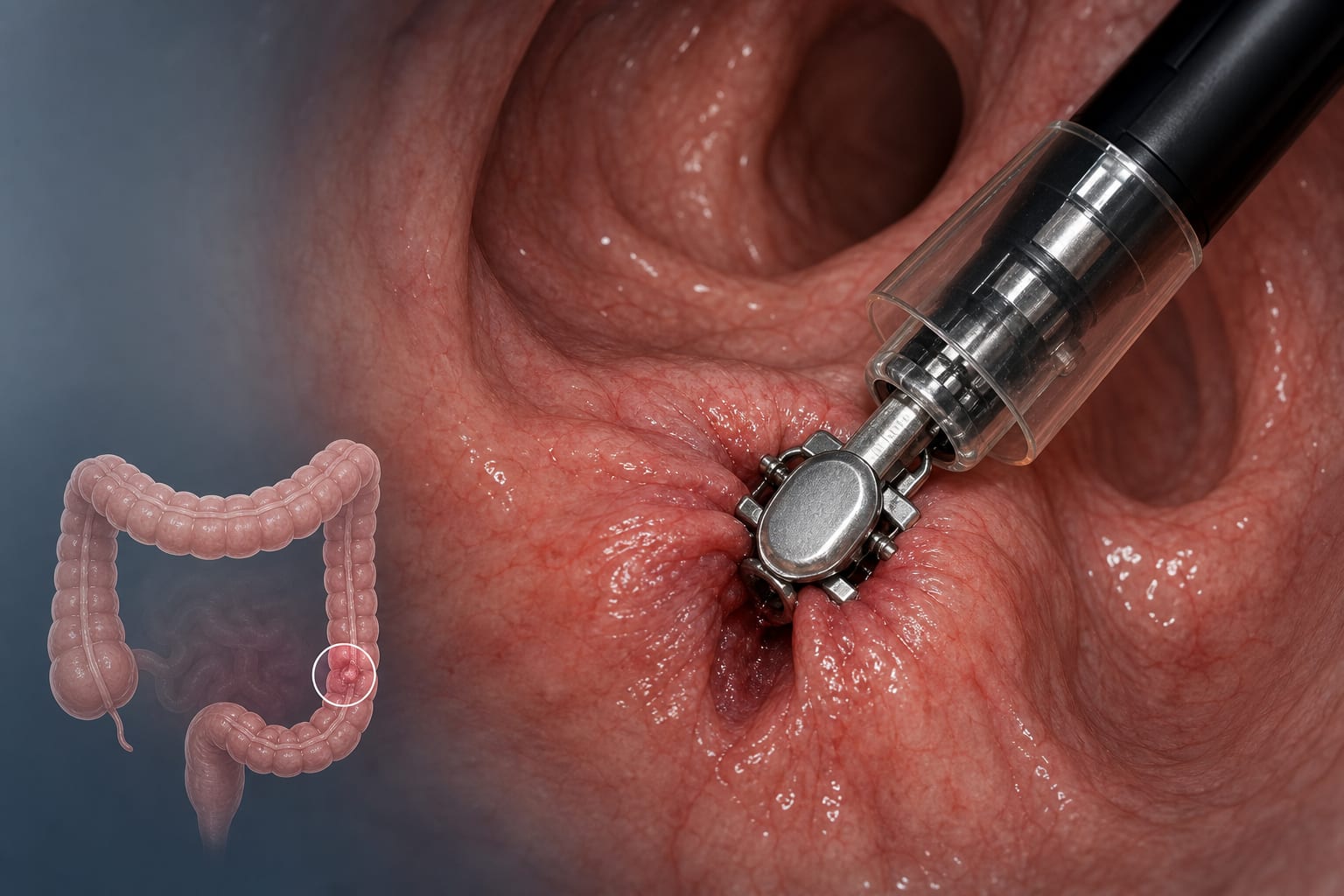
Comprehensive Biomarker Assessment for Early Detection of Anastomotic Leakage Post-Colorectal Surgery: Insights from Inflammation to Ischemia
-
By
-
Yuji Li
-
June 2, 2026
Clinical Report: Comprehensive Biomarker Assessment for Early Detection of Anastomotic Leakage Post-Colorectal Surgery
Overview
Anastomotic leakage (AL) is a significant complication following colorectal surgery, with a notable incidence and serious consequences. This report reviews various biomarkers for early detection of AL, proposing a multimodal prediction framework that integrates inflammation, ischemia, microbiome, and tissue repair.
Background
Anastomotic leakage is associated with increased morbidity and mortality in colorectal surgery, making early detection crucial for improving patient outcomes. Traditional diagnostic methods are often reactive and can delay intervention, highlighting the need for reliable biomarkers. Understanding the multifactorial nature of AL can aid in developing effective predictive tools.
Data Highlights
This article systematically reviews the application of various biomarkers, including serum inflammatory markers, peritoneal drain fluid cytokines, ischemic metabolites, and microbiome markers, in predicting anastomotic leakage.Key Findings
- Anastomotic leakage incidence ranges from 2% to 19%, with higher rates in low rectal anastomoses.
- Traditional diagnostic methods are limited by significant time delays in identifying AL.
- Biomarkers from inflammation, ischemia, microbiome, and tissue repair show potential for early detection of AL.
- Machine learning algorithms may enhance the integration of diverse biomarker data, though external validation is needed.
- Future research should focus on multicenter studies and standardized detection protocols.
Clinical Implications
Clinicians should consider integrating biomarker assessments into routine postoperative monitoring to enhance early detection of anastomotic leakage. A multimodal approach may improve predictive accuracy and facilitate timely interventions.
Conclusion
The development of a comprehensive biomarker framework for anastomotic leakage could significantly improve early detection and patient outcomes in colorectal surgery. Continued research and validation are essential for clinical implementation.
Related Resources & Content
- Assessment of Inflammatory Biomarkers CCL8, CXCL5, and LIF in Colorectal Cancer Surgery Patients Experiencing Anastomotic Leakage, Springer, 2020
- The adjusted Glasgow Prognostic Score predicts a higher likelihood of anastomotic leakage following anterior resection in rectal cancer patients, Springer, 2023
- Prognostic value of preoperative anorectal manometry parameters for anastomotic leakage after sphincter-preserving surgery for rectal cancer, International Journal of Colorectal Disease, 2026
- International Consensus on Reporting Anastomotic Leaks After Colorectal Cancer Surgery: The CoReAL Reporting Framework, PMC, 2025
- Understanding Epiploic Steal: Could This Concept Be Crucial for Lowering Rates of Colorectal Anastomotic Leaks?
- Understanding Epiploic Steal: Could This Concept Be Crucial for Lowering Rates of Colorectal Anastomotic Leaks?
- Predictive Biomarkers for the Early Detection of Anastomotic Leaks in Colorectal Surgeries: A Systematic Review | Cureus
- Advancing early diagnosis of colorectal anastomotic leakage using drain fluid biochemical analysis | Scientific Reports
- International Consensus on Reporting Anastomotic Leaks After Colorectal Cancer Surgery: The CoReAL Reporting Framework - PMC
Based on findings from:
Multimodal biomarker panel for early prediction of anastomotic leak after colorectal surgery: from inflammation to ischemia
Yuji Li. Frontiers In Surgery, 2026.
https://www.frontiersin.org/journals/surgery/articles/10.3389/fsurg.2026.1809885/full
This content is an AI-generated, fully rewritten summary based on a published scholarly article. It does not reproduce the original text and is not a substitute for the original publication. Readers are encouraged to consult the source for full context, data, and methodology.