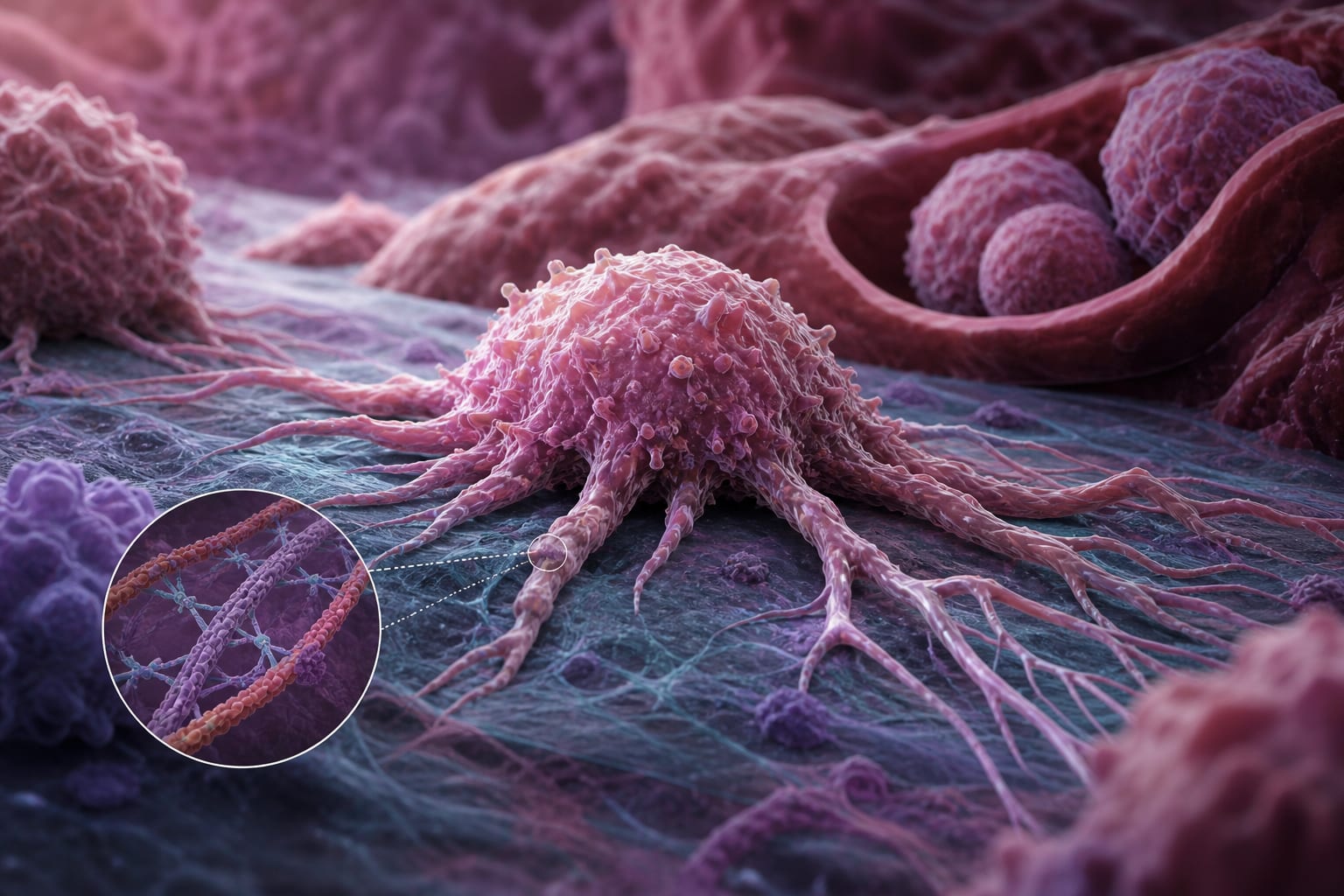
Clinical Report: Migrastatics: A Comprehensive Review of Present Developments
Overview
Metastasis is the leading cause of cancer-related mortality, prompting the exploration of migrastatics, agents designed to inhibit metastatic spread. Significant toxicity has hindered the clinical application of these compounds.
Background
Metastasis significantly worsens cancer prognosis and is responsible for the majority of cancer deaths globally. The development of effective therapies targeting metastatic disease remains a challenge due to its systemic nature and adaptability. Migrastatics represent a novel class of agents aimed at disrupting the invasive behavior of cancer cells, yet their clinical use has been limited by associated toxicity.
Data Highlights
No numerical data or trial results were provided in the source material.
Key Findings
Metastasis accounts for the majority of cancer-associated deaths worldwide.
Migrastatics are defined as agents that disrupt various forms of cancer cell invasiveness.
Current limitations of migrastatics include significant toxicity and adverse effects.
Co-administration of migrastatics with cytotoxic therapies may enhance treatment efficacy.
Dynamic remodeling of the cytoskeleton is crucial for cancer cell motility and metastasis.
Clinical Implications
Clinicians should be aware of the potential for toxicity when considering the use of these agents in treatment regimens.
Conclusion
The clinical application of migrastatics is currently limited by toxicity. Further research is needed to optimize their use.
Ocular tumor coding can be challenging because ocular oncology often involves evolving lesions, diagnostic uncertainty, and terminology that does not always translate cleanly into ICD-10-CM codes. Understanding how to distinguish benign, malignant, in situ, and uncertain histologic behavior neoplasms is essential for accurate coding, medical necessity, and audit defensibility.