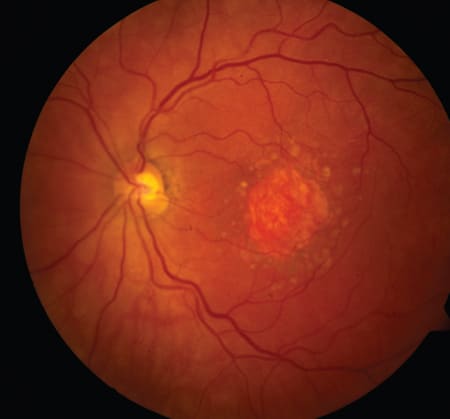
Clinical Report: The Therapeutic Pipeline for Geographic Atrophy
Overview
This report reviews the emerging therapies for geographic atrophy (GA), a significant cause of vision loss in older adults. Recent advancements include complement inhibitors and novel therapeutic strategies targeting mitochondrial dysfunction and gene therapy.
Background
Geographic atrophy (GA) is an advanced form of nonexudative age-related macular degeneration (AMD), leading to irreversible vision loss. The disease is characterized by the progressive loss of retinal structures, significantly impacting patients' quality of life. Understanding the underlying mechanisms, such as complement system dysregulation and oxidative stress, is crucial for developing effective therapies.
Data Highlights
No numerical data available in the source material.
Key Findings
Pegcetacoplan, the first approved therapy for GA, shows modest reductions in lesion growth.
Avacincaptad pegol demonstrated a 14% to 30% reduction in lesion growth in clinical trials.
Vonaprument is currently in phase 3 trials, targeting the classical complement pathway to reduce retinal damage.
Elamipretide, a mitochondrial-targeted therapy, is under investigation for its potential to improve cellular bioenergetics.
Gene therapy JNJ-81201887 aims to enhance retinal expression of CD59 to protect retinal cells.
Clinical Implications
Clinicians should consider the potential of complement inhibitors as a disease-modifying approach for GA, while remaining vigilant about the associated risks. Ongoing studies of novel therapies may provide additional options for managing this challenging condition.
Conclusion
The therapeutic landscape for geographic atrophy is evolving, with multiple innovative strategies under investigation. Continued research is essential to improve outcomes for patients suffering from this debilitating condition.