Impact of Dual Antiplatelet Therapy Duration on Stent Thrombosis Risk in Patients Undergoing Complex Percutaneous Coronary Intervention: A Meta-Analysis - Report - MDSpire
Advertisement
Impact of Dual Antiplatelet Therapy Duration on Stent Thrombosis Risk in Patients Undergoing Complex Percutaneous Coronary Intervention: A Meta-Analysis
Impact of Dual Antiplatelet Therapy Duration on Stent Thrombosis Risk in Complex PCI
Overview
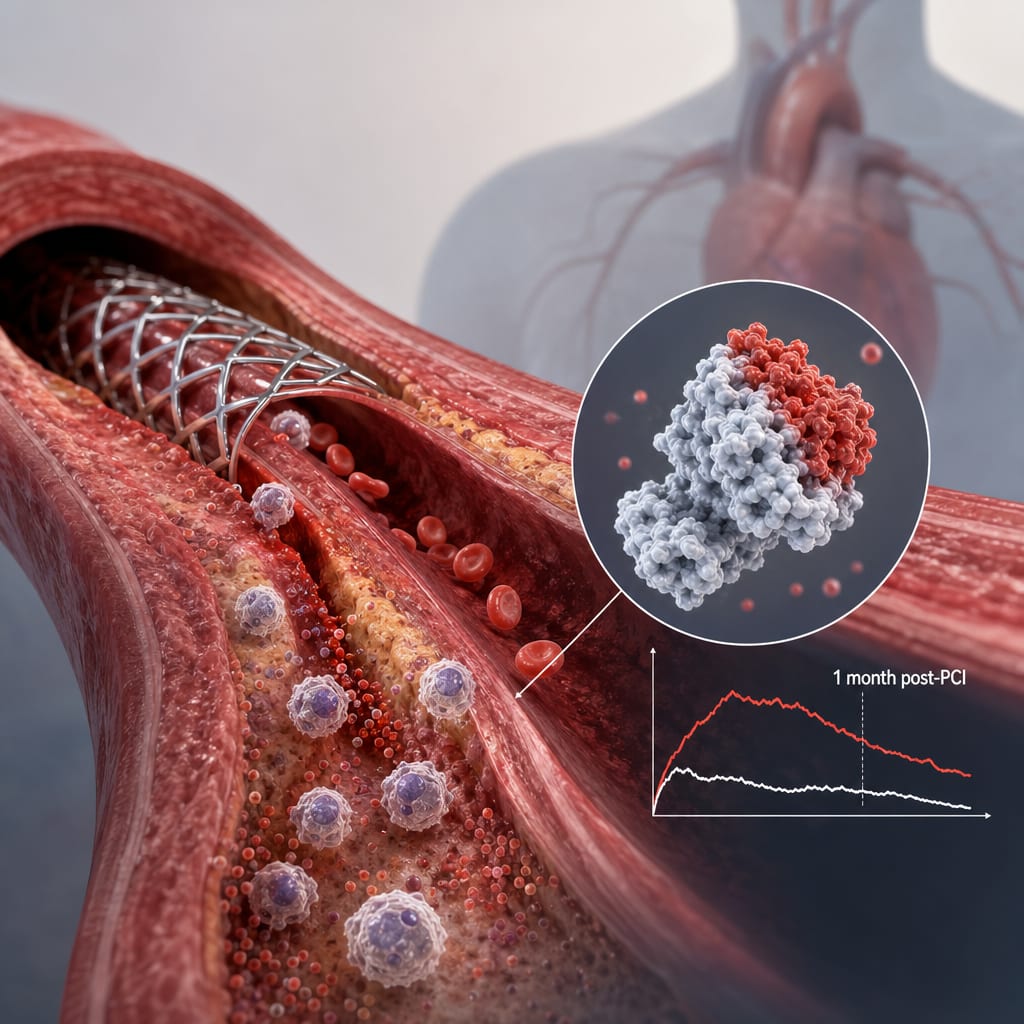
This meta-analysis evaluated the effect of dual antiplatelet therapy (DAPT) duration on stent thrombosis (ST) risk in patients undergoing complex percutaneous coronary intervention (PCI). Findings suggest that extended DAPT may reduce ST risk but must be balanced against bleeding risk, highlighting the need for individualized therapy.
Background
Percutaneous coronary intervention (PCI) is a common treatment for coronary artery disease, with complex PCI procedures increasing due to aging populations and comorbidities. Complex PCI is associated with higher ischemic risk, including stent thrombosis (ST), a serious complication linked to high mortality and myocardial infarction rates. Dual antiplatelet therapy (DAPT) with aspirin and a P2Y12 inhibitor is standard post-PCI to reduce thrombotic events, but optimal DAPT duration in complex PCI remains uncertain due to bleeding risk concerns. Current guidelines recommend varying DAPT durations based on ischemic and bleeding risk profiles, but real-world practice shows variability in DAPT duration, especially in complex PCI patients.
Data Highlights
Outcome
Effect of Extended vs Standard DAPT
Confidence Interval (95%)
Heterogeneity (I2)
Stent Thrombosis (ST)
Reduced risk with extended DAPT
Not specified in excerpt
Not specified
Myocardial Infarction (MI)
Assessed as secondary outcome
Not specified
Not specified
All-cause Death
Assessed as secondary outcome
Not specified
Not specified
Major Bleeding
Assessed as secondary outcome
Not specified
Not specified
Key Findings
Extended DAPT duration is associated with a reduction in stent thrombosis risk in patients undergoing complex PCI.
Complex PCI is defined by criteria such as treatment of ≥3 vessels, ≥3 lesions, ≥3 stents, bifurcation with 2 stents, total stent length >60 mm, or chronic total occlusion.
There is a significant challenge in balancing ischemic risk reduction with bleeding risk when determining DAPT duration in complex PCI patients.
Current guidelines recommend 6 to 12 months of DAPT for most PCI patients, with consideration of prolonged DAPT in high ischemic risk cases including complex PCI.
Real-world clinical practice shows variability in DAPT duration, often influenced by physician concerns about stent thrombosis despite bleeding risk.
The meta-analysis used rigorous methodology including random-effects models and sensitivity analyses to assess outcomes.
Clinical Implications
Clinicians should consider extended DAPT duration in patients undergoing complex PCI to reduce the risk of stent thrombosis, while carefully evaluating individual bleeding risk. Personalized treatment strategies and adherence to guideline recommendations can optimize outcomes. Ongoing assessment of ischemic versus hemorrhagic risk is essential to guide DAPT duration decisions.
Conclusion
Extended dual antiplatelet therapy may reduce stent thrombosis risk in complex PCI patients, but therapy duration should be individualized to balance ischemic benefits against bleeding risks. Further research is needed to refine optimal DAPT strategies in this high-risk population.
References
Academic Research Consortium (ARC) 2 Criteria -- Stent Thrombosis Definition
Cochrane Collaboration and PRISMA Guidelines -- Systematic Review Methodology
Current Clinical Guidelines (2024) -- DAPT Duration Recommendations
by Fiorenzo Simonetti, Claudia Carassia, Hector Alfonso Alvarez Covarrubias, Michael Joner, Thorsten Kessler, Tobias Rheude, Hendrik Sager, Felix Voll, Moritz von Scheidt, Erion Xhepa, Adnan Kastrati, Salvatore Cassese