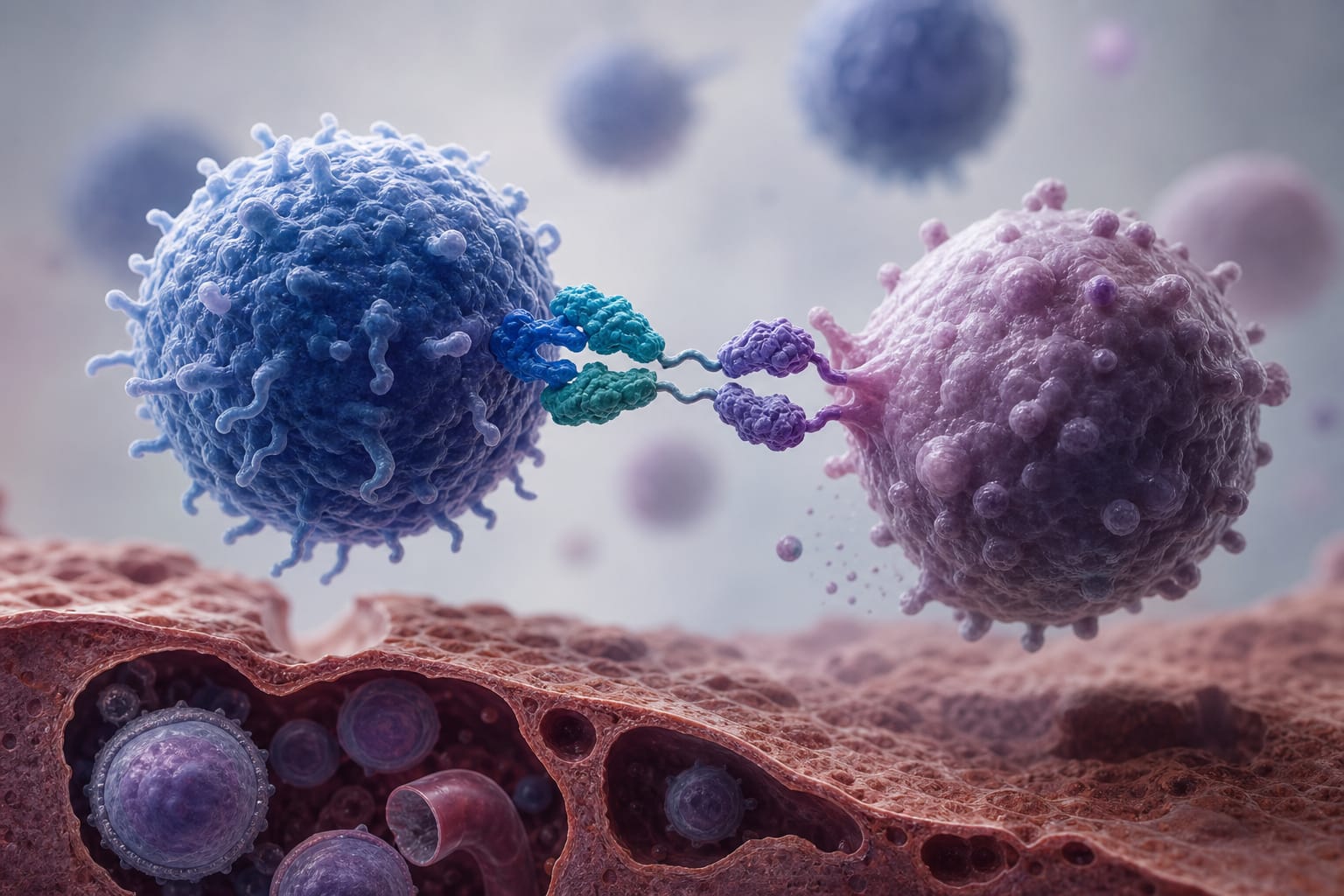
Clinical Report: Neural Influence on Tumor Development in HCC
Overview
The nervous system plays an active role in the regulation of tumor dynamics in hepatocellular carcinoma (HCC), influencing processes such as tumor proliferation and immune evasion. This review highlights the complex interactions between neural signals and tumor biology.
Background
Understanding the role of the nervous system in cancer progression is crucial, as it challenges the traditional view of nerves as passive structures. In HCC, neural activity can modulate inflammation and metabolism, potentially contributing to the transition from chronic liver disease to malignancy.
Data Highlights
No numerical data or trial data provided in the source material.
Key Findings
The nervous system actively regulates oncogenesis through complex interactions with tumor cells.
Neural signals promote tumor proliferation, invasion, and immune evasion in HCC.
Malignant cells can induce neural remodeling, enhancing neuronal excitability.
Neuro-immune crosstalk plays a role in shaping the tumor microenvironment.
Understanding the neural circuits involved in HCC progression is essential.
Clinical Implications
Clinicians should consider the implications of neuro-tumor interactions in HCC.
Conclusion
The interplay between the nervous system and tumor biology in HCC requires further exploration.