Risk factors for inferior right hepatic vein occlusion following right lobe living donor liver transplantation: a single-center experience with 240 cases - Report - MDSpire
Conexiant’s news site is now MDSpire News. Learn more
Advertisement
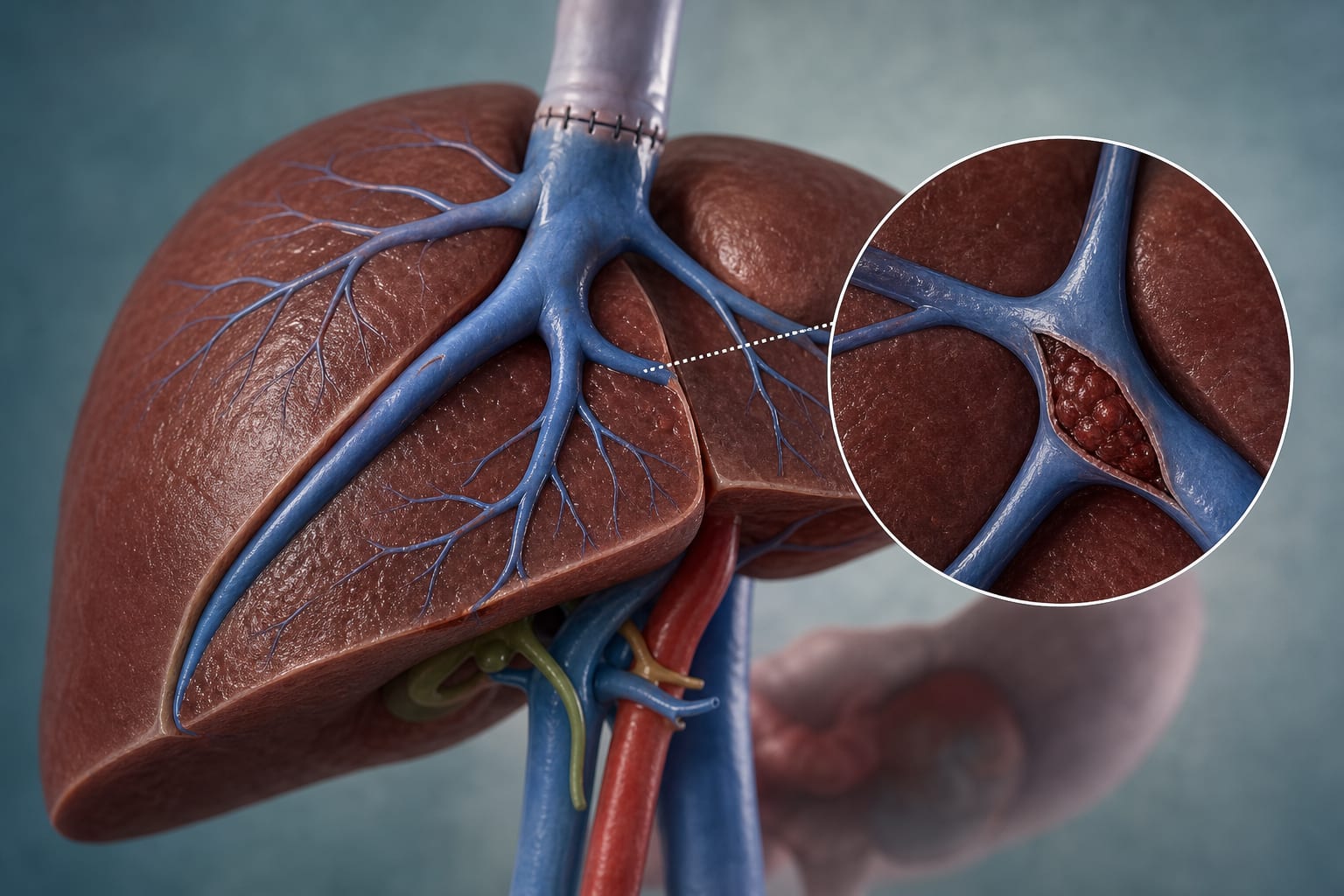
Identifying Risk Factors for Occlusion of the Inferior Right Hepatic Vein After Right Lobe Living Donor Liver Transplantation: Insights from a Single-Center Study of 240 Cases
Clinical Report: Identifying Risk Factors for Occlusion of the Inferior Right Hepatic Vein
Overview
This study analyzes risk factors for inferior right hepatic vein (IRHV) occlusion in right lobe living donor liver transplantation (RL-LDLT) based on a cohort of 240 cases.
Background
Living donor liver transplantation (LDLT) is a crucial alternative to deceased donor transplantation, particularly due to organ shortages. The right lobe graft is preferred for its larger volume, but the anatomical complexity of hepatic vasculature poses significant challenges.
Data Highlights
No numerical data or trial data provided in the source material.
Key Findings
IRHV occlusion can significantly impair graft perfusion and increase postoperative complications.
Variations in hepatic vascular anatomy, particularly the presence of accessory IRHVs, are common.
Meticulous surgical techniques and early detection of thrombosis are essential for reducing complications associated with IRHV occlusion.
Preoperative anatomical evaluations using multislice computed tomography (MSCT) are critical for identifying high-risk patients.
Different reconstruction techniques impact IRHV patency rates.
Clinical Implications
Surgeons should prioritize thorough preoperative assessments of hepatic vascular anatomy.
Conclusion
Identifying risk factors for IRHV occlusion is essential.