Aneurysmal Hemorrhage Triggers Systemic Effects
-
By
-
Kathryn Wighton
-
March 17, 2026
-
3 min
Clinical Report: Aneurysmal Hemorrhage Triggers Systemic Effects
Overview
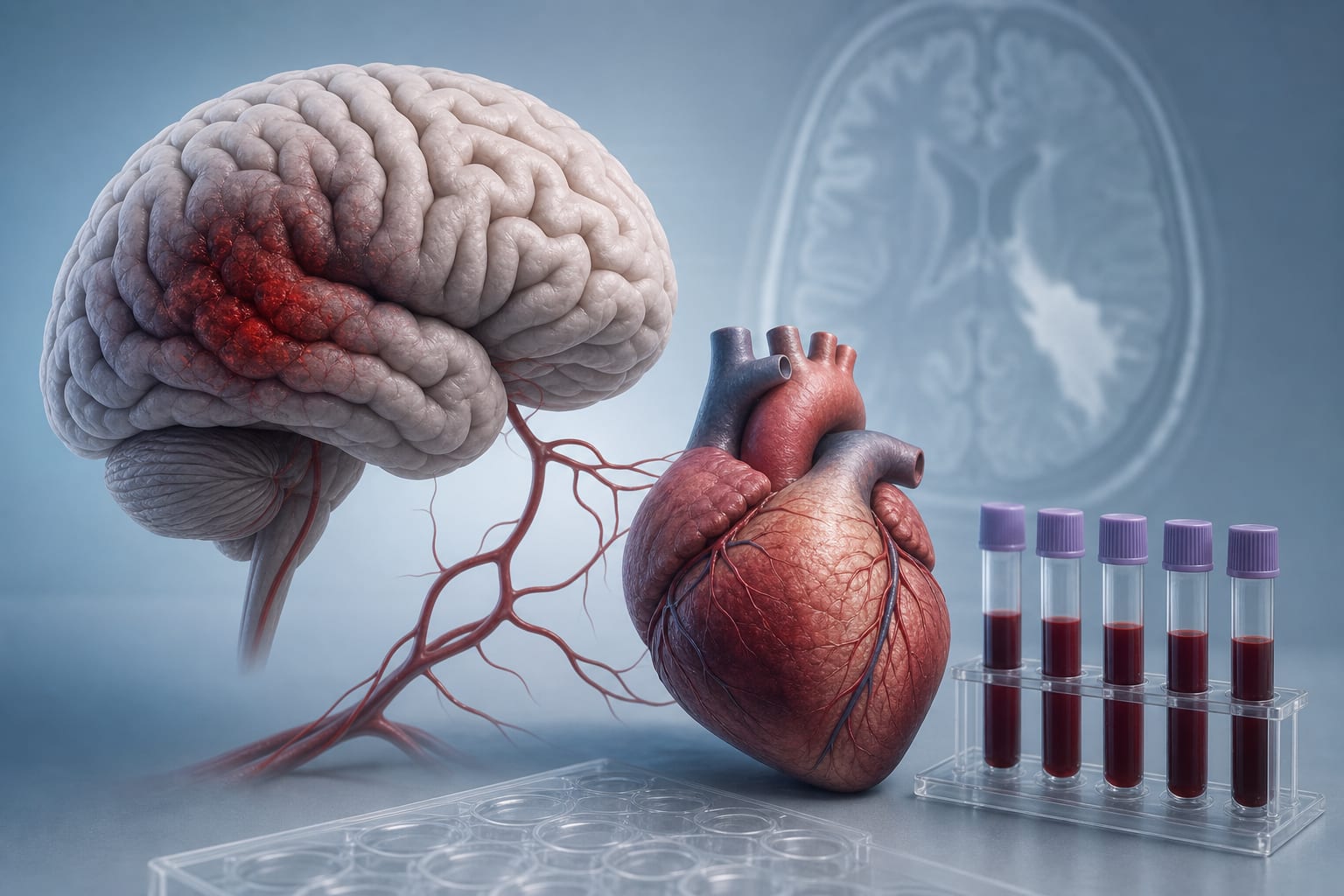
This narrative review highlights the systemic effects of elevated catecholamines following aneurysmal subarachnoid hemorrhage (aSAH), linking them to increased sympathetic nervous system activity, poorer outcomes, and higher mortality rates. The findings suggest that catecholamine levels may serve as potential biomarkers for risk stratification in aSAH patients.
Background
Aneurysmal subarachnoid hemorrhage is a critical condition with significant morbidity and mortality, affecting approximately 40% of patients within 30 days of the event. The surge in catecholamines post-hemorrhage is associated with various systemic complications, including cardiac dysfunction and delayed cerebral ischemia, which can exacerbate patient outcomes. Understanding these systemic effects is crucial for improving management strategies and patient care.
Data Highlights
No specific numerical data provided in the source material.
Key Findings
- Elevated catecholamine levels after aSAH are linked to increased sympathetic nervous system activity.
- Higher catecholamine concentrations correlate with poorer outcomes and increased mortality rates.
- Cardiac dysfunction occurs in up to 28% of patients, with arrhythmias reported in 50% to 100% of cases.
- Catecholamine excess contributes to secondary brain injury and may increase blood-brain barrier permeability.
- Therapeutic strategies such as beta-blockers and calcium channel blockers are being explored to mitigate catecholamine effects.
Clinical Implications
Clinicians should monitor catecholamine levels in patients with aSAH as they may indicate risk for adverse outcomes. Management strategies should focus on stabilizing hemodynamics and preventing complications associated with catecholamine surges, including cardiac dysfunction and delayed cerebral ischemia.
Conclusion
The review underscores the importance of understanding the systemic effects of catecholamines following aSAH, which can significantly influence patient outcomes. Further research is needed to refine therapeutic approaches aimed at mitigating these effects.
Related Resources & Content
- Nalliah S, et al., Acute and Critical Care, 2024 -- Aneurysmal Hemorrhage Triggers Systemic Effects
- Intensive Care Medicine — Impact of Subarachnoid Haemorrhage on the Innate Immune System Response
- Critical Care (Springer) — Beyond the bleed: complications after aneurysmal subarachnoid hemorrhage. Pathophysiology, clinical implications, and management strategies: a review
- Critical Care (Springer) — Neuroendocrine responses to hemorrhagic shock in severe trauma: unraveling controversies and therapeutic implications
- Critical Care (Springer) — Hormonal response following hemorrhage after severe trauma: an observational prospective study
- 2023 Guideline for the Management of Patients With Aneurysmal Subarachnoid Hemorrhage
- Guidelines for the Neurocritical Care Management of Aneurysmal Subarachnoid Hemorrhage
- Prognostic value of elevated cardiac troponin in aneurysmal subarachnoid hemorrhage: a systematic review and meta-analysis
- Frontiers | Predicting prognosis using stroke-heart indicator: brain natriuretic peptide in patients with aneurysmal subarachnoid hemorrhage
- Investigating the relationship between high-dose norepinephrine administration and the incidence of delayed cerebral infarction in patients with aneurysmal subarachnoid hemorrhage: A single-center retrospective evaluation - PMC
- Takotsubo syndrome: pathophysiological insights and innovations in patient care | Nature Reviews Cardiology
This content is an AI-generated, fully rewritten summary based on a published scholarly article. It does not reproduce the original text and is not a substitute for the original publication. Readers are encouraged to consult the source for full context, data, and methodology.