Clinical Report: Immune Pathways in Acute Lung Injury
Background
Acute lung injury (ALI) and acute respiratory distress syndrome (ARDS) are significant causes of respiratory failure in critically ill patients, often triggered by various insults. Understanding the mechanisms behind ALI is crucial. This review shifts the perspective from viewing ALI solely as a hyperinflammatory response to recognizing the role of innate immune regulation in tissue repair.
Data Highlights
No numerical data or trial data provided in the source material.
Key Findings
ALI is conceptualized as a disorder of dysregulated tissue-centered innate immune circuits.
Macrophage plasticity and ILC-mediated responses are critical in balancing inflammation and repair.
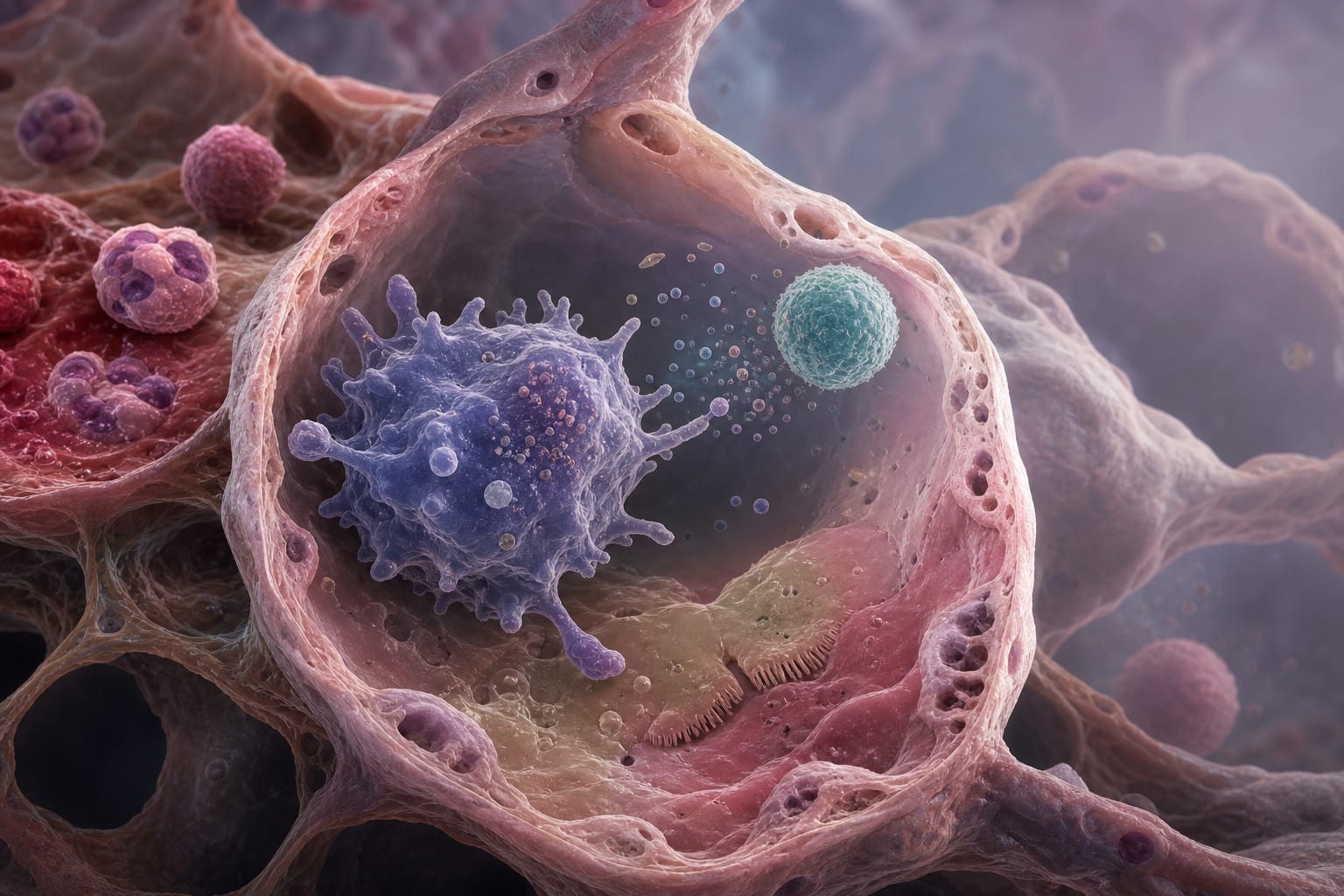
Communication among macrophages, ILCs, and epithelial cells is essential for lung recovery.
Disruption of immune circuit competence can lead to failed repair and persistent inflammation.
Therapeutic strategies aim to restore the functionality of these immune circuits in ALI.
Clinical Implications
Recognizing the role of macrophages and ILCs in ALI may guide the development of targeted therapies aimed at restoring immune circuit competence.
Conclusion
The interplay between macrophages, ILCs, and epithelial cells is crucial for lung repair following injury.