Clinical Report: Systematic Review and Meta-Analysis of Electroacupuncture's Effects in Mouse Models of Amyotrophic Lateral Sclerosis
Overview
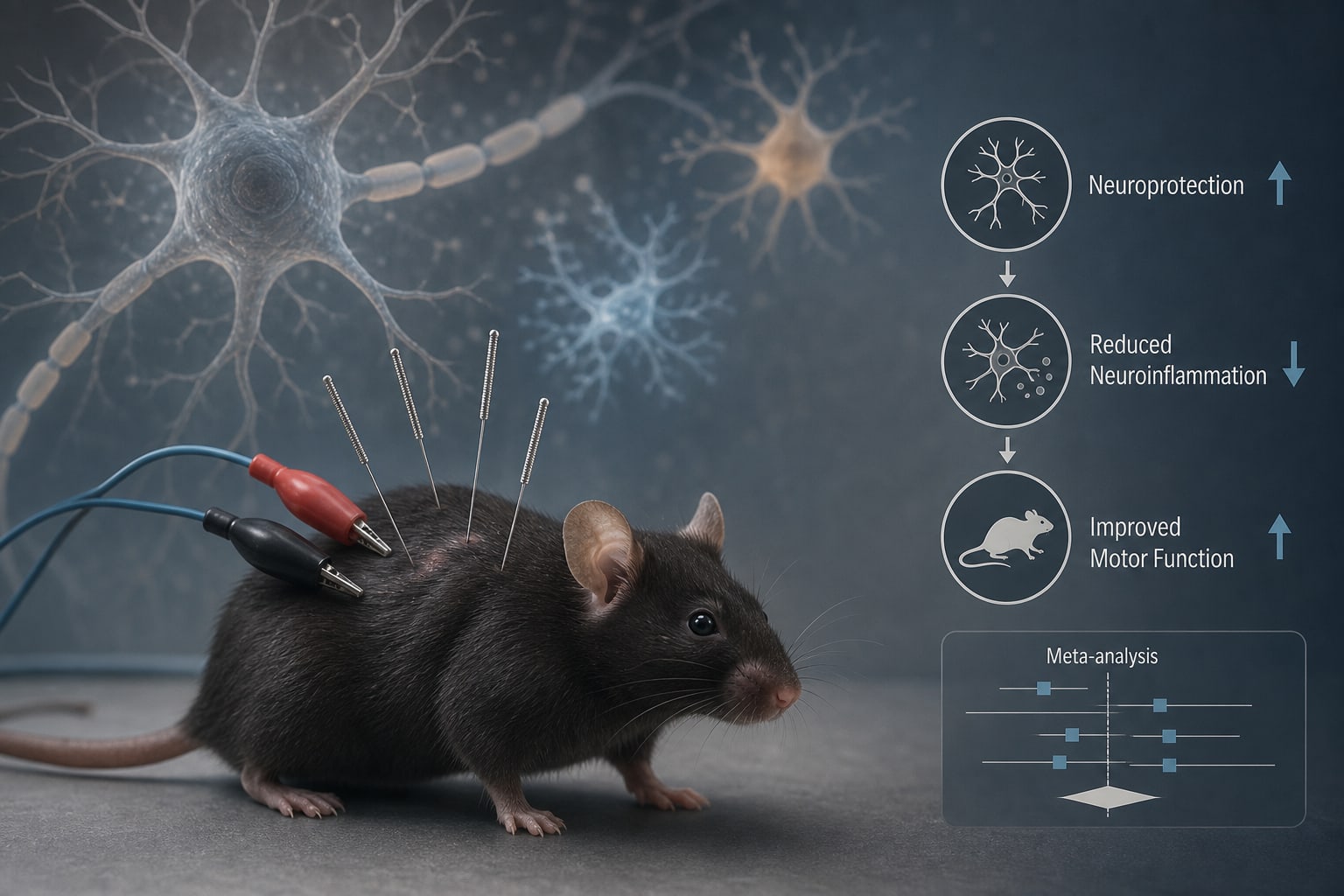
This systematic review and meta-analysis evaluated the efficacy of electroacupuncture (EA) in mouse models of amyotrophic lateral sclerosis (ALS), revealing significant improvements in motor function and neuroprotection.
Background
Amyotrophic lateral sclerosis (ALS) is a progressive neurodegenerative disease that leads to the loss of motor neurons, resulting in severe disability and high healthcare costs. Current therapies offer limited efficacy.
Data Highlights
Outcome
Effect Size
Confidence Interval
p-value
Rotarod Test Score
SMD = 3.31
95% CI (2.05, 4.57)
p < 0.001
Key Findings
Seventeen studies involving 372 animals were included in the analysis.
EA significantly improved motor function in ALS mice as measured by the rotarod test.
EA intervention alleviated neuroinflammation and promoted neuronal survival.
Improved axonal regeneration and stabilization of RNA metabolism were observed with EA treatment.
EA slowed disease progression and prolonged survival time in ALS models.
Potential publication bias was detected.
Clinical Implications
Further clinical trials are warranted to explore the efficacy of electroacupuncture in human populations.
Conclusion
This meta-analysis provides evidence for the neuroprotective effects of electroacupuncture in preclinical ALS models.